
Why Smart People Still Make Bad Decisions
The Big Orange Planet Journal — BOP-004
By Ally Lennon – 16 minute read
There was a time when information itself was a competitive advantage. Businesses that could gather reliable facts before everyone else usually made better decisions. Research demanded patience. Market intelligence required conversations, industry publications, trade shows, customer interviews, and countless hours assembling pieces of a puzzle that few competitors had the time to complete. Those willing to invest in understanding generally earned an edge because knowledge was genuinely scarce. That world has disappeared.
Today, information is abundant to the point of becoming almost invisible. Artificial intelligence can summarize an industry before you’ve finished your first cup of coffee. Search engines can surface millions of pages in fractions of a second. Every consultant has a newsletter, every expert hosts a podcast, every entrepreneur shares a framework on LinkedIn, and every platform promises the next breakthrough that will transform your business forever. We have solved the problem of access. In doing so, we’ve quietly created something far more difficult to solve. Judgment has become one of the rarest business skills in the modern economy.
After more than three decades designing websites, building brands, improving search visibility, and watching the internet evolve from a small collection of static pages into an AI-driven ecosystem influencing nearly every purchasing decision, I’ve reached a conclusion that grows stronger every year. The businesses succeeding today aren’t necessarily the ones consuming the most information. They’re the ones making better decisions about which information deserves their attention in the first place. That sounds obvious until you spend enough time inside real companies.
I’ve watched organizations spend six figures redesigning websites before asking why customers weren’t converting. I’ve seen companies obsess over the latest Google algorithm update while broken contact forms quietly stopped producing leads weeks earlier. I’ve watched businesses purchase expensive SEO services before establishing clear messaging, logical site architecture, or even a compelling explanation of why someone should choose them over a competitor. Those weren’t failures of intelligence. They were failures of judgment. That distinction matters because intelligence has never guaranteed good decisions. In fact, some of the smartest people I’ve worked with have also been remarkably skilled at defending poor ones. Intelligence gives us the ability to construct sophisticated arguments. Judgment determines whether those arguments deserve to exist in the first place.
Experience has taught me those are profoundly different abilities
When I began building websites in the early years of the commercial internet, success felt refreshingly straightforward. Learn the technology. Solve genuine problems. Improve your craft. Build something useful. As search engines matured, the formula became more complicated, but the fundamentals still made sense. Helpful content generally performed well. Fast websites usually outranked slow ones. Businesses that consistently served customers tended to grow. The internet rewarded competence more often than manipulation. Then everything accelerated.
Google became dramatically more sophisticated. Mobile devices reshaped human behavior almost overnight. Social media altered how businesses communicated. Artificial intelligence compressed work that once required weeks into minutes. Every technological leap promised simplicity. Instead, each one multiplied the number of decisions business owners faced every single day. Should we rebuild the website? Should we invest in AI? Should we redesign the brand? Should we publish video? Should we create content every day? Should we migrate platforms? Should we automate customer service? Should we rewrite everything for AI search? Should we change our entire SEO strategy?
None of those questions are inherently difficult. The problem is that they’re almost always asked in isolation. The more valuable question nearly always comes first. Why are we considering this change at all? That single question quietly eliminates an astonishing number of bad decisions because it forces evidence to replace assumption. Most businesses don’t actually suffer from a shortage of ideas. They suffer from an inability to distinguish between interesting ideas and necessary ones. That distinction has become increasingly difficult because information itself has changed. Facts rarely arrive as facts anymore. They arrive packaged as conclusions. Every article promises certainty. Every video claims to reveal hidden secrets. Every webinar guarantees exponential growth. Every AI response speaks with remarkable confidence whether it’s discussing established principles or generating statistically plausible guesses. Confidence has become far easier to manufacture than accuracy.
The danger isn’t that these sources are always wrong. Many contain genuinely valuable insight. The danger is that consuming endless conclusions slowly replaces independent thinking. We begin collecting answers without spending enough time examining the questions that produced them. I’ve watched this happen repeatedly with clients arriving carrying pages of notes gathered from podcasts, YouTube channels, AI conversations, newsletters, conferences, LinkedIn posts, webinars, and industry blogs. Every recommendation sounds persuasive by itself. Collectively they become almost impossible to reconcile.
One expert insists long-form content is essential. Another argues attention spans have collapsed. One consultant recommends publishing every day. Another insists frequency barely matters if authority is strong. One strategist focuses almost entirely on backlinks. Another dismisses backlinks as yesterday’s tactic. One AI advocate encourages automating nearly everything. Another warns that excessive automation quietly destroys trust.
Every perspective contains some truth. Together they often create paralysis. The problem isn’t conflicting advice. Business has always involved competing opinions. The mistake is assuming every opinion deserves equal weight. It doesn’t. Context determines value, and context remains the one thing no search engine, AI model, webinar, checklist, or prompt can fully understand. That’s where judgment begins. Good judgment isn’t knowing more facts than everyone else. It’s recognizing which facts actually matter for the decision sitting in front of you. That’s considerably harder because context refuses to scale. Every company has different customers. Different histories. Different markets. Different budgets. Different strengths. Different weaknesses. Advice that transformed one organization may quietly damage another. I’ve often watched businesses copy successful competitors without understanding why those competitors succeeded in the first place. They’ll duplicate layouts, messaging, pricing, navigation, or marketing campaigns believing they’re reproducing a winning formula. What they’re actually copying is the visible outcome of hundreds of invisible decisions they never witnessed. Success almost always has deeper roots than people assume. The same misunderstanding appears constantly in website design. Businesses ask what features another company uses instead of asking why those features exist. They request elaborate animations because another website has them. They insist on matching navigation systems, adding complex functionality, or copying visual trends simply because someone else appears successful. Rarely do they stop to ask whether those features solve the same problems their own customers actually have.
Technology Magnifies Decisions—It Doesn’t Replace Them
That question leads directly into one of the most persistent misconceptions I’ve encountered throughout my career. Every major technological breakthrough seems to revive the belief that technology will eventually eliminate the need for human judgment. Website builders would replace designers. Search engines would replace directories. Social media would replace websites. Artificial intelligence would replace expertise. None of those predictions proved entirely true because technology doesn’t eliminate decision-making. It simply relocates it. A website builder still requires someone to determine what a business actually stands for. AI still requires someone to evaluate whether its recommendations fit reality. Search engines still require businesses to demonstrate authority instead of merely claiming it. Every new tool amplifies the quality of existing decisions rather than correcting poor ones.
That’s one of the central ideas behind our approach to custom website development. A website should never exist simply because technology makes one possible. It should communicate trust, reduce friction, clarify value, and guide visitors toward meaningful action. Design doesn’t create clarity. It exposes it. If a business struggles to explain what it does internally, no amount of polished graphics or sophisticated animation will solve that underlying problem. The same principle extends to search visibility. Businesses often imagine Google as an impossibly mysterious algorithm rewarding obscure technical tricks. Certainly technical SEO matters. Site architecture matters. Performance matters. Internal linking matters. Structured data matters. Those are essential components of modern search optimization, and we spend considerable time helping clients improve them.
Yet after decades watching Google evolve through countless algorithm updates, one larger pattern has remained remarkably consistent. Google continues moving toward identifying businesses that genuinely deserve to be discovered. Not perfectly. Not instantly. Certainly not without occasional mistakes. But consistently enough that shortcuts become increasingly temporary while genuine authority becomes increasingly valuable. That reality became even clearer while writing earlier Big Orange Planet Journal editorials including Can AI Build My Website? Yes. But That’s Still the Wrong Question and The Difference Between Information and Evidence. Artificial intelligence can dramatically accelerate production. It cannot replace decades of accumulated experience, pattern recognition, practical observation, and informed judgment. It organizes information exceptionally well. It still cannot reliably determine which information deserves the greatest weight inside your unique business. That distinction may become one of the defining competitive advantages of the next decade.

The Most Dangerous Decision Is the One You Never Realize You Made
One of the more fascinating characteristics of poor business decisions is that they rarely feel reckless while you’re making them. They usually feel perfectly reasonable. That’s precisely why they’re so difficult to recognize. Looking backward, the warning signs appear obvious. Looking forward, they almost never do. We tend to imagine bad decisions as dramatic moments filled with uncertainty and visible risk, yet most arrive quietly, disguised as efficiency, convenience, momentum, or consensus. By the time the consequences become obvious, the original decision has faded into the background, replaced by dozens of smaller choices that all grew from the same unnoticed assumption.
I’ve watched this happen repeatedly during website projects. A company decides inquiries have slowed, so it concludes it needs a new website. On the surface that sounds perfectly logical. Yet somewhere near the beginning of the conversation—often without anyone saying it aloud—another decision has already been made. The website must be the problem. From that point forward every discussion revolves around layouts, colors, navigation, photography, animations, content management systems, or the latest design trends. Months later the redesigned website launches looking dramatically better than the one it replaced, and inquiries barely change.
The redesign wasn’t necessarily the mistake. The hidden assumption was.
Sometimes the website wasn’t the problem at all. Sometimes the business had slowly drifted away from its original market. Sometimes competitors became more specialized while the company continued trying to appeal to everyone. Sometimes pricing quietly exceeded what customers expected. Sometimes trust deteriorated because online reviews stopped receiving attention. Sometimes the sales process introduced unnecessary friction. Sometimes the messaging never explained why the business deserved consideration in the first place. The website simply reflected those deeper issues.
Technology has an unfortunate habit of receiving credit for problems it didn’t create and blame for problems it couldn’t possibly solve. That’s one reason I’ve become increasingly skeptical whenever someone says they already know the solution before they’ve clearly identified the problem. Experience has taught me that certainty arriving too early usually deserves closer inspection. Businesses that consistently make good decisions spend surprisingly little time defending their initial assumptions. Instead, they test them. They challenge them. They deliberately search for evidence capable of proving themselves wrong. That process isn’t glamorous. It rarely appears in conference presentations or marketing case studies because it lacks dramatic appeal. It doesn’t generate exciting headlines or viral LinkedIn posts. Yet it consistently produces better businesses because it values understanding before action.
Years before artificial intelligence became part of every business conversation, I noticed an interesting pattern among clients achieving the strongest long-term results. They weren’t always the most technically sophisticated organizations. They weren’t necessarily the largest companies or the ones with the biggest marketing budgets. What separated them was an unusual willingness to remain intellectually flexible. They could hold strong opinions while simultaneously accepting the possibility that new evidence might require them to change those opinions.
That quality has become even more valuable because information now changes faster than certainty should. Every week someone confidently announces that SEO is dead, websites no longer matter, branding has become irrelevant, social media has replaced search, AI has replaced content writers, or automation has permanently changed customer behavior. Six months later another equally confident expert declares precisely the opposite. Businesses that chase every headline spend their time rebuilding strategies instead of strengthening them.
There’s an important difference between adapting and reacting. Adaptation begins with evidence. Reaction begins with emotion. Having watched Google’s search ecosystem evolve through decades of continual change, I’ve learned that the details shift far more often than the direction. Entire industries have appeared, matured, and disappeared. Ranking factors have evolved. Algorithms have become dramatically more sophisticated. User behavior has changed repeatedly. Yet beneath all of those changes one larger principle has remained surprisingly consistent. Businesses that genuinely help people usually outperform businesses attempting to manipulate systems designed to identify helpfulness.
The tactics evolve. The direction rarely does. That’s why so much of our work today focuses on strengthening foundations instead of chasing temporary advantages. Whether we’re developing a new website, improving organic search visibility, refining a brand, or helping a company prepare for AI-powered search experiences, the objective isn’t simply to satisfy today’s technology. It’s to build something that still makes sense after tomorrow’s technology arrives. That philosophy also shaped the Journal editorial Can AI Build My Website? Yes. But That’s Still the Wrong Question. The technology itself was never the central story. The real story was the decision-making process surrounding that technology. AI changes how information is created. It doesn’t eliminate the responsibility of deciding whether that information actually serves the business. Increasingly, that’s the distinction separating organizations that simply adopt new technology from those that genuinely benefit from it. The tools are becoming widely available. The quality of the thinking behind those tools is not.
Pattern Recognition Is Not the Same as Prediction
Experience often gets described as knowing what will happen next. I don’t believe that’s what experience actually provides. If the past three decades have taught me anything, it’s that predicting the future remains remarkably unreliable. Entire industries have been transformed by technologies very few people anticipated. Search engines reshaped commerce. Smartphones reshaped human behavior. Artificial intelligence is already reshaping knowledge work. Every confident forecast eventually collides with reality. What experience actually develops is pattern recognition. That’s a much more valuable skill because patterns reveal probabilities instead of promises. They don’t tell you exactly what will happen. They tell you what deserves your attention.
When I evaluate a website, I rarely know with certainty how it will perform five years from now. But I can usually identify patterns that repeatedly create unnecessary friction. Confusing navigation. Weak messaging. Slow performance. Inconsistent branding. Poor content hierarchy. Missing trust signals. Weak calls to action. Fragmented information architecture. Those issues have produced similar outcomes often enough that ignoring them becomes increasingly difficult to justify.
The same principle applies to search optimization. Businesses frequently ask questions that seek certainty where only probability exists. Will this page rank? Will AI replace Google? Will backlinks still matter? Should we rebuild everything today? None of those questions are unreasonable, but they often expect guarantees from an environment defined by continual change. A more useful question usually sounds different. Which patterns are becoming increasingly difficult to ignore? The patterns suggest that search engines continue rewarding expertise over volume. They reward clarity over manipulation. They reward organizations demonstrating genuine authority instead of simply claiming it. They increasingly recognize businesses creating coherent ecosystems of useful information instead of isolated pages targeting individual keywords.
That’s exactly why internal architecture has become so important. Individual articles matter, but they become significantly more valuable when connected to larger ideas. Every flagship editorial strengthens the Journal. Every Journal article reinforces cornerstone service pages. Every service page strengthens the authority of the entire brand. That’s how topical authority develops naturally instead of artificially. It’s why we continue expanding cornerstone resources covering Denver web design, SEO strategy, branding, website development, AI search, and digital marketing. None of those subjects exist independently in the real world. Businesses don’t experience them separately, so our content shouldn’t treat them as isolated disciplines either. Decision-making connects them long before website navigation ever does.
Artificial intelligence appears to be reinforcing that reality rather than replacing it. Large language models don’t simply retrieve pages. They increasingly synthesize relationships between ideas. Businesses with coherent expertise become easier for AI systems to understand because their knowledge forms an organized structure instead of a disconnected collection of marketing pieces. Ironically, that’s exactly how human beings have always recognized expertise. We don’t trust someone because they know one impressive fact. We trust them because hundreds of smaller observations gradually align into a consistent pattern. Expertise isn’t built through isolated moments of brilliance. It’s built through accumulated evidence that survives repeated testing, changing technology, and continual scrutiny.
Which quietly brings us back to judgment. Judgment isn’t some mysterious instinct possessed by a fortunate few. More often it’s the discipline of resisting the temptation to confuse confidence with evidence. It’s asking one more question before committing to an answer. It’s recognizing that the easiest explanation isn’t automatically the correct one. It’s remaining curious after everyone else has become certain. That may sound like a subtle distinction, but in business it often becomes an extraordinarily expensive one. Organizations surviving repeated technological disruption usually aren’t the ones making the boldest predictions. They’re the ones making the fewest unnecessary assumptions. In an economy overflowing with information, unnecessary assumptions may be among the most expensive business decisions anyone can make.
Judgment Is Becoming the Ultimate Competitive Advantage
One of the unintended consequences of artificial intelligence is that it has dramatically reduced the value of producing information while simultaneously increasing the value of interpreting it. For years businesses competed by publishing more content, creating more pages, answering more questions, and appearing in more search results. Volume itself became a competitive strategy because producing genuinely useful information required significant time, experience, and investment. AI has changed that equation almost overnight.

Today, almost anyone can generate thousands of words on nearly any subject in minutes. Entire websites can be outlined, drafted, optimized, and published before lunch. Marketing campaigns that once required weeks of planning can now be assembled in an afternoon. The cost of producing information has collapsed. But something equally important happened along the way. The easier information became to create, the harder it became to trust. That’s why I don’t believe artificial intelligence is making expertise obsolete. I believe it’s making genuine expertise substantially easier to recognize. When everyone has access to the same tools, the differentiator is no longer who can produce the most content. It’s who can consistently recognize what actually matters. Every AI system, every search engine, every recommendation algorithm, and every business dashboard still depends on one thing technology cannot manufacture by itself: human judgment. Someone still has to decide which questions deserve asking, which evidence deserves believing, which risks deserve taking, and which opportunities deserve ignoring.
That’s an unmistakably human responsibility.
I’ve noticed the businesses adapting most successfully to AI aren’t treating it as an employee replacement. They’re treating it as an accelerator for experienced thinking. They allow technology to organize information, automate repetitive work, summarize research, identify possibilities, and remove friction, while reserving the important decisions for people who understand context. That balance consistently produces better outcomes than allowing technology to drive strategy on its own. It’s the same philosophy guiding everything we build at Big Orange Planet. Technology should remove unnecessary friction. It should never remove responsibility. Every website we design, every branding project we develop, every SEO strategy we implement, and every Journal editorial we publish begins by understanding the business before deciding which technology deserves a place in the solution. That’s also why we continue investing in thoughtful site architecture, authoritative content, meaningful internal linking, sustainable SEO, and cohesive brand strategy instead of chasing temporary shortcuts. Those aren’t simply technical tactics. They’re visible evidence of organized thinking. Search engines increasingly recognize that organization. AI systems increasingly understand it. More importantly, customers feel it almost immediately, even if they can’t explain exactly why.
Trust has always been cumulative.
Every clear explanation strengthens it. Every useful article reinforces it. Every positive experience compounds it. Every promise quietly kept increases it. Businesses often spend years searching for one breakthrough strategy when long-term success almost always emerges from hundreds of consistent decisions that rarely attract attention individually. That’s another lesson experience has a habit of teaching. Extraordinary businesses are seldom built through extraordinary moments. They’re built through ordinary decisions made thoughtfully, consistently, and repeatedly over long periods of time. Most customers never witness those decisions. They simply experience the results.
The Questions Worth Carrying Forward
If there’s one observation that has remained remarkably consistent throughout decades of building websites and watching technology evolve, it’s this: every significant technological advancement eventually shifts attention away from information itself and toward the quality of the decisions made with it. The internet made information abundant. Search engines made it accessible. Smartphones made it immediate. Artificial intelligence is making it conversational. Each innovation solved an important problem while quietly creating another. As answers become easier to obtain, deciding which answers deserve our confidence becomes increasingly difficult. That isn’t a temporary challenge created by AI.
It’s becoming one of the defining business skills of the next decade. The organizations that thrive won’t necessarily be the ones publishing the most content or adopting every emerging technology before everyone else. They’ll be the businesses capable of distinguishing signal from noise. They’ll understand when evidence supports action and when patience is the wiser decision. They’ll recognize that technology becomes most powerful when it strengthens clear thinking instead of replacing it. After decades working with companies across industries, I’ve become increasingly convinced that good decision-making isn’t about certainty at all. In fact, certainty often arrives too early. Real judgment leaves room for new evidence. It welcomes uncomfortable questions. It accepts that changing your mind after learning something meaningful isn’t weakness. It’s progress.
That perspective has quietly shaped every flagship editorial we’ve published in the Big Orange Planet Journal. In Can AI Build My Website? Yes. But That’s Still the Wrong Question, the real lesson was never artificial intelligence itself. It was learning to ask better questions before embracing new technology. In The Difference Between Information and Evidence, the focus wasn’t collecting more facts. It was learning to distinguish between information that merely sounds convincing and evidence that genuinely deserves influence.
This editorial completes that progression. Information explains the world. Evidence helps us understand it. Judgment determines what we do next. Those three ideas increasingly feel inseparable. When clients ask how they should prepare for the future of Google, AI search, websites, branding, or digital marketing, I find myself giving a different answer than I would have offered ten years ago. I spend far less time discussing individual technologies and considerably more time discussing decision-making itself. Technologies will continue changing. Platforms will continue evolving. Search engines will continue refining how they evaluate authority. Artificial intelligence will become dramatically more capable than anything we can currently imagine. And that makes the debate over how quickly AI should advance increasingly relevant—not simply because of what AI can do, but because of what happens when technological capability begins moving faster than our ability to understand its consequences.
None of that changes the responsibility of deciding what deserves our trust. That responsibility still belongs to people. Perhaps that’s the most reassuring conclusion of all. In an age where machines increasingly generate information, summarize knowledge, and produce convincing answers, the most valuable human skill isn’t creating another response. It’s recognizing which response is worth believing. Smart people will continue making bad decisions. We all will. Experience doesn’t eliminate mistakes. Intelligence doesn’t prevent blind spots. Technology certainly won’t remove uncertainty. But organizations willing to slow down long enough to examine assumptions, challenge conclusions, question easy answers, and continually refine their judgment will possess an advantage that’s becoming increasingly difficult for competitors to imitate. Because information is everywhere. Judgment is becoming rare. And rarity has always created value.
Related Reading
This article reflects the thinking behind how we approach websites, artificial intelligence, search and long-term digital strategy at Big Orange Planet. If you found it useful, you might also enjoy:
- Why Getting Your Business Mentioned By AI Is Harder Than You Think
- Why Doesn’t AI Recommend My Business?
- What Business Owners Think SEO Is vs What SEO Actually Is
- What Actually Happens When I Build a Website with ChatGPT
- The Businesses AI Recommends All Have One Thing in Common
Over the coming months, The Big Orange Planet Journal will continue exploring search, branding, website architecture, local SEO, artificial intelligence and the ideas shaping how businesses are discovered — and trusted — online. If you’d like to follow along, you can sign up below for new articles and ideas as we publish them. If you’d like to discuss your website, SEO strategy or digital marketing goals, visit our Contact Us page or explore our Denver web design and SEO services.

About Ally Lennon
Ally Lennon is the founder of Big Orange Planet, a Denver web design and SEO company. He builds websites, fixes the ones that aren't working, and has spent more than two decades developing SEO strategies that get businesses found online. He also spends an unreasonable amount of time figuring out what Google, AI and the rest of the internet are going to do next.
Get the Good Stuff
No fluff. Just practical web design ideas, SEO insight, behind-the-scenes projects, & solutions we've tested in the real world.
Never Miss a Good Idea
More Big Orange Knowledge
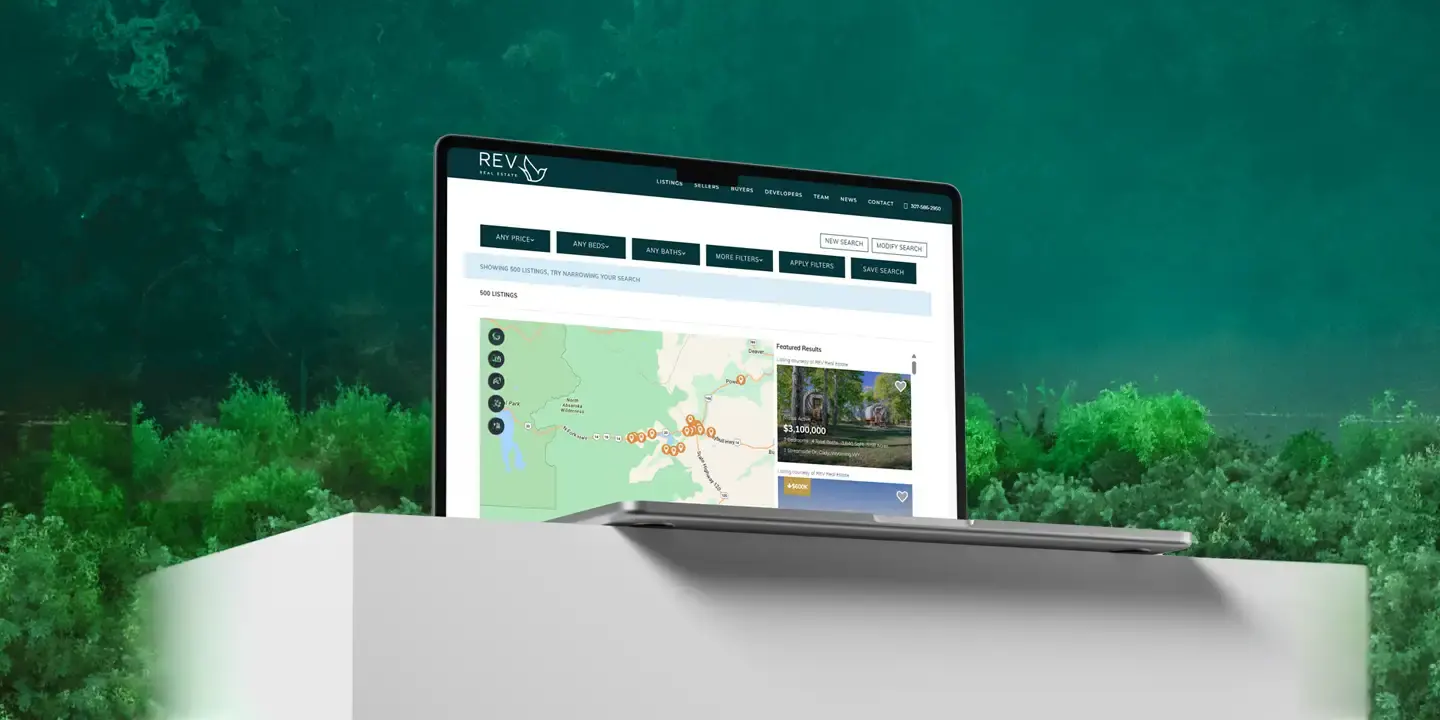
How We Gave an IDX Broker Listings Page a Fully Custom Look
A behind-the-scenes look at how we customized an IDX Broker listings page for…

Why Do Some Small Businesses Dominate Google While Others Never Get Found?
Two businesses can offer similar services and see completely different results…

Finishing Our IDX Broker Customization: Solving the Property Popup
A behind-the-scenes look at what it really took to redesign the IDX Broker…

When Information Becomes Cheap, Trust Becomes Valuable
AI has made information cheap. That changes what people trust. When anyone can…

When ChatGPT Lies About Its Own Work
ChatGPT told me it had preserved every link in a website content project. It…
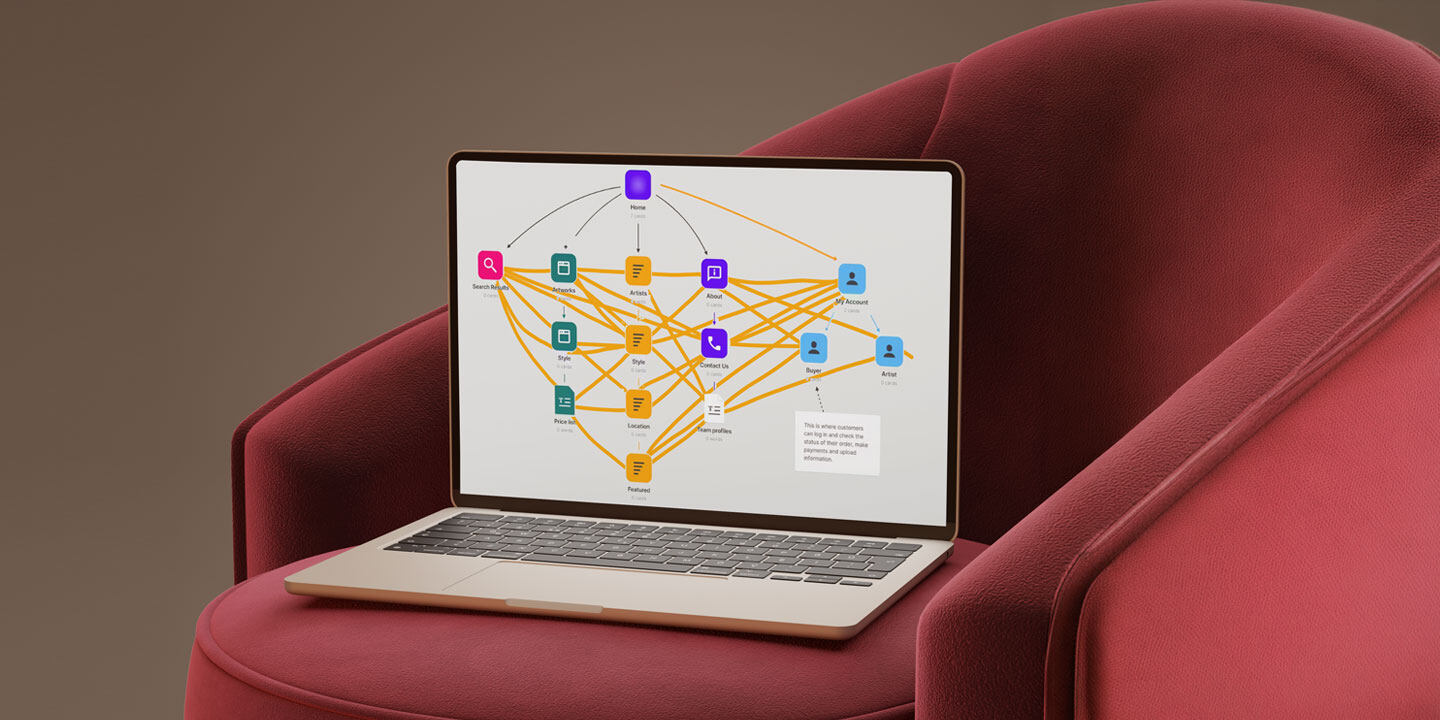
Internal Linking: The Most Overlooked SEO Lever
Internal linking is one of the most overlooked parts of SEO. A clear linking…