
How I Used ChatGPT to Create Website Content From Almost Nothing — Part 2
By Sarah Lennon – 7 minute read
In the first part of this series, What Actually Happens When I Build a Website With ChatGPT?, I looked at the reality of using AI as part of an actual web design project. Not asking ChatGPT to magically produce a finished website, but using it throughout the process as a working tool: helping organize information, develop ideas, solve problems, write content and move a project forward. Our recent website for Stark Construction was different. ChatGPT had one primary job: help me create the textual backbone of a complete website from very little source material.
Stark gave us two small promotional flyers, a list of construction projects they had completed, a logo and six excellent professional photographs. From that project list, we could identify the markets the company had experience in and begin to understand the real scope of the business. Visually, all six photographs were of the same project: Provision Bar in Denver. That was our starting point. Yet the finished website still needed to represent Stark for what it actually is: an established, capable construction company with experience across civil infrastructure, industrial, hospitality and residential work.
Creating Content From Almost Nothing
The first challenge was the words. There wasn’t enough existing copy to simply edit and reorganize, so we needed to extract what the source material actually told us and build from there. This is where ChatGPT became particularly useful. Rather than asking it to invent a construction company, I could give it the facts we had and use those to develop the missing connective tissue: service descriptions, market copy, project introductions, headlines and supporting text.
AI can generate endless plausible-sounding copy. The useful part is making sure that copy remains anchored to reality. Through repeated back and forth, we could develop new content without inventing capabilities, experience or claims Stark couldn’t substantiate. And that process became much more of a dance than simply asking a machine to compute an answer: ChatGPT would give me something, I would reshape it, steer it somewhere else, put it back in and see if I liked where we landed next. What started as fragments gradually became a coherent structure and voice for the company. We identified what mattered, stripped away what didn’t, and built direct, confident content around Stark’s actual experience.
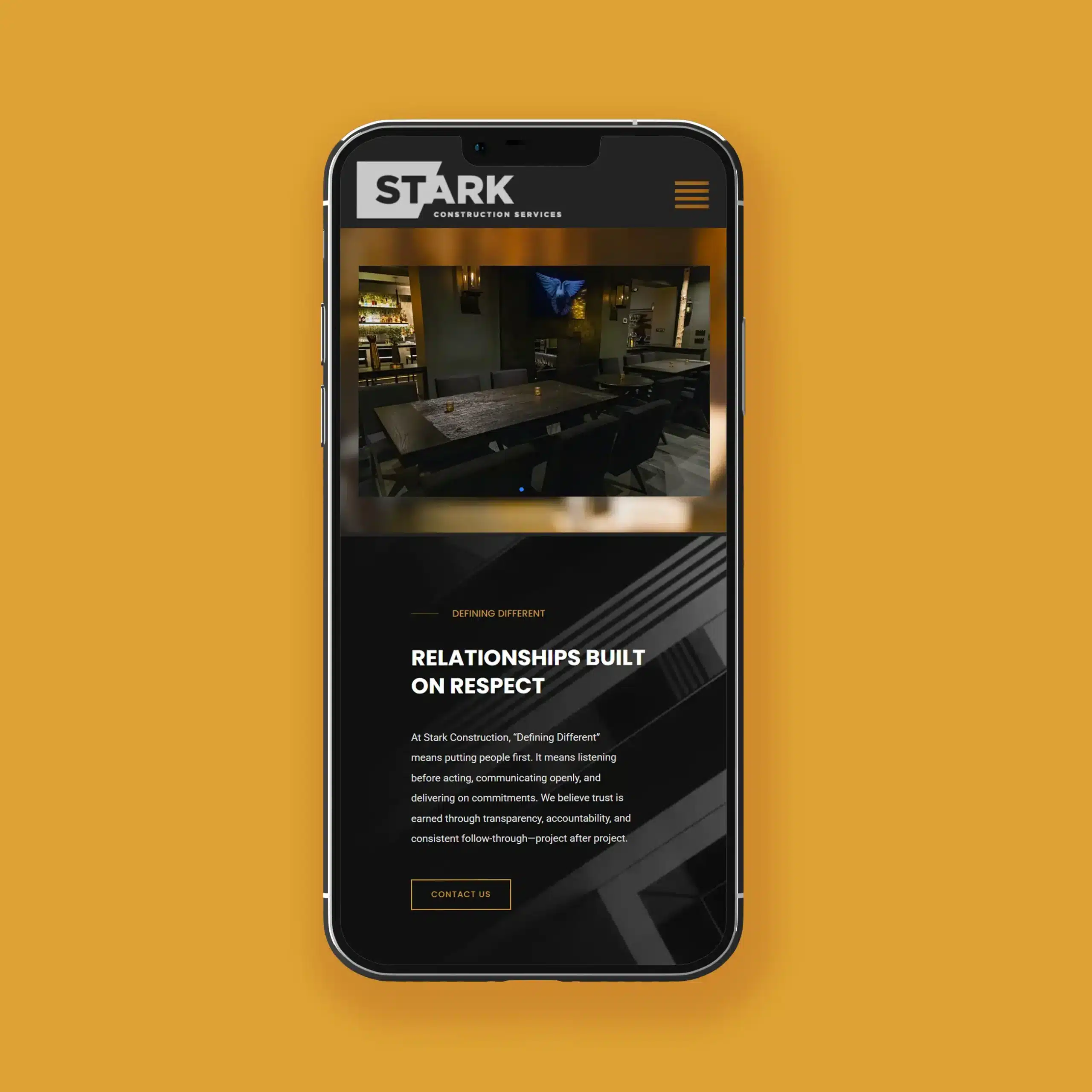
Building a Visual World Around Six Photographs
The six Provision Bar photographs gave us one genuine Stark project to showcase, but they couldn’t visually represent the full scope of the company. I sourced the additional imagery from Envato to represent the markets we’d identified, gloriously going on intuition as there were no other parameters. I then edited and treated the images in Photoshop for consistency. Everything was optimized for size and speed and properly named, tagged and categorized for the website and SEO. The Provision Bar photography remained the real project showcase. The additional imagery gave me the visual range I needed to build the rest of the site around it.
The Logo Gave Me the Website
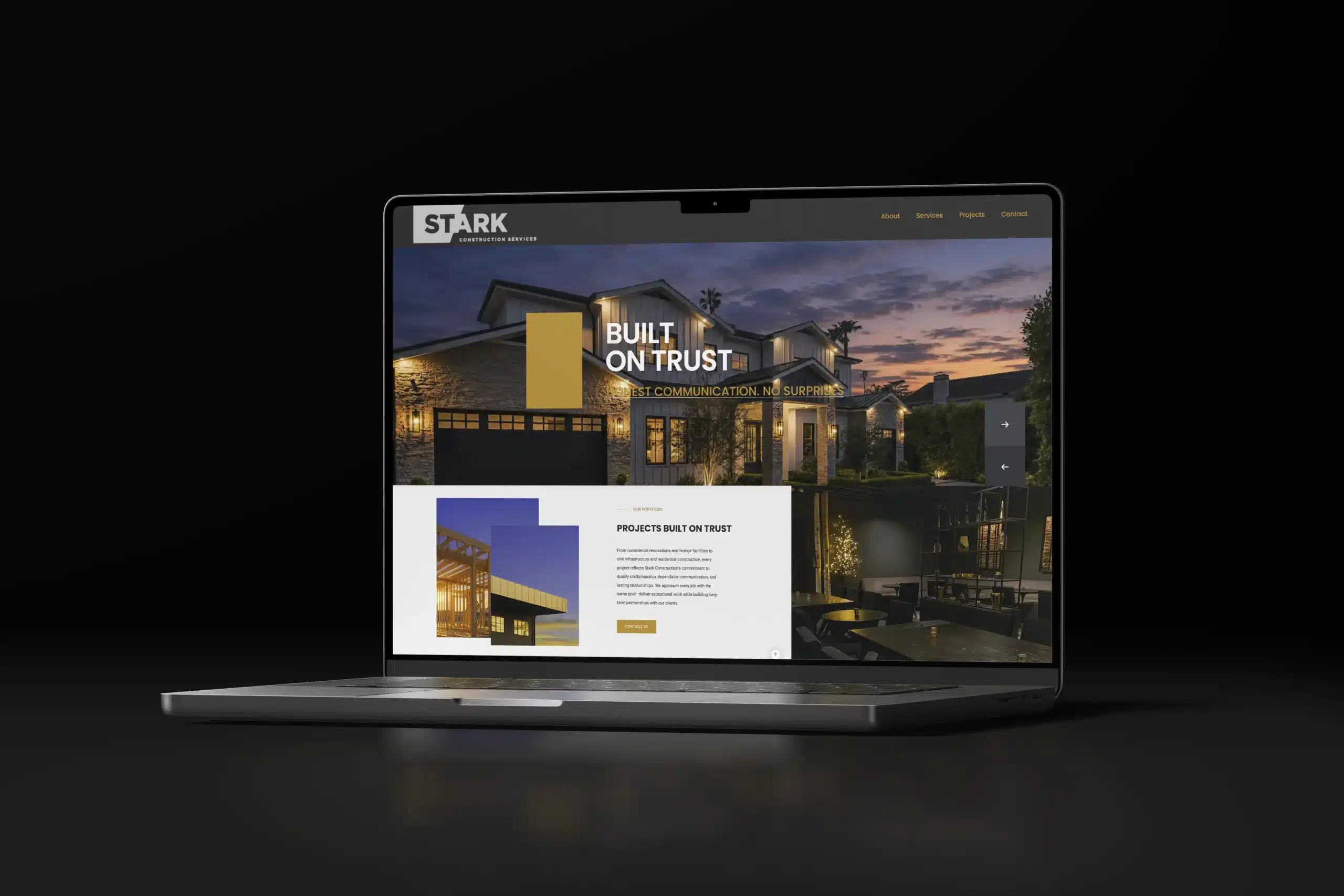
Stylistically, I did have one very useful piece of direction. Stark liked the website we’d previously created for Vertix Builders. That gave me a starting point: bold typography, strong architectural imagery, confident use of space and a design that felt substantial without becoming overly corporate. Beyond that, I essentially had free rein. And the Stark logo gave me the next clue. It was simple, strong and direct. It already had the slightly industrial, masculine character that felt right for the company without needing to manufacture some elaborate visual identity around it. Rather than decorating the website, I wanted the site to behave like the logo.
That really came to life in the homepage header. Using Slider Revolution, I started working with movement based on the geometry and character of the Stark mark itself. The logo, typography, imagery and motion came together to establish the personality of the company within the first few seconds.That visual direction carried through the rest of the site: strong transitions, large imagery, restrained colors, direct typography and enough movement to give the site energy without turning a construction company website into a special-effects demonstration.
And this part of the project was simply a joy to work on. With very little prescribed beyond the existing Stark identity and the Vertix reference, I could follow the direction the design was taking. I chose imagery largely by instinct, developed the animation around the logo and let the visual language build naturally from there. That freedom resulted in a website I love, and more importantly, one Stark loves too.
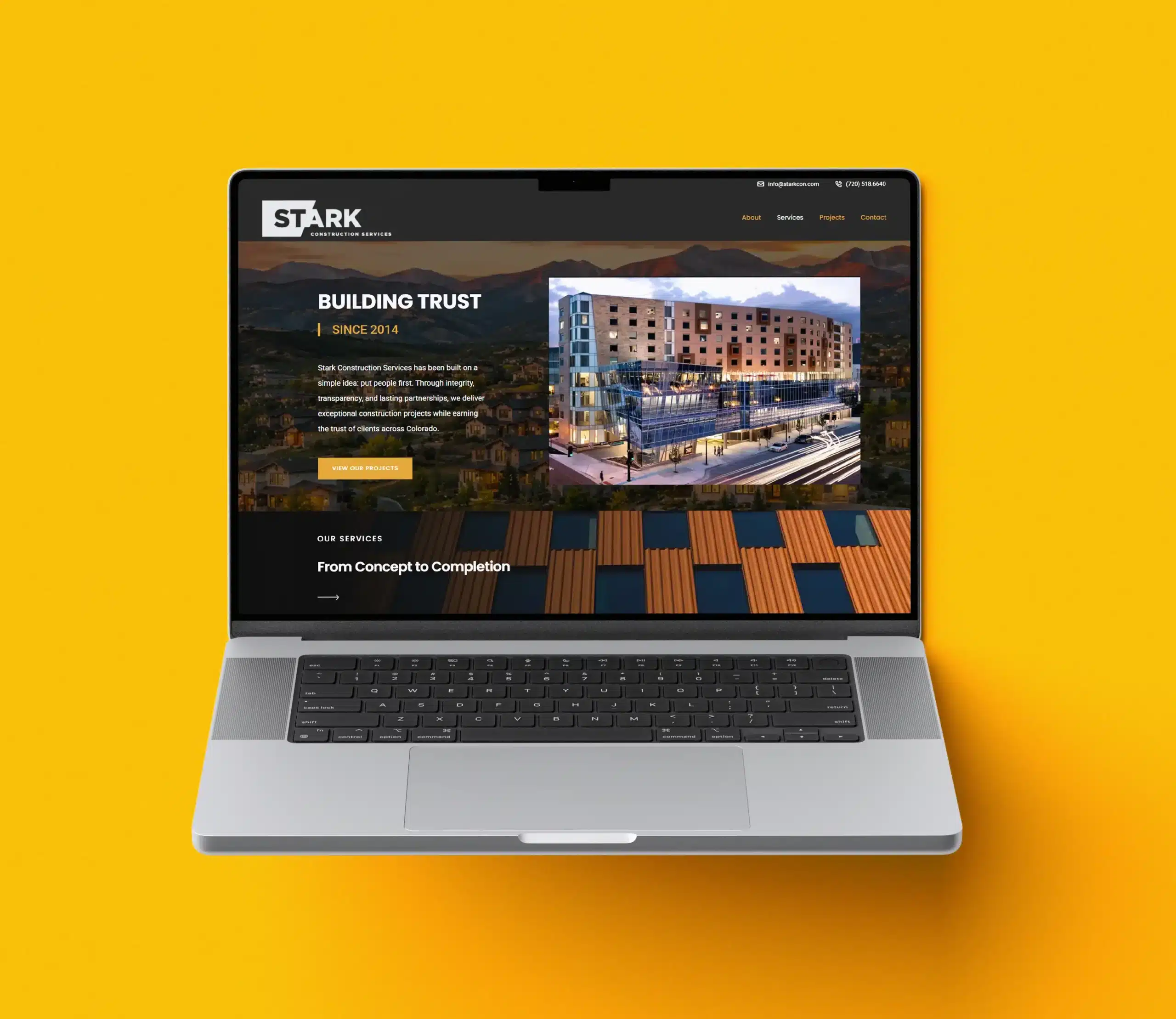
Turning a Small Amount of Information Into Something Substantial
What ChatGPT did exceptionally well was remove a huge amount of friction between having an idea and being able to explore it. It was less issuing instructions to a machine and more like an ongoing creative exchange, with every round getting us closer to where I wanted to go. As each version gave me something new to react to, and my response helped shape the next. That back and forth is the important part. ChatGPT did what I hoped it would because the intent was clear and we kept refining the result until the content properly represented Stark.
Those words then became the backbone I could design around. Once that was in place, the rest of the site had somewhere to go. The result is a site that feels complete, confident and distinctly Stark — built from solid information, a lot of creative freedom, and a very productive six hours dancing with robots.
Related Reading
This article reflects the thinking behind how we approach websites, artificial intelligence, search and long-term digital strategy at Big Orange Planet. If you found it useful, you might also enjoy other articles by Sarah Lennon:
Over the coming months, The Big Orange Planet Journal will continue exploring search, branding, website architecture, local SEO, artificial intelligence and the ideas shaping how businesses are discovered — and trusted — online. If you’d like to follow along, you can sign up below for new articles and ideas as we publish them. If you’d like to discuss your website, SEO strategy or digital marketing goals, visit our Contact Us page or explore our Denver web design and SEO services.

About Sarah Lennon
Sarah Lennon is co-owner and lead designer at Big Orange Planet, a Denver web design and SEO company. For more than 20 years, she has worked across web design, interactive experiences and digital strategy, exploring how design and functionality work together — from ecommerce and property search systems to interactive tools, animation and immersive brand experiences. She now works daily with AI as part of the real-world creative and development process. She writes from that hands-on experience, exploring where AI genuinely improves creative and technical work, where it falls short, and what happens when you actually put these tools to work on live projects.
Get the Good Stuff
No fluff. Just practical web design ideas, SEO insight, behind-the-scenes projects, & solutions we've tested in the real world.
Never Miss a Good Idea
More Big Orange Knowledge
AI-Powered Ecommerce: Practical Strategies for More Traffic and Sales
Discover how AI is revolutionizing web design — from smart automation and…
I Stopped Prompting AI. I Started Working With It
After working with ChatGPT for a long time, I stopped thinking about AI as…
Internal Linking: The Most Overlooked SEO Lever
Internal linking is one of the most overlooked parts of SEO. A clear linking…

When ChatGPT Lies About Its Own Work
ChatGPT told me it had preserved every link in a website content project. It…

What Business Owners Think SEO Is vs What SEO Actually Is
Many business owners know they need SEO but have a very different idea of what…
Why Smart People Still Make Bad Decisions
Good decisions aren’t always about having more information. Smart, experienced…