
Why Most Website Projects Fail Before Anyone Writes Code
Most website projects don’t fail because somebody wrote bad code. They fail because nobody decided what the website was supposed to accomplish before the code was written. That distinction matters. When a website project goes badly, the blame usually lands somewhere near the end of the process. The developer missed something. The designer didn’t understand the vision. The agency took too long. The platform wasn’t flexible enough. The client changed their mind too many times. The new website launched and somehow performed worse than the old one.
Sometimes those things are true. But after building websites for businesses for a long time, I’ve found that many of the problems that eventually become expensive development problems were actually created much earlier. They were sitting quietly in the project from the beginning, usually disguised as small decisions that didn’t seem particularly important at the time. The sitemap wasn’t really settled. Nobody had agreed on the audience. The business couldn’t explain what made it different from its competitors. The owner wanted the website to “look more professional,” but nobody had defined what that meant. Marketing wanted more leads. Sales wanted better-qualified leads. The owner wanted the company to look bigger. Someone else wanted to copy a competitor’s homepage.
The content hadn’t been written. The services hadn’t been prioritized. And somewhere in the middle of all of this, somebody said, “Let’s get the design started.” That’s when the clock starts ticking on a project that may already be headed in the wrong direction. A website is often treated as a design and development project. It isn’t. At least, it isn’t a successful one. A good website project is a business planning project that eventually becomes a design project and then a development project. The order matters.
The Website Is Usually Not the Problem
When a business owner says, “We need a new website,” there is usually a legitimate reason behind it. The existing website may be old. It may be difficult to update. It may not work well on phones. It may have been built by someone who disappeared three years ago. It may not generate enough enquiries. It may not represent the company anymore. Those are all good reasons to consider a new website. But “we need a new website” isn’t actually the problem. It’s the proposed solution.
The real problem might be that prospective customers don’t understand what the company does. It might be that the business has grown but the website still presents it like a five-person company. It might be that people are finding the site through Google but leaving without contacting anyone. It might be that the sales team spends half its day answering questions that should have been answered on the website. Or perhaps the company simply looks less credible online than it does in the real world. Those are very different problems, and they lead to very different websites. This is why the first conversations about a website should have very little to do with fonts, colors, animations, sliders or whether the homepage should have three columns or four. Those things come later. First you have to figure out what the website needs to do.
Start With the Business, Not the Homepage
The homepage gets an enormous amount of attention during website projects. Understandably. It’s the page everyone sees first, the page people want to show their employees, the page the owner usually has the strongest opinion about. But the homepage isn’t the business. A website exists to support the business behind it. If you’re a construction company trying to attract commercial clients, the website needs to establish a different kind of credibility than the website of a local restaurant. A medical practice needs to answer different questions than a software company. A professional services firm may need to demonstrate expertise before a visitor is willing to make contact.
The website has to reflect those realities. That means the project should begin with questions such as: Who are we trying to reach? What are they looking for? What do they need to believe before they contact us? What services matter most to the business? Which services are the most profitable? What questions do prospects ask repeatedly? What makes us different? What action do we want a qualified visitor to take? Those questions aren’t particularly glamorous. They’re also far more important than choosing a homepage animation. A website becomes much easier to design once those answers are understood. That’s the basic philosophy behind our Denver web design approach: the design is only one part of a larger business and communication problem.
“Make It Look More Professional” Isn’t a Strategy
I’ve heard some version of this many times. “We just need it to look more professional.” I understand exactly what people mean when they say it. They aren’t really asking for a particular shade of blue or a different font. They’re saying that the website no longer reflects how they want their company to be perceived. That’s useful information. But it isn’t enough to design from. Professional to whom?
A law firm, a technology company, a landscaping company and a manufacturer can all look professional while having completely different visual identities. This is where branding becomes important. The website doesn’t exist independently of the company. Its visual language, tone, photography, typography, messaging and structure should reinforce the position the business is trying to occupy. A company selling premium services shouldn’t necessarily look like the cheapest option in its market. A company competing on technical expertise shouldn’t bury its expertise under generic marketing language. A business that depends on trust shouldn’t make visitors work to figure out who is actually behind the website. Good web design makes those decisions visible.
The People in the Room Can Break a Website
One of the hardest parts of a website project often has nothing to do with technology. It’s getting everyone to agree. The owner wants the website to emphasize one thing. Marketing wants another. Sales wants another. The office manager thinks the phone number should be bigger. Somebody’s brother has an opinion about the navigation. An employee sends over a competitor’s website and says, “I like what they’re doing.” Pretty soon the project has twelve people making decisions.
This sounds collaborative. It often isn’t. When everyone has equal authority but nobody has clear responsibility, the website becomes a collection of compromises. The headline gets watered down because someone doesn’t like it. The navigation grows because every department wants its own section. The homepage becomes crowded because nobody wants to remove anything. The call to action gets softened because it feels “too salesy.” Eventually the website says a little bit about everything and communicates almost nothing particularly well.
Successful projects need a decision-making structure. Not everybody needs to be excluded. Quite the opposite. The people who understand the business, customers, sales process and operations should absolutely contribute. But somebody has to own the final decision. Otherwise the project doesn’t have direction. It has voting. And websites designed by committee usually look exactly like that.
Content Is Not Filler
This is one of the biggest mistakes I see in website projects. Design starts before the content is ready. A few temporary headlines are dropped into the layouts. Placeholder paragraphs are inserted. Stock photographs are added. The designer creates a beautiful page. Then the real content arrives. And suddenly the headline is three lines longer. The paragraph is twice the length. There are six services instead of three. The client wants an FAQ section. The page needs a testimonial. The image doesn’t make sense anymore. The navigation needs another level. Now the design has to be rebuilt around information that should have been understood before the design began.
Content isn’t something you pour into a finished website like water into a glass. Content determines the shape of the glass. The words tell us what needs to be emphasized. The services determine the structure. The questions customers ask become useful page sections. The differences between products or services determine navigation. The language customers actually use can inform search strategy. This is one reason I don’t separate web design from SEO as cleanly as some agencies do. The two are connected from the beginning, particularly when a website is being built around a larger SEO strategy. Search engines need to understand what a website is about. People need to understand what a business does. Those aren’t competing objectives. Done correctly, they’re usually working toward the same thing.
The Sitemap Is More Important Than Most People Think
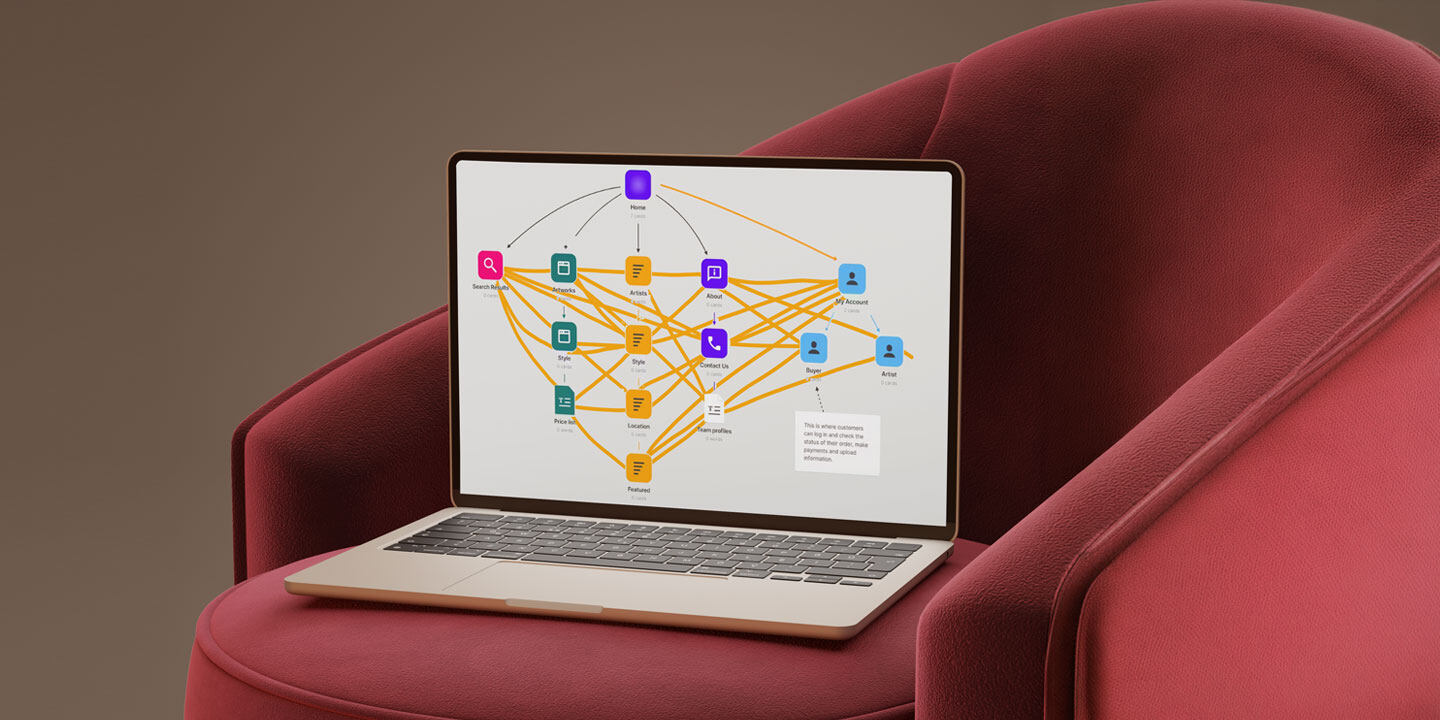
A sitemap doesn’t sound particularly exciting. It may be one of the most important pieces of a website project. The sitemap is where you decide what information exists and how that information is organized. Home. About. Services. Individual service pages. Industries. Locations. Resources. Blog. Contact.
That sounds simple until you start asking the important questions. Which services deserve their own pages? Should related services be grouped together? Should locations have dedicated pages? What belongs in the main navigation? What belongs deeper in the site? What should a visitor be able to reach in one or two clicks? What should Google be able to understand from the structure? These decisions have consequences.
A poorly structured website can be difficult for both people and search engines to understand. A well-structured site creates a logical path through the business. I’ve written more about this in Site Structure and SEO Performance, because structure is one of those things that tends to receive far less attention than it deserves. The sitemap is effectively the skeleton of the website. If the skeleton is wrong, making the skin prettier doesn’t solve the problem.
Scope Creep Is Usually a Symptom
Every website project changes. That’s normal. A client learns something during the process. A new opportunity appears. A feature turns out to be more complicated than expected. Someone realizes that a useful piece of functionality wasn’t included in the original plan.
The problem isn’t change. The problem is uncontrolled change. A website begins as a relatively straightforward project and gradually accumulates features. “We should probably have a blog.” “We need a careers section.” “Can customers log in?” “Could we add online scheduling?” “What about a resource library?” “Can it connect to our CRM?” “Can we sell these products online?” None of those are unreasonable requests. But each one changes the project. Some change it substantially. This is why good planning doesn’t mean pretending nothing will change. It means creating enough structure that everyone understands what a change actually means. If something important needs to be added, add it. Just don’t pretend it didn’t change the project.
The Cheapest Website Can Become the Most Expensive
Price is one of the first things businesses compare when they start looking for a web designer. That’s understandable. But website cost isn’t just the amount on the proposal. There is also the cost of delay. The cost of lost enquiries. The cost of rebuilding. The cost of maintaining a platform that doesn’t fit the business. The cost of poor search visibility. The cost of employees wasting time answering questions the website should answer. The cost of having a website that makes a company look smaller, less established or less credible than it actually is.
A $3,000 website that needs to be replaced in eighteen months isn’t necessarily cheaper than a $10,000 website that works effectively for years. Likewise, an expensive website isn’t automatically a good investment. The question isn’t simply, “What does the website cost?” The better question is, “What is the website supposed to produce?” That’s a much more useful way to evaluate the investment.
Technology Is Not Strategy
This has become even more important with AI. We now have tools that can generate layouts, write copy, produce images, create code and assemble remarkably functional websites in a fraction of the time it used to take. That’s impressive. It’s also easy to misunderstand what has actually changed. The ability to produce a website faster doesn’t necessarily make it a better website. If anything, faster production makes strategy more important. When creating something is difficult, people naturally spend more time deciding what should be created. When creating something becomes easy, there’s a temptation to create everything. AI can generate ten homepage concepts in minutes. That doesn’t mean any of them are the right homepage. It can write service pages. That doesn’t mean it understands which services matter most to your customers. It can generate code. That doesn’t mean it understands how your website should fit into your business.
I’ve written about this before in Can AI Build My Website? Yes. But That’s Still the Wrong Question. The technology is becoming extraordinarily capable. But capability and judgment are not the same thing. The easier websites become to produce, the more important it becomes to know what is worth producing in the first place.
SEO Starts Before the Website Launches
SEO is often treated as something that happens after the website is finished. Build the website. Launch it. Then “do SEO.” That approach can work, but it leaves opportunities on the table. Search visibility is affected by the architecture of the website, the way pages are organized, the language used on those pages, internal links, URLs, technical performance and the relationship between different pieces of content.
A website shouldn’t be designed for Google instead of people. It should be designed so that both can understand it. That means SEO belongs in the planning conversation. If a business wants to be found for several important services, those services need appropriate pages. If local visibility matters, location and business information need to be handled intelligently. If a company wants to establish authority around a subject, the content architecture needs to support that goal. SEO is not a bucket of keywords that gets poured onto a completed website. It’s part of how the website is organized. That relationship between structure and search visibility is one of the reasons Denver SEO and web development shouldn’t be treated as completely separate disciplines.
Every Website Needs a Job Description
Here’s a question worth asking before building any website: What should this website do while you’re busy doing everything else? A good website works when nobody is sitting in front of it. It explains the business at midnight. It answers questions on weekends. It establishes credibility before the first sales conversation. It helps a prospect decide whether the company is a fit. It can generate an enquiry while everyone in the office is asleep. It can introduce a service to somebody who didn’t know the company offered it. It can bring a prospect from Google who has never heard of the business. That’s a pretty significant employee. And unlike an employee, the website doesn’t take a lunch break.
Thinking about the website this way changes the project. Instead of asking, “What should the homepage look like?” you start asking, “What work should the homepage do?” Instead of “How many pages should we have?” you ask, “What information does a customer need before they’re ready to contact us?” Instead of “Can we add this feature?” you ask, “What business problem does this feature solve?” Those are much better questions.
A Website Is a System, Not a Stack of Pages
The finished website might look like a collection of individual pages. It isn’t. The pages are connected. The navigation connects them. Internal links connect them. Content connects them. Calls to action connect them. Branding connects them. Search connects them to people who haven’t found the business before. Analytics connects the website to what actually happens after launch.
A strong website is a system in which those pieces reinforce one another. This is also why changing one part of a website can have unexpected consequences elsewhere. Add a service and the navigation may change. Change the navigation and the user journey changes. Change the page structure and internal linking may need to change. Rewrite the messaging and the design hierarchy may need to change. Change the business strategy and the website may need to change with it. That isn’t a flaw. It’s simply what happens when a website is treated as part of a living business instead of a static brochure.
The Launch Is the Beginning
There’s a strange moment at the end of a website project when everyone looks at the finished site and says, “We’re done.” Technically, the website is live. But that’s when the interesting information starts arriving. Now real people are using it. Now Google is crawling it. Now analytics can show where visitors enter and leave. Now you can see which pages attract attention. Now customers can tell you which questions remain unanswered.
Now you can discover that the service you thought would receive the most attention isn’t getting much traffic while another page unexpectedly becomes one of the most visited pages on the site. A website should respond to that information. That’s why I don’t think of launch as the finish line. Launch is the point at which the website finally gets to meet the people it was built for. The best websites evolve. The business changes. The market changes. Search changes. Customer expectations change. Technology changes. Google changes. AI is changing how people discover information. A website that never changes eventually becomes a historical document.
The Best Projects Are Boring in the Right Places
There’s another lesson I’ve learned over the years. The best website projects aren’t necessarily the ones with the most dramatic meetings or the most complicated technology. They’re often surprisingly boring. The business knows what it wants to accomplish. The decision maker is identified. The sitemap makes sense. The content is planned. The scope is understood. The technology fits the requirements. The design has a reason behind it. Everyone knows what happens next. That’s not particularly exciting. It’s also how projects get finished. The exciting part comes later, when the website is actually working. When a prospect finds the company through search. When somebody fills out the contact form. When a sales conversation starts with, “I looked through your website and I think you might be exactly what we’re looking for.” That’s the payoff.
So What Actually Makes a Website Project Work?
There isn’t a magic platform or development framework that guarantees success. There isn’t a particular homepage layout. There isn’t a secret design trend. Successful website projects tend to have something much more fundamental in common: the people involved understand what they’re building and why.
They know who the website is for. They know what the business needs from it. They understand what information visitors need. They have a realistic idea of scope. They make decisions. They treat content as part of the project rather than something to be filled in later. They consider SEO from the beginning. They choose technology based on requirements rather than fashion. And they understand that the website will continue to evolve after launch. Once those things are clear, development becomes much easier. That’s the irony. The more thought you put into the project before development begins, the less mysterious development becomes.
Final Thoughts
It’s tempting to think that building a website is primarily about making something. Make the pages. Make the design. Make the code. Make it responsive. Make it fast. Make it live. But the hardest part isn’t making the website. It’s deciding what the website should be. That’s where most of the important work happens. Before the first design is approved, before the first page is coded, before anybody argues about the size of the logo, there should already be a clear understanding of the business, the audience, the message, the structure and the job the website is expected to perform. Get those things right and the technology becomes much easier. Get them wrong and even a beautifully designed, technically impressive website can become an expensive way to solve the wrong problem.
That is why I don’t believe the best website projects start with design. They start with questions. What are we trying to accomplish? Who are we trying to reach? What do those people need to know? Why should they trust us? What do we want them to do? What does the business need the website to accomplish that it can’t accomplish today? Those questions don’t look like web development. They are, however, the foundation of it. The code comes later. The decisions come first.
This article was written by Ally Lennon, Big Orange Planet’s SEO legend—call him directly! Phone: 720-272-0770.
Related Reading
This article reflects the thinking behind how we approach websites, artificial intelligence, search and long-term digital strategy at Big Orange Planet. If you found it useful, you might also enjoy:
- How Much Does a Professional Website Actually Cost?
- The Complete Website Launch Checklist: SEO, Security, Performance, Analytics & More
- Do I Need SEO Before, During, or After My Website Is Built?
- What Should Every Small Business Website Include?
Over the coming months, The Big Orange Planet Journal will continue exploring search, branding, website architecture, local SEO, artificial intelligence and the ideas shaping how businesses are discovered — and trusted — online. If you’d like to follow along, you can sign up below for new articles and ideas as we publish them. If you’d like to discuss your website, SEO strategy or digital marketing goals, visit our Contact Us page or explore our Denver web design and SEO services.

About Ally Lennon
Ally Lennon is the founder of Big Orange Planet, a Denver web design and SEO company. He builds websites, fixes the ones that aren't working, and has spent more than two decades developing SEO strategies that get businesses found online. He also spends an unreasonable amount of time figuring out what Google, AI and the rest of the internet are going to do next.
Get the Good Stuff
No fluff. Just practical web design ideas, SEO insight, behind-the-scenes projects, & solutions we've tested in the real world.
Never Miss a Good Idea
More Big Orange Knowledge
Internal Linking: The Most Overlooked SEO Lever
Internal linking is one of the most overlooked parts of SEO. A clear linking…

Web Design That Performs: How to Build Sites That Look Great and Actually Convert
Because there are so many providers that offer access to the hosting plans, you…

How Small Design Details Make Brand Experiences More Memorable
Discover how AI is revolutionizing web design — from smart automation and…

Why Your Website Looks Good but Still Doesn’t Work
A website can be beautifully designed, technically sound and completely wrong…

Why Getting Your Business Mentioned By AI Is Harder Than You Think:
Getting your business mentioned by AI is harder than simply publishing more…

Small Business Web Design in Denver: What Actually Works (2026 Guide)
Google search results are shifting across industries, keyword clusters, and…