
The $200 Logo Job That Wanted a Full Legal Department
The Big Orange Planet Journal — BOP-006
By Ally Lennon – 17 minute read
When a $200 Logo Project Starts Looking Like a Federal Contract
I get a fair number of emails looking for web design, SEO, branding, logo work and other creative services. Most are easy enough to identify within a few seconds. Some are badly written, some are obviously automated, some make wildly unrealistic requests, and some simply go straight into the trash because there is no reason to spend time figuring out what the sender is actually doing. Then there are the ones that are interesting enough to make me stop for a minute. I received one recently that did exactly that. It was supposedly a request for a very small logo and business card project, with a total budget of $200. That sounds simple enough. Then I read the rest of the email.
The sender explained that they were looking for a graphic design company to finalize an existing logo concept. They wanted the final logo, business card design, standard file formats and editable source files, including Adobe Illustrator files. They were also open to new logo proposals. Again, perfectly ordinary. Then came the requirements. Before they would even share the logo concept, they wanted an NDA. They wanted to know whether the design company had a legally registered business entity in the United States capable of entering into a contract with their LLC. They wanted specific examples of luxury or premium branding work, preferably three to five of them, and specifically requested that nobody simply send a general portfolio link.
And then the paperwork really got going. If the project moved forward, the designer would apparently be expected to sign a formal contract, along with something called a Contributor Joinder and a Source Materials & Human Authorship Certificate. At that point I stopped wondering what the logo looked like and started wondering whether I had accidentally wandered into a federal procurement process. Somewhere in the world, apparently, there is a $200 logo project that requires enough administrative architecture to make a Fortune 500 company nervous. I can already picture the organizational chart: somewhere there is a procurement manager waiting for my certificate of incorporation before allowing the creative director to show me a JPEG.
There is nothing inherently strange about an NDA. There is nothing strange about confirming who you are contracting with. There is nothing particularly strange about requesting editable source files or wanting to see relevant design examples. Businesses use contracts and confidentiality agreements every day, and sometimes very small projects genuinely have unusual requirements. But context matters. A $200 design project wearing a $20,000 procurement costume is a different thing entirely. The individual requirements are not necessarily remarkable by themselves; it is the sheer mismatch between the economic value of the work and the machinery surrounding it that makes the whole proposition so strange.

That distinction matters because professionalism is not the same thing as professional-sounding language. A legitimate business can have an elaborate process. A legitimate business can have lawyers. A legitimate business can require documentation. But documents do not create legitimacy by themselves, and increasingly, neither does polished communication. We are living in an environment where generating convincing business language is almost effortless. An email can sound organized, precise and corporate without giving you much useful evidence about the person or organization behind it. That is a bigger issue than this particular logo request.
This is one of the reasons I have become increasingly interested in the difference between information and evidence. I wrote about that more directly in Information Is Everywhere. Evidence Is Becoming Rare. We have more information than ever, but information is cheap. A beautifully formatted email is information. A sophisticated-looking website is information. A logo, an LLC reference, a legal document or an impressive signature block is information. None of those things automatically constitute evidence of the underlying reality they are presenting.
And that is also where AI makes this whole environment considerably more interesting. AI is exceptionally good at producing the surface appearance of competence. It can create polished emails, elaborate explanations, corporate terminology and convincing procedural language in seconds. I have written about that phenomenon before in AI Became a Shiny Marketing Object All of a Sudden, and the issue here isn’t really whether AI wrote this particular email. I don’t know that. The larger point is that the cost of manufacturing professional-looking communication has collapsed. When the surface becomes cheap to manufacture, you have to pay more attention to what is underneath it.

The Problem Isn’t Necessarily the Email. It’s the Proportion.
I don’t know what happens if somebody responds to this particular inquiry. Maybe the sender eventually explains everything and there is a perfectly ordinary business behind it. Maybe there is a real company, a real logo and a real $200 budget. Maybe somebody has simply built the most elaborate procurement process in human history for a very inexpensive piece of graphic design. I’m not going to manufacture certainty where I don’t have it. But I don’t need to know the sender’s ultimate intention to recognize that the proposition itself is absurdly disproportionate.
And that is actually the part I find more interesting than whether the email is legitimate. Proportion is useful information. A $200 project should generally have a process appropriate to a $200 project. If someone wants to hire a designer to clean up a logo and create a business card, the normal conversation is pretty straightforward: What do you have? What do you want changed? What does it need to look like? What files do you need? What is the deadline? What is the budget? When the administrative requirements suddenly become dramatically more elaborate than the economic value of the work, that mismatch tells you something. It doesn’t necessarily tell you exactly what is happening, but it tells you that something about the proposition deserves scrutiny.
That is increasingly how I think about strange business inquiries. I’m less interested in deciding immediately whether something is a scam and more interested in noticing when the pieces don’t fit together. The internet is full of manufactured signals. A company can look established because it has a beautiful website. An inquiry can look legitimate because it uses formal language. A person can sound authoritative because the email contains the right terminology. A business can appear sophisticated because someone has spent an afternoon generating an impressive collection of PDFs. Meanwhile, the actual underlying business relationship may be considerably less substantial than the presentation suggests.
That is why a designer should be paying attention to the whole shape of an inquiry, not just the individual requests. The request for Illustrator files isn’t weird. The NDA isn’t weird. The request for portfolio examples isn’t weird. The contract isn’t weird. Even an authorship certificate isn’t necessarily weird in isolation. Put them all together around a $200 logo project and suddenly the picture changes. It becomes a $200 design project wearing a legal department as a costume, and at some point the costume itself becomes the most interesting part of the story.
There is an irony here for a company like Big Orange Planet, because a large part of what we do is help businesses present themselves credibly online. We design websites, develop brands and create the visual and written signals that tell prospective customers who a company is and why it should be trusted. That’s useful, but it also means I’ve spent a lot of time watching the machinery of credibility being assembled. A polished presentation can help a real business communicate what is already true. It cannot, by itself, make the underlying business true.
Maybe that is the lesson hiding inside this ridiculous little email. The internet is getting very good at producing things that look legitimate. AI is accelerating that process. Templates are accelerating it. Automation is accelerating it. Corporate language is accelerating it. And the more convincing the surface becomes, the more valuable proportion, context and actual evidence become underneath it. I was expecting to send an Illustrator file. Apparently I was expected to join an international treaty. For a $200 logo.
I’m sure there is a perfectly reasonable explanation somewhere. There usually is, at least theoretically. But there is also a point where you stop asking whether every individual piece is technically possible and start looking at the whole picture. When a tiny creative project arrives wrapped in luxury-brand credentials, corporate verification, an NDA, a formal contract, multiple legal documents and a human-authorship certificate, the paperwork has become the story. And sometimes the most useful thing you can learn from an email is not what the sender says about themselves, but how badly the pieces fit together.
That may be one of the more important skills in the increasingly synthetic internet: learning to notice when something has a lot of information but very little evidence. And occasionally, when the mismatch is spectacular enough, it is also pretty funny.
“`
Related Reading
This article reflects the thinking behind how we approach websites, artificial intelligence, search and long-term digital strategy at Big Orange Planet. If you found it useful, you might also enjoy:
- Why Getting Your Business Mentioned By AI Is Harder Than You Think
- Why Doesn’t AI Recommend My Business?
- What Business Owners Think SEO Is vs What SEO Actually Is
- What Actually Happens When I Build a Website with ChatGPT
- The Businesses AI Recommends All Have One Thing in Common
Over the coming months, The Big Orange Planet Journal will continue exploring search, branding, website architecture, local SEO, artificial intelligence and the ideas shaping how businesses are discovered — and trusted — online. If you’d like to follow along, you can sign up below for new articles and ideas as we publish them. If you’d like to discuss your website, SEO strategy or digital marketing goals, visit our Contact Us page or explore our Denver web design and SEO services.
Get the Good Stuff
No fluff. Just practical web design ideas, SEO insight, behind-the-scenes projects, & solutions we've tested in the real world.
Never Miss a Good Idea
More Big Orange Knowledge

Why Businesses Think GEO Is Easier Than It Actually Is
Many businesses see GEO as a shortcut to being recommended by AI. In reality,…
Google Business Profile Optimization for Denver Companies
A strong Google Business Profile can make a major difference in local search.…
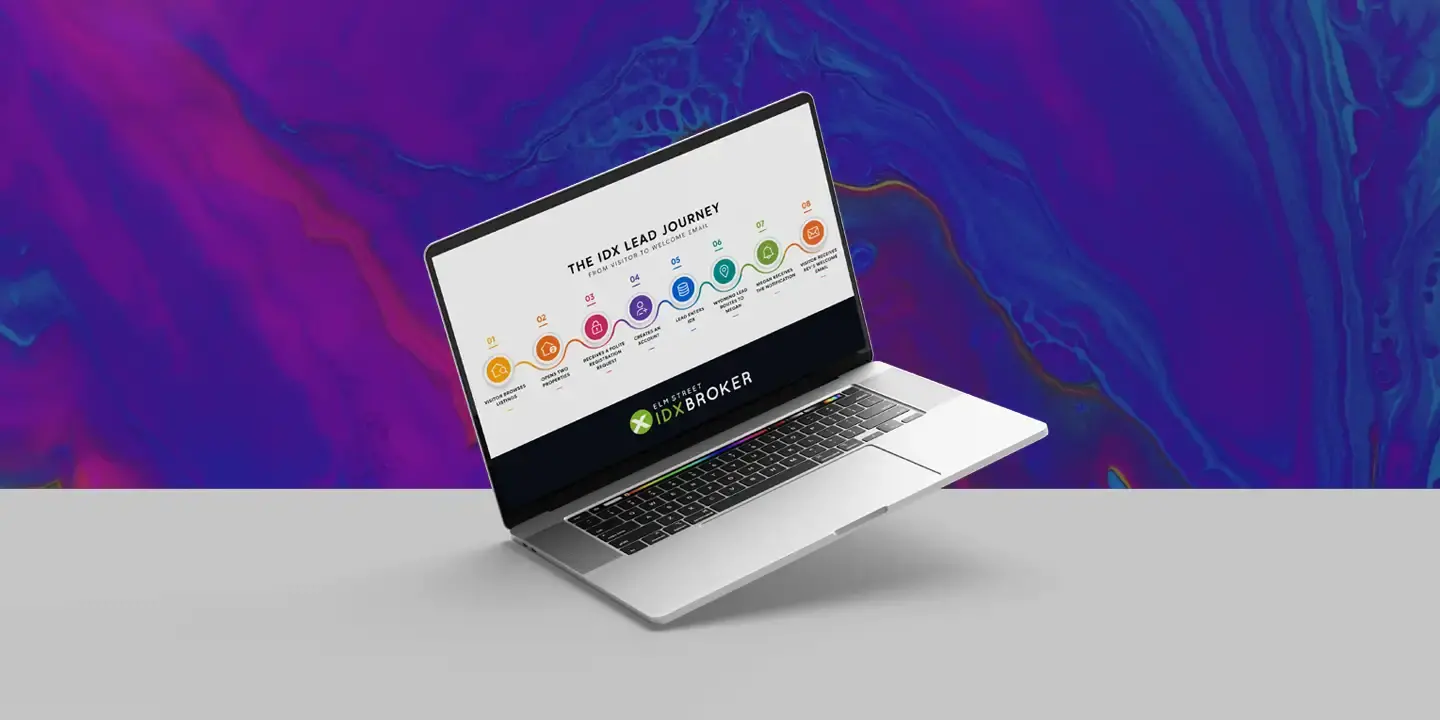
How We Turned IDX Broker Property Searches Into Leads
A behind-the-scenes look at how we turned REV Real Estate’s IDX Broker property…

The Businesses AI Recommends All Have One Thing in Common (And It’s Not a Secret)
AI isn’t recommending businesses because they discovered some secret trick. The…
What Actually Happens When I Build a Website with ChatGPT
A behind-the-scenes look at how I used ChatGPT throughout a real website…

Why Isn’t My Website Getting More Leads?
Getting traffic but not enough leads? We look at why website visitors don't…