
I Stopped Prompting AI. I Started Working With It.
I used to think the trick to getting useful results from AI was figuring out the right prompt. That made sense. Give it better instructions and you get a better answer. Be specific, provide context, explain what you want and, if necessary, give it examples. There are entire industries now built around teaching people how to write the perfect prompt. After working with ChatGPT for a long time, though, I think that misses something important. The useful relationship isn’t really prompt-and-answer. It’s conversation. At some point, I stopped thinking about each prompt as an isolated request and started treating the interaction more like working with another person. I have an idea. I explain it. The first version isn’t quite right, so I push back. It tries another direction. I notice something I hadn’t thought about. We change the structure. I decide what stays and what gets thrown out. Sometimes it gets something exactly right. Sometimes it goes completely sideways. Sometimes it gives me an idea that is better than the one I started with, even though that wasn’t what I originally asked for. Sometimes I also have to tell it, yet again, that I really don’t want twelve bullet points when I asked for three paragraphs. That last part is probably more important than it sounds. The longer you work this way, the less the process looks like “using AI” and the more it looks like developing a working relationship with a very unusual collaborator.
The Prompt Isn’t the Point
There is nothing wrong with a good prompt. If I want a very specific answer, clear instructions obviously help. If I want research organized a certain way, or a piece of writing aimed at a particular audience, or a technical problem worked through systematically, context matters. But a prompt has a limitation: it assumes you already know what you want. A lot of interesting work doesn’t happen that way. When I start writing an article, I often don’t have the finished article sitting in my head. I might have a title, an argument, a half-formed observation or a question that I think is worth exploring. That’s enough to start. The conversation does the rest.
This is one of the biggest differences I’ve noticed between using AI as a tool and actually working with it. If I expect the first response to be the finished product, I’m constantly judging whether the answer is “good.” If I treat the first response as part of the process, I’m asking a different question: where do we go from here? That approach is pretty close to the workflow OpenAI itself now describes for writing with ChatGPT: plan, draft, revise and package, with the output treated as something to review rather than a final authority. OpenAI’s own writing guidance makes the same basic point: the useful part isn’t simply generating text, but working through it iteratively. An AI response can be useful even when it isn’t correct, complete or publishable. Sometimes its biggest value is showing me what I don’t want. I’ll read something and think, no, that’s not what I’m trying to say. And suddenly I know what I am trying to say. That’s not failure. That’s part of writing.
The same thing happens with structure. I may start with one idea, see how it gets organized and realize that two ideas really belong together. Or I discover that what I thought was the main point is actually the setup for a better point. The machine didn’t necessarily write the answer. The conversation helped me find it. I’ve seen this happen repeatedly in actual website projects too. In How I Used ChatGPT to Create Website Content From Almost Nothing, the useful part wasn’t asking ChatGPT to magically produce a finished website. It was using the back-and-forth to turn a small amount of real information into something we could actually work with. It also means I don’t spend nearly as much time worrying about whether I’ve discovered the perfect prompt. The perfect prompt is often just the first sentence of a conversation. The rest gets figured out as you go.

It Learns How I Work, and I Learn How It Works
This is where the relationship gets considerably more interesting. The longer you work with AI, the more you start recognizing its habits. You learn what it is good at, where it tends to wander and when an answer sounds convincing but needs to be questioned. You learn when it needs more context and when it actually needs less. And, in a very practical sense, it starts learning your preferences. Not in the human sense. It doesn’t suddenly become your coworker who remembers what you ordered for lunch. But within an ongoing working context, patterns emerge.
For me, that includes things that probably sound ridiculously specific to anyone outside the process. I don’t want every article broken into a dozen tiny sections. I don’t want every paragraph to be three sentences long because somebody decided that is what “readable” means. I don’t want writing that sounds like it came out of an AI content template. I want the writing to sound like me. I want an article to have an actual point. I want internal links to make sense rather than being sprinkled around because somebody decided an article needs a certain number of links. And when I’m editing something, I’m perfectly happy to say, “No. That’s not it. Try again.” One of the biggest lessons I’ve learned is that you can’t be afraid to disagree with the machine. AI is remarkably good at producing something that sounds finished. Those are not the same thing. Something can be grammatically clean, logically organized and completely wrong for what you’re trying to accomplish.
So I’ve learned to push back. “That’s too repetitive.” “Those paragraphs are too short.” “That sounds like an AI wrote it.” “You’re making the same point three times.” “That’s technically true, but it isn’t the point of this article.” “Start over.” Those aren’t sophisticated prompts. They’re editorial decisions. That’s where the human part of the relationship becomes much more important. AI can generate enormous amounts of language very quickly. It can reorganize an argument in seconds. It can look at the same idea from several angles. It can help identify repetition, gaps, inconsistencies and possibilities. But it doesn’t automatically know which of those possibilities actually matters to me. That comes from context, experience and having a reason for writing the thing in the first place.
And that distinction matters because AI can also be confidently wrong about work it has just completed. We experienced exactly that while updating older Big Orange Planet articles, which became the subject of When ChatGPT Lies About Its Own Work. The lesson wasn’t that AI is useless. It was that generating something and verifying that something are two different jobs. The interesting part is that this works in the other direction too. The more I work with AI, the better I understand how to work with it. I know when to give it freedom and when to be extremely specific. I know when to ask for another pass instead of trying to repair every sentence myself. I know when an answer needs to be challenged, and I know when an unexpected answer is actually worth following. That’s why I like the word “symbiotic,” even though it sounds a little too biological for a writing process. Both sides change the process. I adapt to what the machine is good at. The working context adapts to how I work. The result can be something neither side would have produced in exactly the same way alone.
The Work Gets Better When Neither of Us Does It Alone
There is a temptation to describe AI-assisted writing as either a shortcut or a threat. Either AI does all the work and the human becomes unnecessary, or AI produces generic garbage and serious writers should stay away from it. Neither description matches what I’m experiencing. The more useful comparison is collaboration. Not because AI is a person. It isn’t. And not because every AI response is brilliant. It definitely isn’t. The useful part is the division of labor. I bring the reason for doing the work. I bring the experience behind the subject. I bring judgment. I know what I’m trying to say, even when I haven’t figured out exactly how to say it yet.
AI brings speed, range and an almost absurd willingness to try another version. It doesn’t get tired of rewriting the same paragraph. It doesn’t get annoyed when I say the fifth version still isn’t right. It can take an argument apart and put it back together in a different order. It can say, essentially, “What if we looked at it this way?” Sometimes that suggestion is terrible. Sometimes it opens the entire article. That’s the part I didn’t expect when I first started using AI seriously. I expected efficiency. What I got was a different way of thinking through ideas. I’ve seen the same shift in web design, where AI is changing not only how websites get built but how designers and clients think about the process. My earlier piece, How AI Is Transforming Web Design, looks at that larger change from the web-design side.
The biggest value of working with AI isn’t necessarily that I can produce something faster. Speed matters, but faster isn’t automatically better. The value is that I can externalize more of the thinking process. An idea doesn’t have to remain trapped in my head until I’ve figured out the perfect way to express it. I can put the rough version on the table, see what comes back, argue with it, reshape it and keep going. That’s much closer to how good creative work actually happens. Very little good work arrives fully formed. You make something, look at it, see what’s wrong, change it and discover something in the process. Then you make another version. Eventually, you have something worth keeping. AI doesn’t eliminate that process. It accelerates parts of it and, sometimes, makes the process more interesting.
That is why I’ve stopped thinking primarily about prompting. Prompting is an instruction. Working together is a process. There is also an important line that shouldn’t disappear in all of this. I still have to decide whether something is worth saying. I still have to decide whether it is true. I still have to decide whether it sounds like me. I still have to decide whether the argument holds up. And ultimately, I still have to put my name on it. I’m not particularly interested in pretending AI wasn’t involved when it was. But I’m equally uninterested in pretending that generating words is the same thing as doing the work.
The work is deciding what those words should accomplish. It’s knowing when the answer is wrong. It’s recognizing when an ordinary idea has turned into an interesting one. It’s having enough experience to say, “That’s technically correct, but we’re missing the point.” Maybe that’s what writing with AI has become for me. Not telling a machine what to write, and not handing it an assignment and waiting for the finished product. It’s a conversation between human judgment and machine capability, with a lot of editing, arguing, experimenting and occasional frustration in the middle. I bring the ideas. It brings possibilities. I decide what matters. It helps me explore what might work. Then we do another pass. And another. I stopped looking for the perfect prompt. I started having a conversation. For me, that has turned out to be much more useful.
Get the Good Stuff
No fluff. Just practical web design ideas, SEO insight, behind-the-scenes projects, & solutions we've tested in the real world.
Never Miss a Good Idea
More Big Orange Knowledge
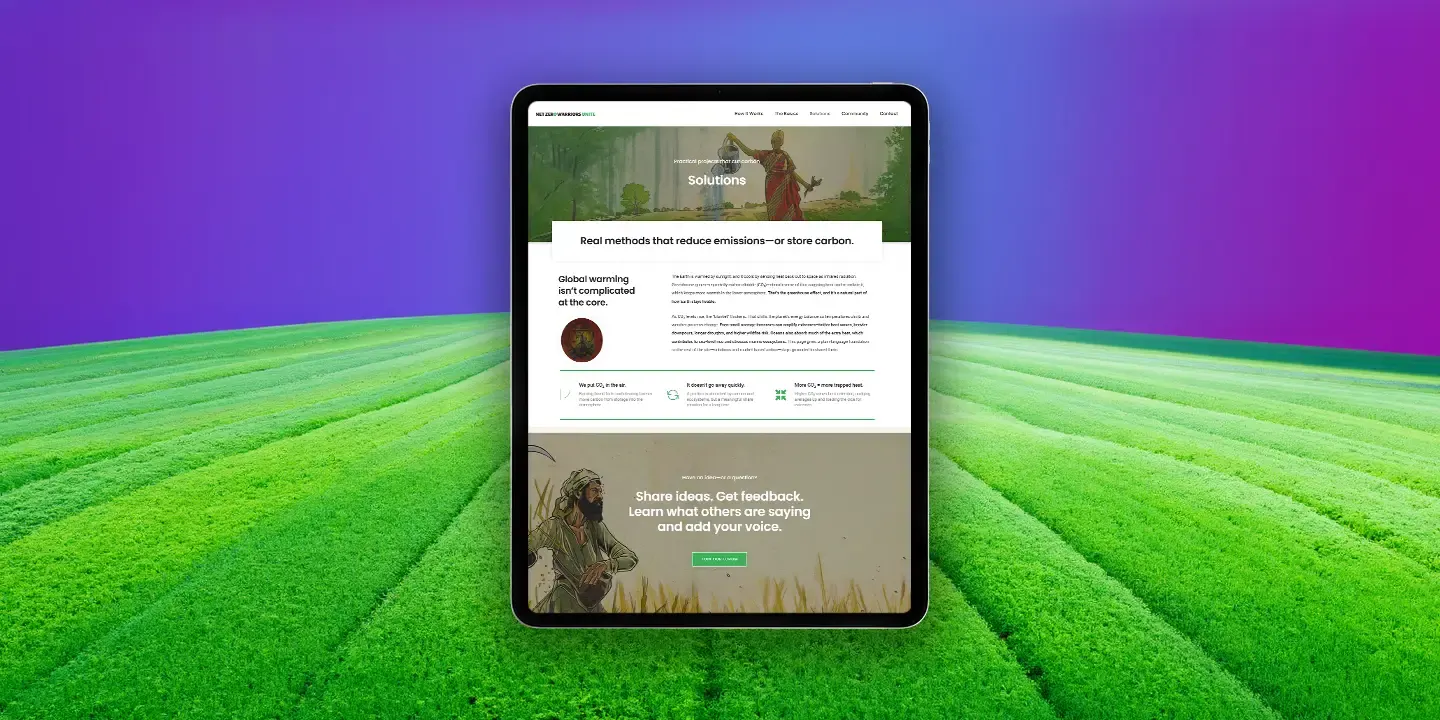
What Actually Happens When I Build a Website with ChatGPT
A behind-the-scenes look at how I used ChatGPT throughout a real website…

Why Getting Your Business Mentioned By AI Is Harder Than You Think:
Getting your business mentioned by AI is harder than simply publishing more…
Tips for Freelance Web Designers Starting Out
Discover how AI is revolutionizing web design — from smart automation and…

AI-Powered Ecommerce: Practical Strategies for More Traffic and Sales
Discover how AI is revolutionizing web design — from smart automation and…

How Much Does a Website Redesign Actually Cost?
Website redesign quotes can range from a few thousand dollars to $30,000 or…

How I Used ChatGPT to Create Website Content From Almost Nothing
A behind-the-scenes look at how I used ChatGPT to create the textual backbone…