
Reviews and Rankings: How Much Do Reviews Really Affect SEO?
Reviews have become one of the most important trust signals for local businesses, but their relationship with SEO is often oversimplified. You’ll sometimes hear that getting more Google reviews will automatically push a business higher in search results. The reality is more complicated. Reviews absolutely matter, particularly in local search. But they exist alongside your Google Business Profile, website, relevance, location, links, content and the wider authority of the business. Reviews can strengthen your local search presence, but they are not a substitute for a strong SEO strategy.
Reviews Matter Most in Local Search
The distinction between traditional organic rankings and local results is important. Google says local results are primarily based on relevance, distance and prominence, and that more reviews and positive ratings can help a business’s local ranking. That makes reviews particularly relevant when businesses are competing in Google Maps and other locally focused results. But that doesn’t mean the business with the most reviews automatically wins.
Google is trying to determine which businesses are relevant and useful for a particular local search. Reviews contribute to that picture, but so do the business category, location, website, links, information contained within the profile and other signals. This is why a business with fewer reviews can sometimes appear above a competitor with considerably more. Review count is one piece of a much larger local search puzzle.
Reviews Also Influence the Person Doing the Search
This is arguably where reviews become even more valuable. Imagine two businesses appearing next to each other in Google. Both provide the service you need. One has recent reviews describing real customer experiences and thoughtful responses from the owner. The other has very little feedback or hasn’t received a review for a long time. Which one feels safer to contact?
That decision happens before somebody ever reaches the website. Reviews can help answer questions that the business itself cannot answer quite as convincingly. Do customers trust this company? Does it do what it promises? What happens when something goes wrong? Are people still actively using it? SEO can earn the visibility. Reviews can help turn that visibility into trust.
More Reviews Aren’t Automatically Better Reviews
Businesses understandably pay attention to review count. If a competitor has 300 reviews and you have 30, that difference is difficult to ignore. But chasing a number shouldn’t become the strategy. A useful review profile develops naturally from genuine customers describing genuine experiences. Detailed feedback can also give potential customers far more useful information than a collection of identical five-star comments.
The objective should therefore be an ongoing process for asking real customers for honest feedback rather than periodically launching a desperate campaign to increase the number beside your business name. That approach is better for potential customers and considerably safer than attempting to manufacture reputation through fake or manipulated reviews.
Recent Reviews Matter to Customers
There is also a practical difference between a business with reviews accumulated years ago and one that continues receiving feedback today. Recent reviews show potential customers that people are still using the business and having experiences worth discussing. They can provide current information about service, staff, products and the way the company operates now. That doesn’t mean an old review suddenly becomes worthless or that Google applies some simple freshness formula we can see. It means that an active review profile provides stronger current evidence of the business people are considering today.
Responding to Reviews Is Worth Doing
Businesses sometimes concentrate so heavily on obtaining reviews that they forget the other half of the conversation: responding to them. Google itself recommends responding to reviews. From a customer perspective, responses demonstrate that somebody is actually paying attention. A thoughtful response to praise reinforces the relationship, while a professional response to criticism can sometimes be even more valuable because future customers can see how the business handles problems. There’s no need to stuff responses with keywords or turn every reply into an advertisement. That usually sounds unnatural. Just respond like a business speaking to a customer.
Your Google Business Profile and Website Should Support Each Other
Reviews shouldn’t exist in isolation from the rest of your local search strategy. Your Google Business Profile tells Google and potential customers what the company does, where it operates and how people can interact with it. Your website provides considerably more depth: detailed services, expertise, projects, content, credentials and the wider evidence behind the business. For businesses trying to strengthen their local presence, reviews work best when paired with strong website structure and local authority. Our Denver Web Design work is part of that wider foundation.
Those assets should reinforce one another. If you’re investing in Denver SEO, for example, your website, services and business profile should present a consistent picture of what the company actually does. The same principle applies to local authority. Relevant links, mentions and relationships can provide additional evidence around the business, which is why Local Link Building Strategies That Work remains another useful part of a broader local SEO strategy. The strongest local presence is built from signals that reinforce one another rather than one tactic doing all the work.
Reviews Can’t Fix a Weak Website
This is where expectations sometimes become unrealistic. A company collects dozens of positive reviews and expects rankings to improve dramatically. But the website still has weak service pages, confusing structure, poor content or technical problems. The Google Business Profile may also be incomplete or incorrectly categorized. Reviews can’t repair all of that. Likewise, a technically excellent website doesn’t remove the value of reputation. Somebody can discover you through search, visit a beautifully designed website and still go back to Google to see what customers say about you. Website quality establishes your case. Reviews provide independent evidence that customers believe it.
Reviews Can Matter Even When Rankings Don’t Change
This is an important point because SEO discussions tend to measure everything by ranking position. Suppose your business remains in exactly the same local position but improves its review profile considerably. More people who encounter the listing may now feel confident enough to call, visit the website or request directions. Your ranking hasn’t changed. Your business result has. That’s why judging reviews purely by whether a keyword moves from position four to position three misses much of their value. Reviews influence reputation and conversion as well as contributing to the wider local search picture.
Don’t Try to Game the System
Fake reviews are not a clever SEO strategy. Google has policies against fake engagement and other forms of review manipulation. More importantly, manufactured reviews undermine the thing reviews are supposed to provide in the first place: independent evidence from real customers. A much stronger long-term approach is simply to make requesting honest feedback part of the normal customer process. Make it easy. Ask consistently. Respond professionally. Then let the reputation build over time.
Reviews Are Part of a Larger Local SEO System
The businesses that perform well locally tend to have more than one thing working in their favor. They have a properly managed Google Business Profile. Their website clearly explains what they do. Their location and services make sense. They have genuine customer feedback. Their business is mentioned elsewhere. Their content demonstrates expertise. Their contact information is accurate and easy to find.
This is why local SEO becomes much easier to understand when you stop looking for one dominant ranking factor. Google is trying to understand whether a business is relevant, established and appropriate for the person making the search. Reviews contribute valuable evidence, but they’re still part of that larger picture. Businesses should also pay attention to broader ranking movement because strong reviews can’t compensate for weak SEO foundations. Our article Google Algorithm Update Rankings Shifting looks more closely at why search visibility can change even when a business has a strong reputation.
Final Thoughts
So, how much do reviews really affect SEO? For local businesses, they matter. Google explicitly identifies review count and positive ratings as factors that can help local ranking, and reviews contribute to the broader prominence and reputation of a business. But their value goes beyond rankings. Reviews influence whether somebody trusts the business after finding it, whether they click, whether they make contact and whether they choose it over the company sitting immediately beside it.
Don’t build a review strategy simply to impress Google. Build one because genuine customer experience is powerful evidence for both search engines and people. Combined with a strong website, a properly managed Google Business Profile, useful content and genuine local authority, that reputation becomes part of a much stronger overall search presence.
This article was written by Ally Lennon, Big Orange Planet’s SEO legend—call him directly! Phone: 720-272-0770.
Related Reading
Get the Good Stuff
No fluff. Just practical web design ideas, SEO insight, behind-the-scenes projects, & solutions we've tested in the real world.
Never Miss a Good Idea
More Big Orange Knowledge

September 10, 2026
Why Your Website Looks Good but Still Doesn’t Work
A website can be beautifully designed, technically sound and completely wrong…
September 5, 2025
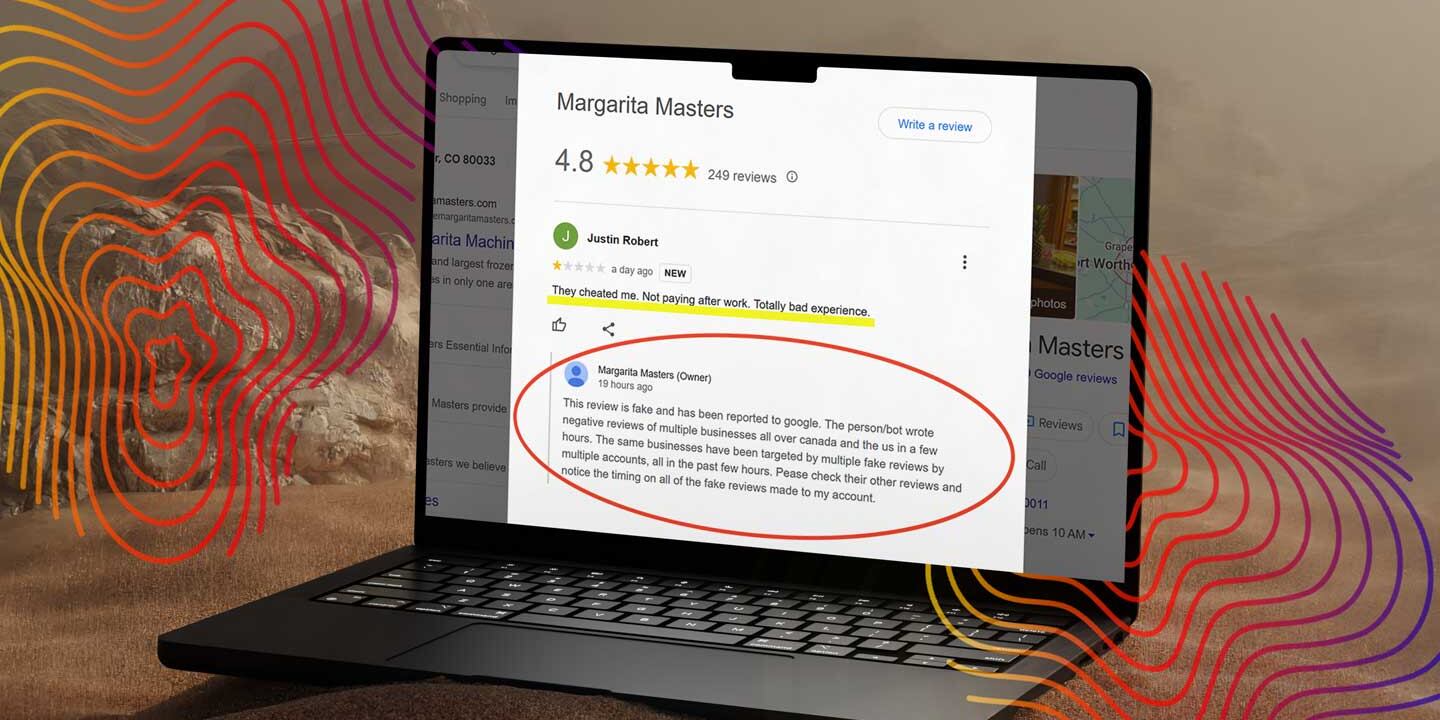
How to Deal With Fake Google Reviews and a Negative SEO Attack
Fake Google reviews aren't just a reputation problem. They can create…

April 3, 2026
How to Rank in Denver Search Results (When Rankings Won’t Sit Still)
Google search results are shifting across industries, keyword clusters, and…

May 17, 2026
How Proximity Impacts Local Rankings in Google Search
The Big Orange Planet JournalSEO
Proximity is one of the biggest factors affecting local Google rankings. We…

January 15, 2025
Google Business Profile- Advanced Optimization Techniques
Establishing strong credibility with Google My Business will earn you higher…
January 29, 2025
What is SEO exactly and why does it matter to you?
SEO isn't about making Google like your website. It's about making your…