
How AI Is Transforming Web Design: From Code to Creativity
The Digital Evolution of Design
The web has always evolved in waves. The first was static — simple HTML pages with rigid layouts. The second was dynamic — powered by CSS, JavaScript, and responsive frameworks. The third, the one we are living in now, is intelligent.
Artificial Intelligence (AI) has entered the world of web design not as a trend, but as a fundamental shift. It’s transforming how websites are imagined, built, tested, and optimized — moving from manual coding to intelligent creation. Designers are no longer just building websites; they are training systems to design themselves.
This convergence of design and data has given birth to a new discipline: AI-driven web design, where creativity meets computation and intuition meets automation.
From Manual to Machine Intelligence
How Traditional Web Design Worked
For decades, the design process followed a predictable pattern: brief → wireframe → mockup → code → test → launch. It was human-intensive, time-consuming, and heavily dependent on individual skill. Every color choice, layout, or font pairing required deliberate design logic.
While this process gave rise to some of the most iconic digital experiences, it also introduced inefficiencies — repetitive tasks, inconsistent user journeys, and limited scalability. Enter AI, the silent revolution reshaping the digital workflow from the inside out.
Automation Meets Imagination
AI doesn’t just replace steps in the process; it redefines them. Through machine learning and neural design models, systems can now analyze patterns, predict behaviors, and even create visual compositions autonomously.
Take Wix ADI (Artificial Design Intelligence) or Bookmark’s AIDA — both use AI to generate entire websites from a short description of a business. In seconds, they analyze industry data, user preferences, and conversion models to produce personalized layouts, content structures, and color schemes.
This isn’t about shortcuts — it’s about shifting the designer’s role from execution to orchestration.
AI and the Designer’s New Role
From Execution to Curation
In the AI era, designers act more like creative directors of algorithms. They set the vision, tone, and emotional direction, while AI handles structure, optimization, and adaptability.
According to Adobe’s Future of Design 2025 Report, 61% of digital designers already use AI-based tools to automate part of their workflow — from layout generation to usability testing. The result? More time for creativity, storytelling, and human-centered design thinking.
As Ally Lennon, UX strategist at Big Orange Planet, puts it:
“AI doesn’t design for you. It designs with you. The difference is collaboration, not replacement.”
AI as a Creative Collaborator
The myth that AI kills creativity couldn’t be further from reality. When used wisely, it amplifies creative exploration. AI-driven systems generate variations, test aesthetics in real time, and suggest new visual directions that human designers might overlook.
By analyzing massive datasets — from heatmaps to eye-tracking studies — AI learns what visually engages users, then proposes designs that align with both psychology and aesthetics. The designer becomes the final editor of an ever-expanding canvas of possibilities.
Personalization: The Heart of AI-Driven Design
Designing for Every User, Not the Average One
Traditional websites are static: everyone sees the same page. AI-driven design breaks that paradigm through hyper-personalization. It dynamically adapts content, layout, and navigation for each user based on behavior, location, or interaction history.
For example, an AI-enhanced eCommerce site can rearrange its homepage to showcase products most relevant to a returning visitor’s preferences. This isn’t magic — it’s machine learning optimizing engagement in real time. Delivering real-time personalization at this level takes custom model work behind the scenes, which is where AI development firms like Logix Built come in.
A 2024 McKinsey Digital Study found that personalization powered by AI increases conversion rates by up to 30% and user satisfaction by over 40%. Design is no longer static; it’s alive, adaptive, and uniquely personal.
Data as Design Language
The future designer speaks not only in colors and grids but in data. AI interprets user signals — scroll depth, dwell time, bounce rate — and translates them into actionable design improvements.
This turns analytics from a reporting tool into a creative compass. With every user interaction, the design learns and evolves — refining itself automatically.
The Midpoint: When Design Learns to Talk Back
The line between designer, developer, and machine is blurring. Modern studios are now integrating AI interfaces that understand natural language, allowing creators to converse with their design systems.
Imagine designing by simply describing what you want:
“Create a minimalist landing page with warm tones, focus on user testimonials, and optimize for mobile engagement.”
Within seconds, AI assembles wireframes, typography, and imagery, adapting them dynamically to context. Designers can tweak and iterate instantly — no coding required.
If you’re exploring these intelligent workflows, you can even go to ask AI through platforms that simulate conversational design assistants. They interpret creative prompts and turn them into usable, adaptive design assets — making ideation as simple as speaking your vision.
This new design language — part verbal, part visual — represents the true convergence of human intuition and artificial intelligence.
The Tools Leading the AI Design Revolution
1. Generative Design Systems
Platforms like Uizard, Khroma, and Figma AI analyze creative patterns to auto-generate design elements. They suggest palettes, layouts, and typography combinations optimized for engagement metrics.
In practice, this means a freelance designer or small business can achieve agency-level polish with minimal resources. AI bridges the gap between concept and execution.
2. AI-Assisted Front-End Development
Tools such as GitHub Copilot and Sketch2Code convert sketches or descriptions into production-ready code. By interpreting natural language, they eliminate the traditional barrier between designers and developers.
The phrase “no-code” is evolving into “co-code” — where humans and machines build interfaces collaboratively.
3. UX Optimization Platforms
AI-driven testing tools like Hotjar AI and Crazy Egg Predict simulate thousands of user sessions to identify usability issues before a website even launches. These predictive insights replace months of A/B testing with hours of automated iteration.
Ethical Design in the Age of Automation
The Bias Problem
AI is only as unbiased as the data it learns from. If a system is trained on design patterns favoring certain cultures or demographics, it may inadvertently reinforce those biases.
Ethical designers are now developing inclusive AI frameworks — ensuring accessibility, cultural diversity, and fairness are built into automated design logic.
As Dr. Naomi Fields, ethics researcher at Stanford’s Human-Centered AI Institute, states:
“Designing with AI means designing with awareness. Bias isn’t a bug — it’s a reflection. We must teach machines what equity looks like.”
Ownership and Originality
Who owns an AI-generated design? The creator of the algorithm, the user providing the prompt, or the AI itself? Current copyright law leans toward the human prompter, but debates continue globally.
For web designers, the key is transparency: acknowledging AI as a collaborator while maintaining human authorship and creative direction.
The Business Impact of AI in Web Design
Faster Delivery, Smarter Scaling
For agencies and businesses, AI drastically reduces project timelines. A design process that once took six weeks can now be condensed into six days — with higher accuracy and flexibility.
According to HubSpot’s 2025 Digital Efficiency Report, firms using AI-driven design systems report an average 40% increase in delivery speed and 35% cost reduction.
This efficiency allows smaller studios to compete with global agencies, leveling the creative playing field.
Continuous Optimization
Unlike traditional static sites, AI-enhanced websites never stop improving. They analyze live user interactions and automatically adjust layouts, headlines, and visuals for better engagement.
This creates a feedback loop of perpetual innovation — where every click teaches the design something new.
Looking Ahead: The Future Designer’s Canvas
Where Creativity Meets Computation
Tomorrow’s design studios will be half-human, half-algorithmic. Designers will curate experiences, mentor machines, and craft emotional resonance through data-informed creativity.
AI won’t replace artistry; it will expand it. The best websites of the next decade won’t just look beautiful — they’ll think, learn, and adapt like living ecosystems.
A New Creative Philosophy
Ultimately, AI transforms web design not by removing the human element, but by magnifying it. It takes over the repetitive and technical, freeing creators to focus on narrative, empathy, and vision — the core of all meaningful design.
The future belongs to designers who see AI not as competition, but as collaboration. Because the next great creative revolution won’t come from code alone — it will come from the harmony between human insight and machine intelligence.
Don’t hesitate to contact Big Orange Planet. We are centrally located on 2401, 15th street in downtown. Phone: 720 272 0770
More Big Orange Knowledge
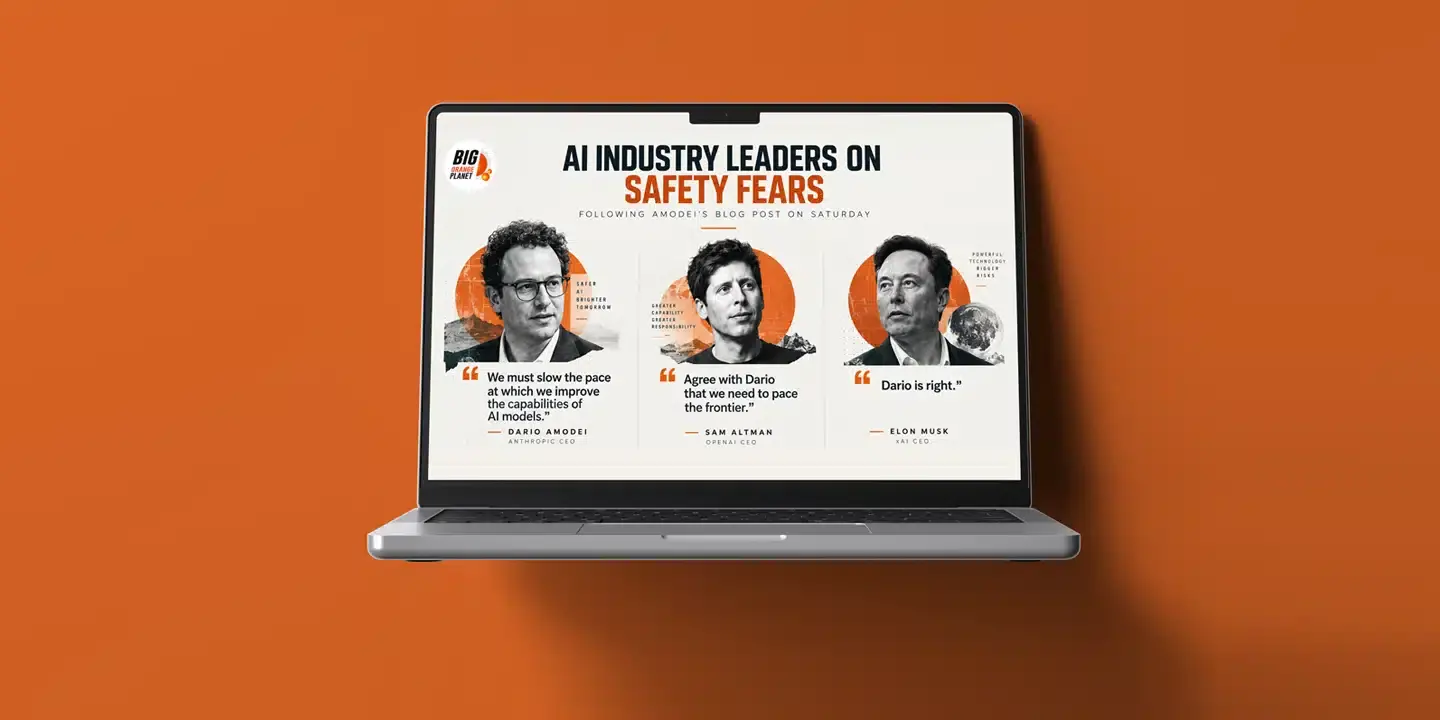
September 15, 2026
Why Are the People Building AI Suddenly Asking Us to Slow It Down?
The Big Orange Planet JournalAI
Some of the people building the world’s most powerful AI systems are now…

April 1, 2026
Denver Web Design: Complete Guide (2026)
Google search results are shifting across industries, keyword clusters, and…
April 13, 2026
How Website Design Impacts SEO Rankings (Complete Guide)
Google search results are shifting across industries, keyword clusters, and…
October 11, 2026
AI Can Make More Marketing. It Can’t Make It Matter.
AI has made professional presentation cheap, convincing and accessible to…

March 15, 2026
Common Design Mistakes to Avoid When Creating an HTML Email Template
HTML email isn’t a browser. Learn the most common design mistakes that cause…

April 3, 2026
Colorado Web Design & Development: Strategy, Costs & Growth Guide
Colorado web design is about more than choosing a template. This guide looks at…