
How to Make Your Business Easier for AI to Understand
AI search is getting very good at answering questions. The harder problem, at least for many businesses, is making sure the AI understands what the business actually is in the first place. That sounds obvious until you look at a typical business website. The company may have a clever slogan on the homepage, a list of services buried somewhere else, an About page that talks mostly about its history, a blog covering fifteen loosely related subjects, and several different descriptions of the company scattered around the web. The business owner knows exactly what the company does. A search system has to figure it out.
If you want your business to appear when someone asks an AI system a relevant question, start with that problem. Before worrying about GEO, AEO, prompts or any of the other terminology surrounding AI search, make the basic facts about your business exceptionally clear. That’s the starting point for getting your business into AI search results in the first place.
Start With a Clear Business Identity
Imagine that an AI system has only a few seconds to summarize your company for someone who has never heard of it. What would you want it to say? “We are a Denver web design company that builds custom websites for businesses and also provides SEO.” That’s pretty clear.
“We create digital experiences that transform brands and connect businesses with their audiences.” That may sound more polished, but it doesn’t tell you nearly as much.
This is where marketing language can actually get in the way of search visibility. A business owner may want the homepage to sound sophisticated, different or clever. Those goals aren’t necessarily incompatible with search, but clarity has to exist somewhere. If you’re a web design company, say you’re a web design company. If you’re a Denver roofing contractor, say that. If you provide commercial construction services throughout Colorado, make that clear.
Your homepage, title, headings, introductory copy, service descriptions and supporting pages should reinforce the same basic identity without simply repeating the same sentence over and over. The point isn’t keyword stuffing. It’s making sure the business category, primary services and geographic focus aren’t buried beneath marketing language.
The same principle applies to individual services. A Services page filled with labels such as “Strategy,” “Solutions,” “Innovation” and “Technology” may make sense internally, but it doesn’t necessarily explain what the company actually sells. If you provide web design, explain web design. If you provide SEO, give SEO enough space to explain what you actually do. If you build ecommerce websites, say what that means. If you specialize in medical clinic construction, explain that specialization rather than expecting someone to infer it from a few project photographs.
Dedicated service pages give you room to explain what the service is, who it is for, what problems it solves, how the process works and how it differs from related services. A company with ten genuinely important services doesn’t necessarily need one enormous page containing ten keyword-heavy sections. A well-organized set of pages can explain each part of the business much more clearly. That’s good website architecture, and it is also good SEO.
Give the Business Context
Understanding a business isn’t just about its name and services. Location and subject matter provide much of the context that allows a search system to distinguish one business from another.
If you’re a local business, your geographic relationship should be obvious. That might mean a city, metro area, state, region or several specific markets. A Denver business shouldn’t have to hide its location in the footer and expect search systems to figure everything else out. At the same time, adding “Denver” to every sentence isn’t local SEO. It just makes the website unpleasant to read.
Establish the geographic context naturally. Your homepage can identify the primary market. Service pages can explain where those services are offered. Relevant local pages can address specific markets when you genuinely serve them. Your Google Business Profile and other legitimate business listings should reinforce the same basic information. If your website says you’re based in Denver, your business listings say you’re based in Denver, and your service pages explain that you work throughout the Denver metro area, the overall picture becomes considerably clearer than if every source describes the company differently. For a local business, this is part of the larger Denver SEO strategy rather than some separate AI trick.
The same thing happens with subject matter. Consider a company that provides medical clinic construction. The business shouldn’t only say “medical construction.” Its website can explain the types of facilities it works on, the construction challenges those projects involve, planning considerations, common project requirements and the markets it serves. That additional information creates context around the core service.
A web design company can do the same thing. If the company says it builds websites but also publishes useful material about website architecture, SEO, conversion, user experience, WordPress development, local search and website performance, the surrounding content helps establish what kind of web design company it is. This is one reason businesses shouldn’t view their blog as a place to publish whatever topic happens to be popular that week. The content should reinforce what the company actually knows.
Show What You Actually Know
This is where expertise becomes particularly important. Anyone can publish a page saying, “SEO is important for your business.” There are probably millions of pages saying roughly the same thing. What have you actually learned from doing the work? What mistakes do clients repeatedly make? What decisions have consequences six months later? What approaches look good on paper but fail in practice? What does an experienced professional notice that a beginner doesn’t? Those questions produce much more useful content.
If your company has real experience in a subject, let that experience appear throughout the website. Case studies, examples, project explanations, detailed service pages, original observations and practical articles all provide evidence of what the business actually knows. Your website shouldn’t merely claim expertise. It should demonstrate it.
That becomes even more important as generic content gets easier to produce. The internet doesn’t need another version of information everyone already has. It needs useful information that reflects experience, expertise and context. AI doesn’t need you to sound robotic so it can understand you. It needs information worth understanding.
Your About page is part of this, too. Too many About pages amount to a founding date, a paragraph about company values, a list of team members and a “Contact us today” message. There’s nothing inherently wrong with that, but it leaves useful information on the table. The About page should help establish why your business is qualified to do what it says it does. Experience, specialties, markets served, relevant background, notable projects and the people behind the work can all contribute to that picture.
The service pages establish what you do. The supporting content establishes what you know. The case studies establish what you’ve actually done. Those pieces are considerably more useful when they reinforce one another.
Specificity is one of the easiest ways to improve all of them. Don’t just say you build “high-quality websites.” Explain what kind. Don’t just say you offer “SEO solutions.” Explain which problems you solve. Don’t just say you serve “businesses of all sizes.” Explain who you actually work with. Don’t just say you’re “experienced.” Explain what that experience looks like.
Every time you replace a vague statement with useful specifics, you give both people and search systems more information. You don’t need more jargon. You need more precision.
Make the Website Tell One Consistent Story
Here’s a simple test: take five important pages from your website and ask what each one says the business does. If the homepage describes one kind of company, the Services page describes something slightly different, the About page uses completely different terminology and the blog spends most of its time discussing subjects unrelated to the actual services, you’ve created unnecessary ambiguity.
The problem doesn’t have to be dramatic. Small inconsistencies accumulate. Maybe the company calls itself a “digital agency” on one page and a “web development firm” on another. Maybe one page says it serves Colorado while another says it works nationally. Maybe a service that represents a major part of the business is barely mentioned anywhere except a dropdown menu. Your important pages should tell a consistent story. Not identical copy. A consistent story.
The connections between those pages matter, too. A website isn’t just a collection of individual documents. If you have a page about web design, a page about SEO, and articles about website architecture, search visibility, site speed and conversion, internal links can help establish how those subjects relate. Someone reading about website architecture should be able to move naturally into your web design services. Someone reading about local SEO should be able to find your SEO service page. Someone reading about AI search should be able to discover related material about SEO and website structure.
Internal linking is therefore much more than a technical SEO chore. It helps organize your knowledge. A well-structured website effectively says, “These subjects belong together, this page explains the service, these pages support it, and these other pages provide additional evidence and expertise.” That’s a much stronger structure than publishing fifty articles and leaving them disconnected from the rest of the site.
The same principle applies to important information that already exists but is buried. Maybe your best explanation of a service is three clicks deep. Maybe your industries are listed only on an obscure portfolio page. Maybe your location appears only in the footer. Maybe your most useful expertise is contained in an old blog post that isn’t linked from anywhere important. If something matters to the business, it should have a reasonable place in the site’s architecture.
This is one reason a properly planned Denver web design project should consider content structure before the visual design is finalized. Design can make information easier to consume, but it can’t compensate for a website that doesn’t have a coherent information structure underneath it.
Make the Web Around Your Business Tell the Same Story
Your website isn’t operating in isolation. Search systems can encounter your business through your Google Business Profile, industry directories, professional organizations, local publications, social profiles, client websites, press coverage and other legitimate sources. Those sources don’t have to use exactly the same wording. In fact, they probably shouldn’t. But the important facts should generally line up.
Your business name should be recognizable. Your location should make sense. Your core services shouldn’t change depending on which directory happens to be describing you. If your company has a particular specialization, credible third-party sources that mention that specialization can reinforce the broader picture.
This is one reason I don’t think of link building as simply collecting links anymore. A legitimate mention from a relevant organization can tell the web something about your business. A random link from an unrelated website may tell it considerably less. That outside consistency matters because a business’s identity isn’t created entirely by the business itself. If your website says one thing, your listings say another and other legitimate references describe something else entirely, you’re creating a fragmented picture. The goal isn’t to make every mention identical. It’s to make the underlying facts recognizable.
This is also where your own content strategy matters. Keywords still have value because they tell us how people search and what language customers use, but a page built entirely around inserting a phrase into the right places can miss the larger opportunity.
Imagine a page targeting “Denver web design.” A weak page might repeat “Denver web design” in the title, headings, opening paragraph and several other places without saying much else. A stronger page can explain what web design involves, who the company works with, what types of websites it builds, how the process works, what separates custom development from templates, how SEO fits into the process and what clients should consider before starting a project.
The second page gives a search system much more to work with. It also gives the human reader much more reason to stay.
Keywords identify a subject. Context explains the subject.
Don’t Try to Write for AI
This may be the most important point in the entire article. You don’t need to rewrite your website so it sounds like something an AI would write. You don’t need to fill every page with questions. You don’t need to mention “AI” in every heading. You don’t need to repeat your company name constantly, and you don’t need to create bizarre paragraphs designed to manipulate some supposed AI-ranking formula. You need to make the business understandable.
Who are you? What do you do? Where do you do it? Who do you do it for? What do you know? What have you actually done? What questions can you answer? What evidence exists elsewhere that supports the picture you’re presenting?
Those are useful questions whether the visitor is a person, Google, ChatGPT or something else entirely.
The businesses that are easiest for AI systems to understand aren’t necessarily the ones doing the most elaborate AI optimization. They are often the businesses that have done the basic work of explaining themselves properly. Their websites have a clear structure. Their services are specific. Their locations are understandable. Their content supports their expertise. Their pages are connected. Their important information is accessible. Their descriptions are consistent. Their reputation exists beyond their own domain.
None of that is particularly mysterious, and that’s actually good news. You don’t have to chase every new acronym that appears in the AI-search industry. Start with your own website. Read the homepage as if you’ve never heard of the company. Look at the service pages and ask whether you understand exactly what is being sold. Look at the About page and ask whether it establishes any real expertise. Look at the blog and see whether the content reinforces the business or wanders into unrelated subjects. Follow the internal links and see whether the site’s important ideas connect.
Then look outside the website. Does the rest of the web describe the same business?If the answer is yes, you’ve already done a lot of the work required to make your business understandable. If the answer is no, that’s useful information too.
Because before you can expect AI to tell someone else what your business does, you need to make sure you’ve told the web yourself. That’s where AI search optimization really starts.

About Ally Lennon
Ally Lennon is the founder of Big Orange Planet, a Denver web design and SEO company. He builds websites, fixes the ones that aren't working, and has spent more than two decades developing SEO strategies that get businesses found online. He also spends an unreasonable amount of time figuring out what Google, AI and the rest of the internet are going to do next.
Get the Good Stuff
No fluff. Just practical web design ideas, SEO insight, behind-the-scenes projects, & solutions we've tested in the real world.
Never Miss a Good Idea
More Big Orange Knowledge

AI Became a Shiny Marketing Object All of a Sudden
AI has quickly become one of the most powerful marketing words in business. But…
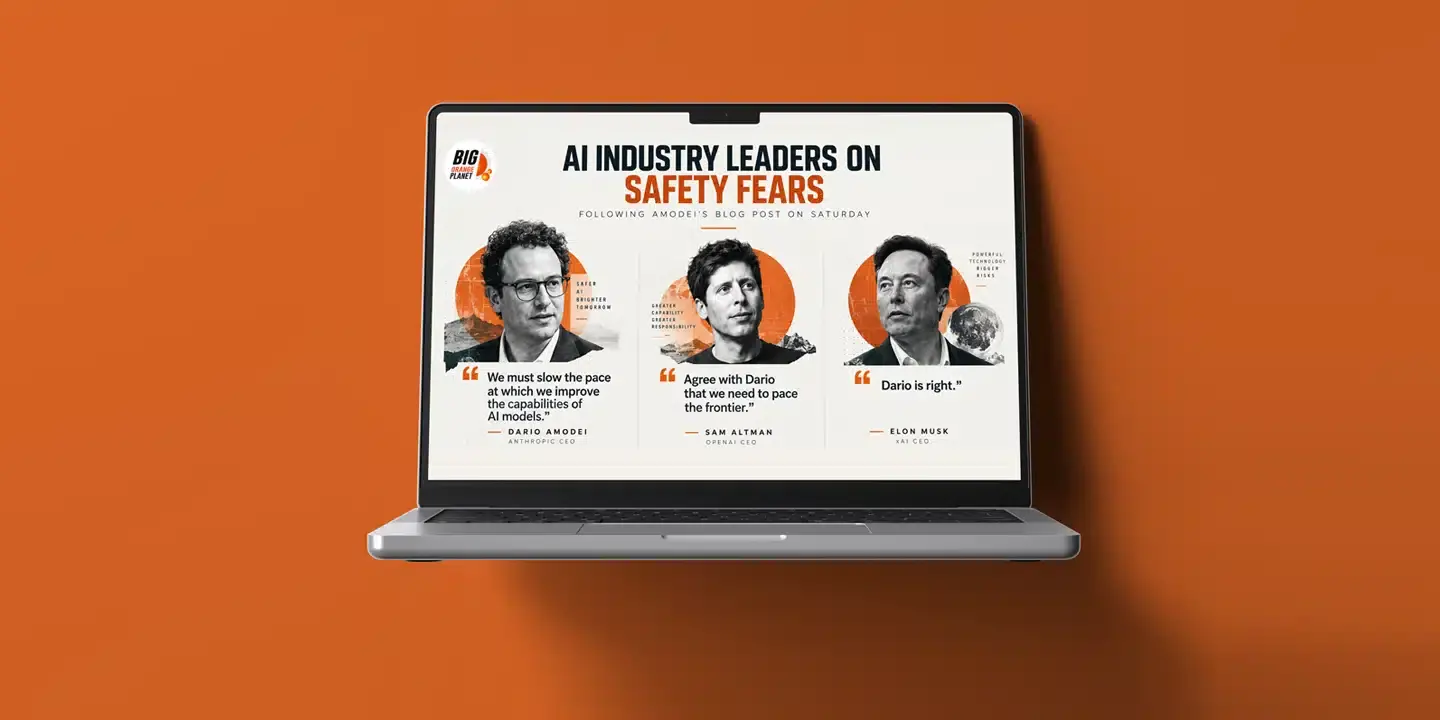
Why Are the People Building AI Suddenly Asking Us to Slow It Down?
Some of the people building the world’s most powerful AI systems are now…

Does ChatGPT Content Rank in Google
Discover how AI is revolutionizing web design — from smart automation and…

AI Is Only as Good as the Person Who Knows When It’s Wrong
The most dangerous AI answer isn't the obviously wrong one. It's the plausible…

How Much Does a Website Redesign Actually Cost?
Website redesign quotes can range from a few thousand dollars to $30,000 or…

Tips for Freelance Web Designers Starting Out
Discover how AI is revolutionizing web design — from smart automation and…