
Website Speed Matters More Than You Think: How a Slow Website Hurts SEO, Users and Sales
There is a strange thing that happens with website speed. Everyone agrees that a fast website is better, but speed is still treated like one of those technical details that somebody should worry about after the website is finished. It shouldn’t be. Website speed is part of the website itself. It affects what people see, how quickly they can understand what you do, whether they can interact with the page, how the site performs in search, and ultimately whether somebody stays long enough to become a customer.
A website can have great branding, beautiful photography, clever animation and exactly the right words and still be a bad website if the person using it has to wait for everything to happen. That’s the part of website speed that often gets lost in the technical conversation. We talk about milliseconds, caching, JavaScript, image compression and Core Web Vitals, but the person visiting the website doesn’t experience any of those things. They experience the website as fast, slow, responsive, frustrating or effortless.
And that experience matters.
For businesses, this is much bigger than simply asking whether Google likes a fast website. A slow website can create friction at almost every point in the customer journey. Someone searches for a company, clicks the result, waits for the page, tries to interact with it, waits again, and eventually decides it isn’t worth the trouble. There may never be an obvious indication that the visitor left because of performance. They simply disappear.
That makes speed a web design issue, a development issue, an SEO issue and a conversion issue at the same time. If you are spending money getting people to your website through search, advertising, referrals, social media or email, it makes very little sense to spend all that effort getting someone there and then make them wait for the website to work.
Website Speed Is Not Just an SEO Issue
When I talk to business owners about website speed, the first question is often some version of, “Does Google really care how fast my website is?” Yes, but that isn’t actually the most important question.
Google has incorporated page experience and Core Web Vitals into the broader systems it uses to evaluate websites, but that doesn’t mean speed is some magic ranking switch where a website suddenly jumps from page five to position one because somebody shaved half a second off its load time. Search is considerably more complicated than that.
A better way to think about speed is that it removes friction. A fast website gives both users and search engines a cleaner experience. A slow website introduces friction at exactly the wrong moment: when somebody has just arrived and is deciding whether your company is worth their attention.
This is one reason I think speed belongs in the larger conversation about Denver web design. Good web design isn’t simply about making a website look good. The structure, technology, content, imagery, responsiveness and performance all have to work together. If one of those pieces is fighting the others, the finished website suffers.
The First Impression Happens Before People Read Anything
People often talk about a website’s first impression as though it starts with the logo, headline or hero image. It starts before that. It starts with whether the page responds.
When somebody clicks a search result, taps a link on their phone or enters your domain directly, they have an expectation that something is going to happen. If the screen sits there blank for too long, if the main image takes forever to appear, if buttons don’t respond or if the page jumps around while everything loads, the visitor has already formed an opinion about the company before reading a single sentence.
That opinion may not be conscious. They may never think, “This website has poor performance optimization.” They simply think, “This is taking too long.” And then they leave.
This is particularly important for service businesses. If you are a contractor, law firm, medical practice, real estate company, manufacturer, professional service firm or any other business where the website is supposed to generate an inquiry, the website has one basic job: make it easy for the right person to understand you and take the next step.
Speed supports that job. Slowness gets in the way of it.
I wrote more about the other reasons people leave websites in Why Visitors Leave Websites in Seconds, because speed is rarely the only problem. Confusing messaging, weak design, poor navigation and too many competing choices can all create friction. Performance is one of the biggest pieces of that larger experience.
Mobile Makes the Problem More Obvious
The old idea that mobile users are somehow a secondary audience is long gone. For many businesses, the phone is where a large portion of the first interaction happens, and mobile exposes bad performance very quickly.
A desktop computer may have a fast processor, a large screen and a strong connection. A phone may be operating on a less reliable connection while simultaneously asking the browser to process a surprisingly complicated website. That means a website that feels acceptable on the developer’s computer can feel noticeably slower to an actual visitor.
This is one reason I pay particular attention to mobile performance when evaluating a website. The goal isn’t to make a website win a laboratory test on one particular computer. The goal is to make the real website work well for real people using real devices.
That distinction matters because performance is part of usability. A visitor shouldn’t have to understand anything about your hosting environment, content delivery network, JavaScript or image formats. They should simply be able to use the website.
What Google Actually Measures
This is where the conversation has become considerably more sophisticated than it was a few years ago. Google’s Core Web Vitals are designed around important parts of the experience a person actually has on a page. The current metrics are Largest Contentful Paint, Interaction to Next Paint and Cumulative Layout Shift.
Largest Contentful Paint, or LCP, is essentially asking how quickly the main content of the page becomes visible. Interaction to Next Paint, or INP, looks at responsiveness — what happens after somebody clicks, taps or otherwise interacts with the page. Cumulative Layout Shift, or CLS, looks at visual stability, which is the particularly annoying experience where you go to click something and the page moves underneath your finger because another element suddenly loaded.
These measurements are useful because they are much closer to the way people experience a website than simply saying, “The page finished loading in X seconds.” A page can technically finish loading while still feeling slow. A page can also appear quickly while remaining frustratingly unresponsive.
That is why website performance isn’t really one number.
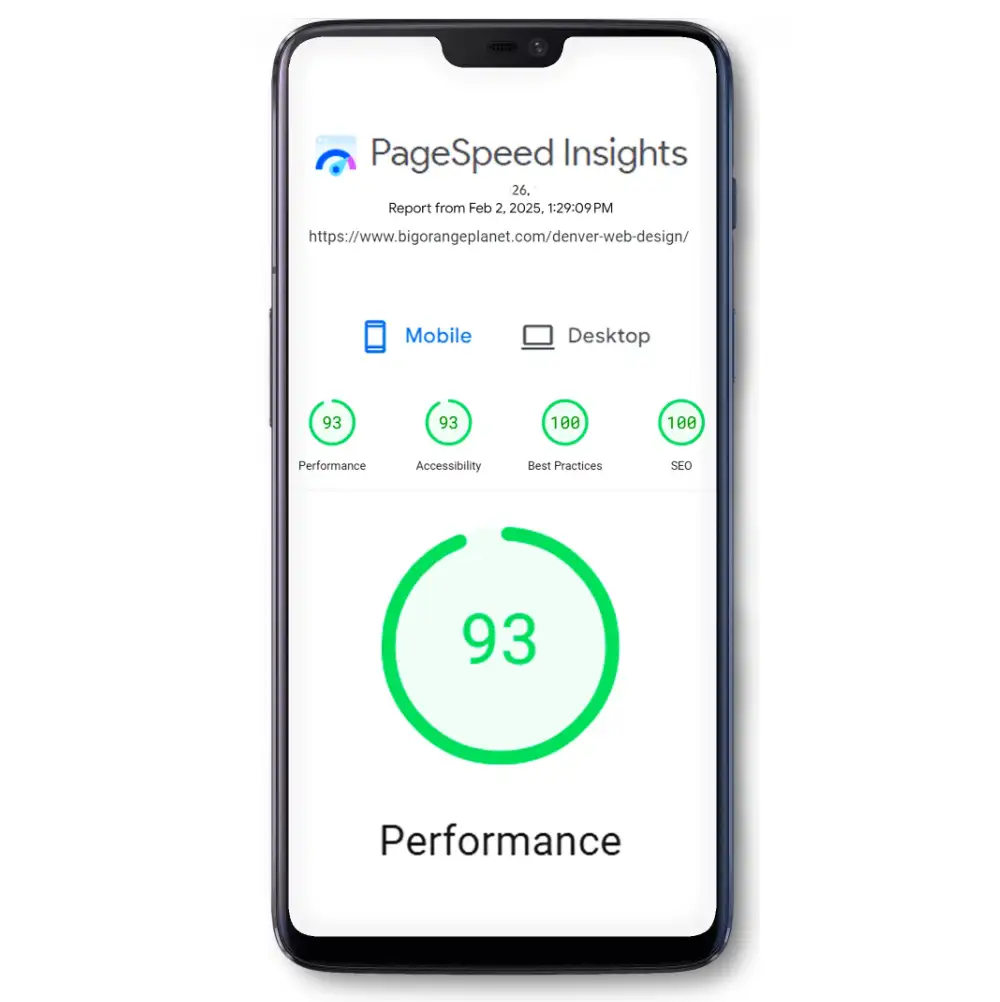
Stop Chasing a PageSpeed Score of 100
One of the biggest mistakes I see is treating Google’s PageSpeed Insights score like a school grade. People run their website through the tool, see a 62, panic, start installing optimization plugins and spend the next three days trying to turn the number into 100.
That isn’t necessarily the best use of anyone’s time.
PageSpeed Insights is extremely useful. It can expose problems and point toward opportunities for improvement. But the score itself is not the website. The more useful question is: What is actually making this website slow for the people who use it?
Sometimes the answer is an enormous hero image. Sometimes it is a badly configured server. Sometimes it is a pile of JavaScript from plugins and third-party services. Sometimes it is a theme carrying around functionality the website doesn’t need. Sometimes it is a video background, a slider, a collection of tracking scripts or a dozen different external resources being loaded before the visitor can actually use the page.
And sometimes the problem is simply that the website was built without performance being considered from the beginning. That last one is harder to fix with a plugin.
Why Beautiful Websites Can Be Slow
There is a natural tension between visual design and performance, but it doesn’t have to be a fight. A beautiful website doesn’t have to be slow. The problem comes when visual decisions are made without considering what they cost the browser.
A giant photograph looks great on a large monitor. But if the original image is several megabytes and the browser has to download all of it just to display a relatively small version on a phone, the visitor is paying the price for that design decision.
The same thing happens with animation. Animation can make a website feel sophisticated and alive. But adding animation simply because the technology makes it possible isn’t good design. Every additional effect has a cost, whether that cost comes from JavaScript execution, additional assets, rendering complexity or simply making the page harder to use.
The same applies to video, sliders, custom fonts, popups, chat systems, analytics tools, social feeds and other third-party services. None of these things are automatically bad. The problem is accumulation.
A website can end up with twenty small things that each seemed harmless when they were added. Together, they can create a page that is significantly more complicated than anyone intended. This is one of the reasons performance needs to be considered during the design and development process rather than treated as cleanup work afterward.
WordPress Isn’t Automatically Slow
WordPress gets blamed for slow websites all the time. Sometimes that criticism is deserved. Often it isn’t.
WordPress is a content management system. What happens inside that system depends heavily on how the website is built. A carefully developed WordPress website with a sensible theme or custom architecture, good hosting, optimized assets and only the functionality it actually needs can perform very well.
A WordPress website assembled by installing a giant theme, adding twenty plugins, importing a collection of widgets and then layering optimization plugins over the top can become a completely different animal.
The problem isn’t necessarily WordPress. The problem is the architecture.
This is why I am generally more interested in finding out why a website is slow than simply throwing another performance plugin at it. Optimization should address the cause of the problem, not just add another layer of software to hide it.
That same architectural thinking applies to the broader website. I’ve written about it in How Website Design Impacts SEO Rankings, because design, structure, performance and search visibility are much more connected than the old “designer versus SEO” model suggests.
Speed and SEO Work Together
There is another reason website speed belongs in the SEO conversation. SEO is ultimately about helping the right people discover and use the right content. A search engine can send someone to your website, but the search engine doesn’t complete the transaction for you. The visitor still has to use the site.
They need to see the content. They need to understand the offer. They need to navigate. They need to find the contact information. They need to click the button. They need to trust what they are seeing. And if the website is slow or unstable throughout that process, all the SEO work that brought the person there is working against unnecessary friction.
This is one reason I don’t like treating SEO as something that gets added after a website is finished. The technical structure, content, page hierarchy, internal linking, performance and conversion experience all influence how effectively a website can do its job.
Website speed is one piece of that larger system, and it belongs in the same conversation as the technical and content work covered by our Denver SEO services.
Speed Can Affect Conversion Without Anyone Knowing Why
There is a particularly interesting problem with slow websites: the business owner often doesn’t know that the website is losing people.
Someone searches for a service. They click the website. The page takes too long. They hit the back button. They try another company. There isn’t necessarily an email saying, “I left because your LCP was poor.” The business simply never gets the inquiry.
That makes website performance one of those problems that can quietly cost money. And the slower the website is, the more important this becomes. A visitor who is already highly motivated may tolerate some friction. A visitor who is comparing several companies has much less reason to wait.
When competing businesses are offering essentially the same service, the website experience becomes part of the comparison. Fast feels easy. Easy feels professional. Professional builds confidence. That chain matters.
What Actually Makes a Website Faster?
There isn’t one universal fix because every slow website has a different problem. Images are often an obvious place to start. Images should be appropriately sized and efficiently delivered rather than uploading enormous originals and expecting the browser to figure everything out. Modern image formats and responsive image delivery can make a substantial difference.
Server performance matters too. If the server takes too long to respond, everything that follows is delayed. Hosting, caching, database performance and the site’s underlying configuration can all contribute to the problem.
Then there is JavaScript. Modern websites can depend on a surprising amount of JavaScript, and not all of it is necessary for the first thing a visitor needs to do. Reducing unnecessary scripts and making sure critical content isn’t blocked by everything else can dramatically improve the experience.
CSS matters as well. So do fonts. So do third-party services. So does the number of requests the browser has to make before the page becomes useful. And then there is caching, which can make a properly configured website feel dramatically faster for returning visitors and reduce the work required from the server.
The important point is that these are not independent tricks. A website is a system. Changing one thing can improve one metric while making another problem worse. Good performance work looks at the entire system.
Sometimes the Problem Is the Website Itself
This is the part nobody particularly wants to hear when they have already invested heavily in a website.
Sometimes a website can be optimized. Sometimes it needs to be rebuilt.
If a website has accumulated years of plugins, obsolete code, oversized assets, unnecessary functionality, poorly implemented integrations and layers of design decisions that were never intended to work together, there may come a point where optimization becomes an exercise in making a fundamentally complicated system slightly less complicated.
That doesn’t mean every slow website needs a new website. Far from it. But there is a difference between fixing a performance problem and continually treating symptoms.
If the foundation is sound, optimize it. If the architecture is fundamentally working against the goals of the business, rebuilding may make more sense. That is a web development decision, not a PageSpeed decision.
For businesses considering whether an existing site needs to be fixed or fundamentally rethought, that distinction is important. Performance problems can sometimes reveal a much larger issue with the way the website was originally put together.

How I Actually Approach Website Speed
I don’t start with the question, “How do we get this website to 100?” I start by asking what the website is doing.
What does the visitor need to see first? What is loading before that happens? What is making the browser work? What assets are unnecessarily large? What scripts are being loaded? What is happening on the server? What is happening only because a plugin or theme decided it should?
And perhaps most importantly, what parts of the website actually contribute to the business?
That last question is surprisingly useful. If a feature doesn’t help the visitor, support the brand, generate a lead, sell something, provide necessary information or serve a legitimate technical purpose, it deserves to be questioned.
Websites become faster when they stop doing unnecessary things.
Website Speed Is Part of Good Web Design
This is really where the conversation should end. Website speed isn’t a technical trophy. It isn’t about bragging that your PageSpeed score is 98. And it isn’t something that should be left until the website is finished.
It is part of designing a website that works.
A good website gives visitors the information they need, when they need it, without making them fight the technology to get there. It loads the important content quickly. It responds when people interact with it. It doesn’t jump around while they are trying to read it. It works on the devices people actually use. It supports search visibility rather than creating unnecessary technical obstacles. And it gets out of the way so the business can do what the website was built to do.
That is the real importance of website speed.
Google cares about performance because users care about performance. Users care because they don’t want to wait. And businesses should care because every unnecessary bit of friction creates another opportunity for someone to leave.
So yes, check your website with PageSpeed Insights. Look at your Core Web Vitals. Pay attention to the technical recommendations. But don’t lose sight of the bigger picture.
The goal isn’t a faster score. The goal is a better website.
And a better website is one that gets people where they need to go without making them wait.
The Bottom Line
Website speed matters because websites matter. A business can spend months creating content, improving its branding, building links, optimizing pages and trying to get more visibility in search. All of that work eventually leads somebody to a screen.
When that person arrives, the website needs to work.
It needs to appear quickly enough that they don’t wonder whether the link worked. It needs to respond when they interact with it. It needs to remain stable while the page loads. It needs to make sense on a phone. It needs to communicate clearly. And it needs to make the next step easy.
None of this means every website needs to be stripped down until it looks like a spreadsheet. Good performance isn’t about removing everything interesting from a website. It’s about making deliberate decisions about what belongs there and making sure the technology supports those decisions instead of getting in their way.
That is the real difference between optimizing a website and simply chasing a performance score.
A score belongs to a testing tool. A website belongs to a business and the people that business is trying to reach.
So yes, website speed matters for SEO. It matters for mobile users. It matters for usability. It matters for conversions. It matters for trust. But most of all, it matters because nobody visits a business website hoping to wait around for it to work.
The goal isn’t a faster website because fast is impressive. The goal is a better website because better websites make it easier for people to find you, understand you, trust you and ultimately do business with you.
Get the Good Stuff
No fluff. Just practical web design ideas, SEO insight, behind-the-scenes projects, & solutions we've tested in the real world.
Never Miss a Good Idea
More Big Orange Knowledge

How Proximity Impacts Local Rankings in Google Search
Proximity is one of the biggest factors affecting local Google rankings. We…

Why Some Website Content Never Ranks
Google search results are shifting across industries, keyword clusters, and…

Why Google Search Results Look so Unstable Right Now
Google search results can change from day to day, but ranking movement does not…

AI SEO vs. Google SEO: What’s Actually Different—and What Still Matters
AI SEO has a game-changing advantage that Google SEO simply can’t match -…

When Information Becomes Cheap, Trust Becomes Valuable
AI has made information cheap. That changes what people trust. When anyone can…

Why Some Denver Businesses Dominate Search Results
Google search results are shifting across industries, keyword clusters, and…