
Denver Web Design: Complete Guide (2026)
If you’re looking for web design in Denver, Colorado, you’re stepping into a market that’s far more competitive than most businesses expect. This isn’t a place where a basic website is “good enough.” In Denver, your site is often the first — and sometimes only — chance you get to convince someone to trust your business. If it’s slow, unclear, or outdated, people don’t stick around. They move on.
That’s why web design here isn’t really about design alone. It’s about performance. Visibility. Conversion. It’s about whether your website actually helps your business grow. If you’re already comparing options, it’s worth understanding what separates a site that just exists from one that consistently generates leads. And if you want to see how that looks in practice, you can explore our Denver web design services
Why Denver Changes the Rules
Denver has become one of the most active digital markets in the country. You’re not just competing with other local businesses — you’re up against well-funded companies, aggressive SEO strategies, and brands that are constantly refining their online presence. That changes the expectations.
A website here needs to load quickly, communicate clearly within seconds, and guide users toward action without friction. There isn’t much margin for error. If something feels off, people don’t analyze it — they leave. What that means in practice is simple: your website has to do its job immediately. It has to feel trustworthy, relevant, and easy to use from the moment someone lands on it.
What Actually Makes a Website Work in Denver
A lot of websites look decent on the surface. The difference shows up in how they perform.The strongest sites tend to have a kind of quiet clarity to them. You don’t have to figure them out. You understand what the business does, who it’s for, and what to do next almost instantly.That clarity is usually intentional. It comes from thinking through structure, messaging, and user behavior — not just visual design.
There’s also a technical side that most people never see directly but absolutely feel. Speed, mobile performance, and how the site is built all affect whether it ranks and how users interact with it. In a market like Denver, those details matter more than most businesses realize.And then there’s local relevance. A website that clearly signals it serves Denver — and understands the area — tends to perform better than something generic. It doesn’t need to overdo it, but it should feel grounded in the market.
How Much Web Design Costs in Denver
Pricing is one of the first questions people ask, and the honest answer is that it varies quite a bit.
At the lower end, you’ll find simple builds that get something online. In the middle range, you start to see more thoughtful structure, better performance, and stronger alignment with business goals. At the higher end, the work becomes more strategic, more customized, and more focused on long-term growth. What matters isn’t just the number — it’s what’s behind it.
Two websites can cost very different amounts and still look similar at a glance. The difference shows up later in how they rank, how they convert, and how long they last before needing to be rebuilt. In Denver especially, businesses that treat their website as an investment tend to see far better results than those trying to minimize upfront cost.
Understanding the Process (and Why It Matters)
A good website doesn’t come together randomly. There’s usually a process behind it, even if it’s not always visible from the outside. It starts with understanding the business — what it does, who it serves, and what success actually looks like. From there, the structure begins to take shape. Pages are organized, messaging is refined, and the overall direction becomes clear.
Design builds on that foundation, not the other way around. And once development begins, everything is focused on turning that structure into something fast, functional, and reliable. What separates strong projects from weak ones is often how well these pieces connect. When strategy, design, and development are aligned, the end result tends to feel simple — even if a lot went into making it that way.
Where SEO Fits Into All of This
Search visibility isn’t something you tack on at the end. It’s influenced by how the site is built from the beginning. The way pages are structured, how content is organized, how fast the site loads — all of these affect whether Google can understand and rank it.
That’s why web design and SEO aren’t really separate decisions. In practice, they’re part of the same system. If your site is well built, it doesn’t just look better. It tends to perform better in search and keep people engaged longer, which reinforces those rankings over time.
Common Problems That Hold Websites Back
You start to see patterns after looking at enough websites in Denver. Sometimes it’s a focus on appearance without enough attention to structure. Other times it’s the opposite — something technically functional but unclear or difficult to use. A lot of sites try to do too much at once, which ends up creating confusion. Others move slowly or feel outdated, which quietly undermines trust.
None of these issues are unusual. But in a competitive market, they add up quickly. Fixing them doesn’t usually require reinventing everything. It often comes down to simplifying, clarifying, and aligning the site with what users actually need.
At some point, most businesses reach a decision point. They either continue with what they have and try to improve it, or they step back and rebuild with a clearer strategy. There isn’t a single right answer for everyone. But there is a difference between incremental fixes and a more intentional approach.
If you’re evaluating options, it helps to look beyond surface-level design and think about how the site will perform over time. The goal isn’t just to launch something new — it’s to build something that continues to work.If you want a clearer picture of what that looks like, you can explore how a Denver web design company approaches structure, performance, and growth (
A lot of businesses start by focusing on Denver and then expand outward. Once a site is performing well locally, it becomes much easier to extend visibility into surrounding areas like Boulder, Colorado Springs, and Fort Collins.
That kind of growth usually isn’t accidental. It’s supported by how the site is structured and how content is developed over time. If that’s part of your long-term plan, it’s worth considering early.
You can also see how that broader approach connects to Colorado web design and development strategies, especially if your reach isn’t limited to a single city.
Final Thoughts
Web design in Denver isn’t just about having a presence online. It’s about whether that presence actually works.
In a market where competition is constant and expectations are high, the difference between an average site and a strong one shows up quickly. One sits there. The other actively contributes to your business.
If your current site isn’t doing that — if it’s not bringing in leads, not ranking, or not reflecting the level of your business — it’s probably not a small issue. It’s a structural one.
And once that’s addressed, everything else tends to move more easily.
This article was written by Ally Lennon, Big Orange Planet’s SEO legend—call him directly! Phone: 720-272-0770.
More Big Orange Knowledge

May 28, 2026
Why Most Business Websites Fail (And How to Fix Them)
Most business websites don't fail because of one major mistake. Poor structure,…

March 15, 2026
Common Design Mistakes to Avoid When Creating an HTML Email Template
HTML email isn’t a browser. Learn the most common design mistakes that cause…

May 21, 2026
Tips for Freelance Web Designers Starting Out
Discover how AI is revolutionizing web design — from smart automation and…

March 28, 2024
Create a Lightbox in WordPress
A lightbox is a dark pop up window that overlays your web site to showcase an…

June 3, 2026
Conversion-First UX: Maximizing B2B Lead Generation Funnels
Discover how AI is revolutionizing web design — from smart automation and…
August 28, 2024
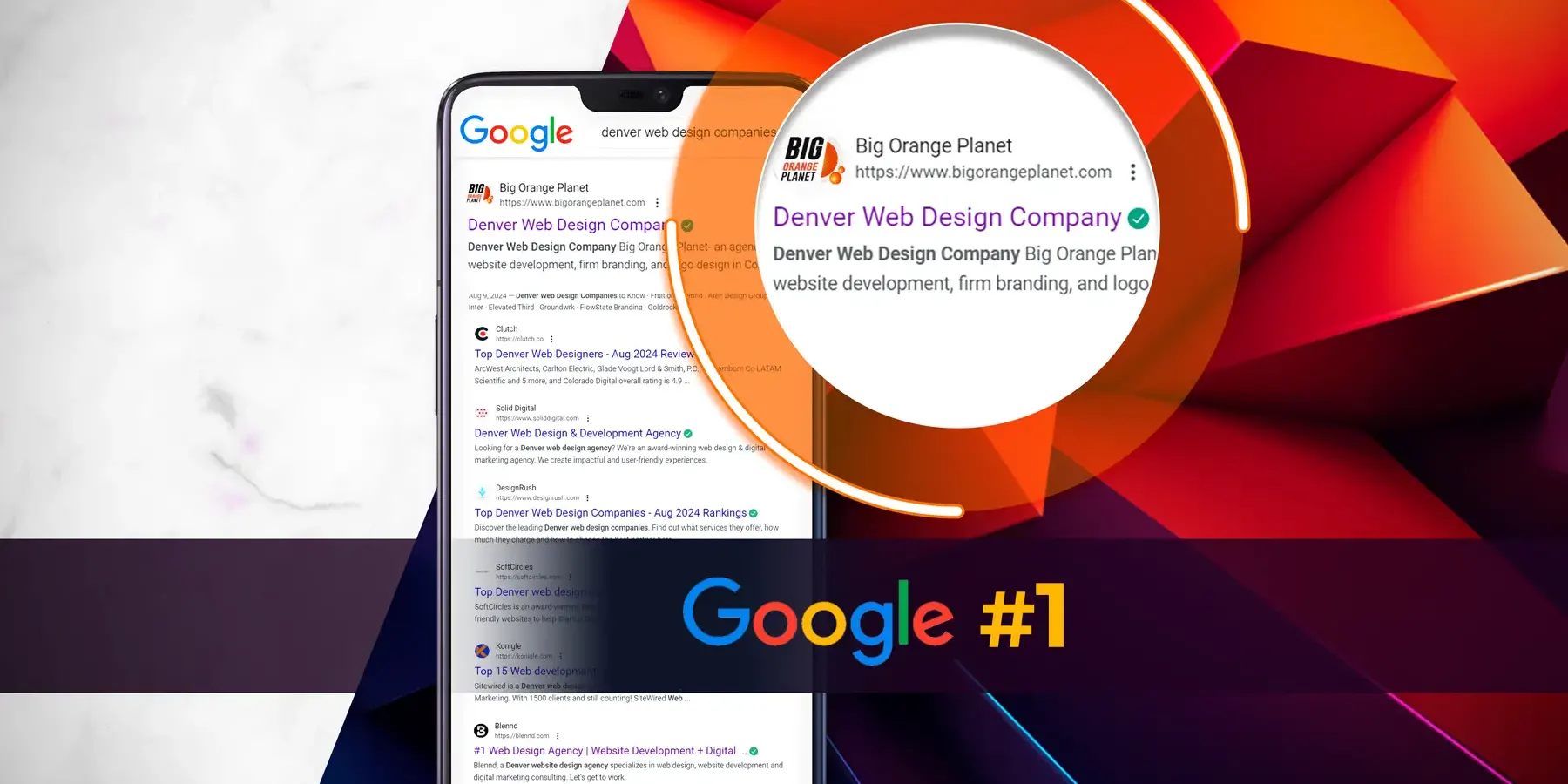
Google – Algorithm update August 2024
Google is continuing to roll out a very major update to its algorithmn, what is…