
Can AI Build My Website? Yes. But That’s Still the Wrong Question.
The Big Orange Planet Journal-001
By Ally Lennon – 11 minute read
Can AI build your website? Yes. That answer is no longer particularly controversial. AI can generate HTML and CSS, write JavaScript, create layouts, produce images, draft page copy, suggest navigation, write code, troubleshoot problems and even assemble surprisingly functional websites. The technology is getting very good. But I think business owners are asking the wrong question.
The more useful question isn’t whether AI can build a website. It obviously can. The useful question is whether AI knows what website your business actually needs. Those are two very different things. A website isn’t simply a collection of pages, images, code and words. It’s supposed to do something for a business. It might generate leads, explain a complicated service, sell products, establish credibility, support a sales team, attract local customers, answer questions, or make an unfamiliar company feel trustworthy enough that someone is willing to call. The technology can help produce all of those things. It doesn’t automatically understand why they matter.
AI Has Changed Website Production
There is a temptation to think that because AI can now do much of the work involved in producing a website, the website itself has become almost irrelevant. I don’t think that’s what happened. What changed is the cost and speed of production. Twenty years ago, creating a professional website required a fairly specialized combination of design, development, content, image preparation and technical knowledge. Even relatively simple changes could require someone who understood the underlying technology. Today, a business owner can open an AI tool and start building. That’s a remarkable change.
You can describe a business and have AI suggest a sitemap. You can ask it to write a homepage. You can have it generate a contact form, responsive code or several different visual directions. You can ask it to rewrite the copy when you don’t like the first version. You can create and test ideas in an afternoon that might previously have taken considerably longer. I use these tools myself. They are useful. They save time, remove friction and make experimentation dramatically easier.
But there’s an important distinction here: making something is not the same as knowing what should be made. That’s something we’ve seen firsthand while using AI inside actual website projects. In What Actually Happens When I Build a Website with ChatGPT, we looked at what happens when AI becomes part of the working process rather than being treated as a magic button that produces a finished website. AI can help with research, structure, content, code and technical problems, but somebody still has to make the decisions.
A Website Can Be Technically Good and Still Be Wrong
Imagine asking AI to build a website for a commercial construction company. It can produce a very convincing construction website. It might create a strong-looking hero section with a photograph of a construction site, write a paragraph about quality craftsmanship, and create pages for services, projects, about the company and contact information. It might even make the site look better than many websites currently online.
But it still needs information. What kind of construction does the company actually do? Does it specialize in medical facilities, retail, industrial work, tenant improvements or government projects? Which projects demonstrate its capabilities? Who makes the buying decision? What objections do prospective clients have? What geographic markets matter? What separates this company from the other contractors competing for the same project?
Those aren’t coding questions. They are business questions. And they exist before the first line of code is written. That’s why I keep coming back to the same idea: technology has made website production easier. It hasn’t made website strategy unnecessary. In some ways, it has made strategy more important. When producing something was difficult, the difficulty itself forced people to think carefully about what they were going to build. Now that AI can produce almost anything almost instantly, the limiting factor becomes deciding what is actually worth producing.

AI Doesn’t Know Your Business Just Because You Told It About Your Business
This is one of the more subtle problems with AI-generated websites. You can give an AI system a tremendous amount of information about your company. It can read your existing website, your brochures, your service descriptions, your reviews and your notes. It can organize all of that information remarkably well. But information isn’t the same thing as understanding.
If you tell AI that your company has been in business for 25 years, it can incorporate that fact into the website. It doesn’t automatically know whether that fact should be the centerpiece of your homepage. If you tell it that you offer twelve different services, it can create twelve service pages. It doesn’t automatically know that three of those services generate most of your revenue and should receive substantially more attention. If you give it a list of competitors, it can compare their websites. It doesn’t automatically know which differences actually matter to the customer.
That distinction becomes especially important when we’re talking about search. A website can contain all the right words and still fail to communicate authority. It can mention Denver, Colorado, its services, its experience and its industry repeatedly without giving Google—or a potential customer—much reason to believe that the business is genuinely established and relevant. Search engines have become much better at understanding relationships between content, businesses, topics and evidence. AI systems are becoming increasingly good at doing something similar. Simply generating more information isn’t necessarily the advantage it once appeared to be. The information has to make sense.
AI Is Extremely Good at Helping
None of this means AI shouldn’t be used to build websites. Quite the opposite. I think we’re going to use AI more and more. The mistake is thinking that using AI means handing the entire project over to AI. There is an enormous difference between AI doing the work and AI making all of the decisions.
I can use AI to brainstorm page structures, explore different ways of explaining a complicated service, generate code, find problems, rewrite sections, organize information, research possibilities and accelerate repetitive tasks. I can also reject everything it gives me. That’s an important part of the process. The best use of AI isn’t necessarily getting it to produce a finished answer on the first attempt. It’s using the technology to move through possibilities faster while somebody with actual context decides which possibilities are worth keeping.
That’s what makes the technology powerful. It becomes an extremely fast collaborator rather than an unquestioned decision-maker. And that distinction matters whether you’re building a small business website or a much larger custom website.
The Website Still Has to Work for a Business
This is where website design gets reduced too often to appearance. A website can be beautiful and fail. It can be technically impressive and fail. It can have excellent animation and fail. It can even rank for some keywords and still fail to generate meaningful business. The website has a job. What is that job?
Sometimes the answer is obvious. An ecommerce site needs to sell products. A restaurant needs people to find the menu, location and hours. A professional services company needs prospective clients to understand what it does and why they should make contact. But many businesses have more complicated sales processes. A website might need to establish enough credibility for somebody to request a proposal. It might need to demonstrate experience in a specialized industry. It might need to explain something that customers don’t understand yet.
The website becomes part of the sales process. That’s why the decisions surrounding the website matter so much. Where should the important information appear? Which questions should be answered immediately? Which pages deserve the most attention? What evidence should be presented? What should the navigation look like? What should the calls to action say? What should the site emphasize, and what should it leave out? AI can help with all of those questions. But somebody still has to make the decisions.
SEO Starts Before the Website Is Finished
There is another reason this matters. A website shouldn’t be designed in isolation from search. SEO isn’t simply something you bolt onto a finished website by adding keywords to the pages. Site structure, page hierarchy, navigation, URLs, internal linking, content organization, performance and the relationship between pages all contribute to how a website can be understood.
That means the decisions made while building the site can affect what happens later. If a business has an important service but the website treats it as a footnote, that’s a structural decision. If every service is placed on one enormous page instead of giving important topics enough room to develop, that’s a structural decision. If supporting articles aren’t connected to the service pages they reinforce, that’s a structural decision.
This is why I don’t think of SEO and web design as completely separate activities. They overlap. The website is part of the search strategy. And increasingly, it’s part of how AI systems understand the business too. I’ve written more about that timing in Do I Need SEO Before, During, or After My Website Is Built?. If search matters to the business, it makes considerably more sense to think about it while the website is being planned than to discover later that the structure needs to be changed.
So Should You Build Your Own Website With AI?
You absolutely can. For some businesses, that may make perfect sense. If you have a straightforward business, reasonable technical skills, time to experiment and a clear understanding of what you want the site to accomplish, AI can get you surprisingly far. That’s something I think the web industry needs to acknowledge. AI has genuinely lowered the barrier to entry. You don’t necessarily need to hire someone to create every page, make every change or write every line of code. That’s good.
But there is another side to that equation. The easier it becomes to build a website, the easier it also becomes to build the wrong website. You can now spend an afternoon generating pages that would previously have taken weeks. That sounds like an advantage. It is—provided you know which pages should exist. Otherwise you’ve simply made the wrong decision faster.
That’s probably the biggest change AI has brought to web design. The bottleneck isn’t production anymore. Increasingly, it’s judgment.
The Real Value Isn’t the Code
This is also why I don’t think the future of professional web design is simply about protecting the ability to write code. Code is becoming easier to produce. That’s fine. There are plenty of things I’d rather have AI help me do than spend hours doing manually. The value is increasingly in understanding what the code, content and design are supposed to accomplish.
It’s understanding how a business works. It’s recognizing when the client’s explanation of the business isn’t actually how customers see it. It’s knowing when a page needs more information and when it needs less. It’s recognizing that a beautiful animation might be completely unnecessary. It’s understanding that the cheapest technical solution isn’t always the cheapest business solution. It’s knowing when an AI-generated answer sounds convincing but doesn’t actually make sense. And sometimes it’s simply having enough experience to say, no, we’re not going to do that.
That judgment matters beyond the website itself. As AI systems increasingly answer questions about businesses, the website becomes part of the evidence available to those systems. A company needs more than a page saying it is an expert. It needs information that demonstrates what it knows, what it has done and how it helps customers. That’s the larger issue behind Why Getting Your Business Mentioned By AI Is Harder Than You Think. AI visibility isn’t simply another button you switch on. It is connected to authority, credibility, useful information and the broader reputation of the business.
The same principle applies to the question Why Doesn’t AI Recommend My Business? A business can have a technically excellent website and still lack the broader evidence that makes it easy for search engines, AI systems and potential customers to understand and trust it. The website matters enormously, but it exists within a much larger ecosystem.
AI Didn’t Make Web Design Disappear
It changed it. And I think that’s a much more interesting story. The old model of web design involved a lot of specialized production work. The new model will involve increasingly capable technology doing more of that production. Good. Let it.
If AI can help us build faster, test more ideas, solve technical problems and spend less time on repetitive work, that’s progress. But it doesn’t eliminate the need to understand the business. If anything, it makes that understanding more valuable. Because when almost anyone can generate a website, the website itself stops being much of a differentiator.
What matters is what the website says, why it says it, whether it’s true, whether it reflects the business, whether it answers the questions customers actually have, whether it creates trust, whether it supports search, whether it helps somebody take the next step, and whether all of those pieces fit together.
That’s also why a website shouldn’t be treated as a finished project that gets launched and then forgotten. It should become an increasingly useful source of information about the business. The more genuinely useful knowledge a company can document, the more valuable that website becomes to customers and to the systems trying to understand the business.
So, can AI build your website? Yes. But that’s still the wrong question.
The better question is: What should your website actually do for your business—and how do we use AI to build it better, rather than simply build it faster?
That’s where the interesting part of web design begins.
Related Reading
If you’re interested in the practical side of using AI during a website project, start with What Actually Happens When I Build a Website with ChatGPT. If you’re thinking about the planning side, Why Most Website Projects Fail Before Anyone Writes Code is the natural next read. And if search is part of the reason you’re building the website in the first place, Do I Need SEO Before, During, or After My Website Is Built? picks up that part of the conversation.


About Ally Lennon
Ally Lennon is the founder of Big Orange Planet, a Denver web design and SEO company. He builds websites, fixes the ones that aren't working, and has spent more than two decades developing SEO strategies that get businesses found online. He also spends an unreasonable amount of time figuring out what Google, AI and the rest of the internet are going to do next.
Get the Good Stuff
No fluff. Just practical web design ideas, SEO insight, behind-the-scenes projects, & solutions we've tested in the real world.
Never Miss a Good Idea
More Big Orange Knowledge

Alt Text for Images: What It Is, Why It Matters, and How to Use It Correctly
Alt text is more than an SEO checkbox. Learn what image alt text actually does,…
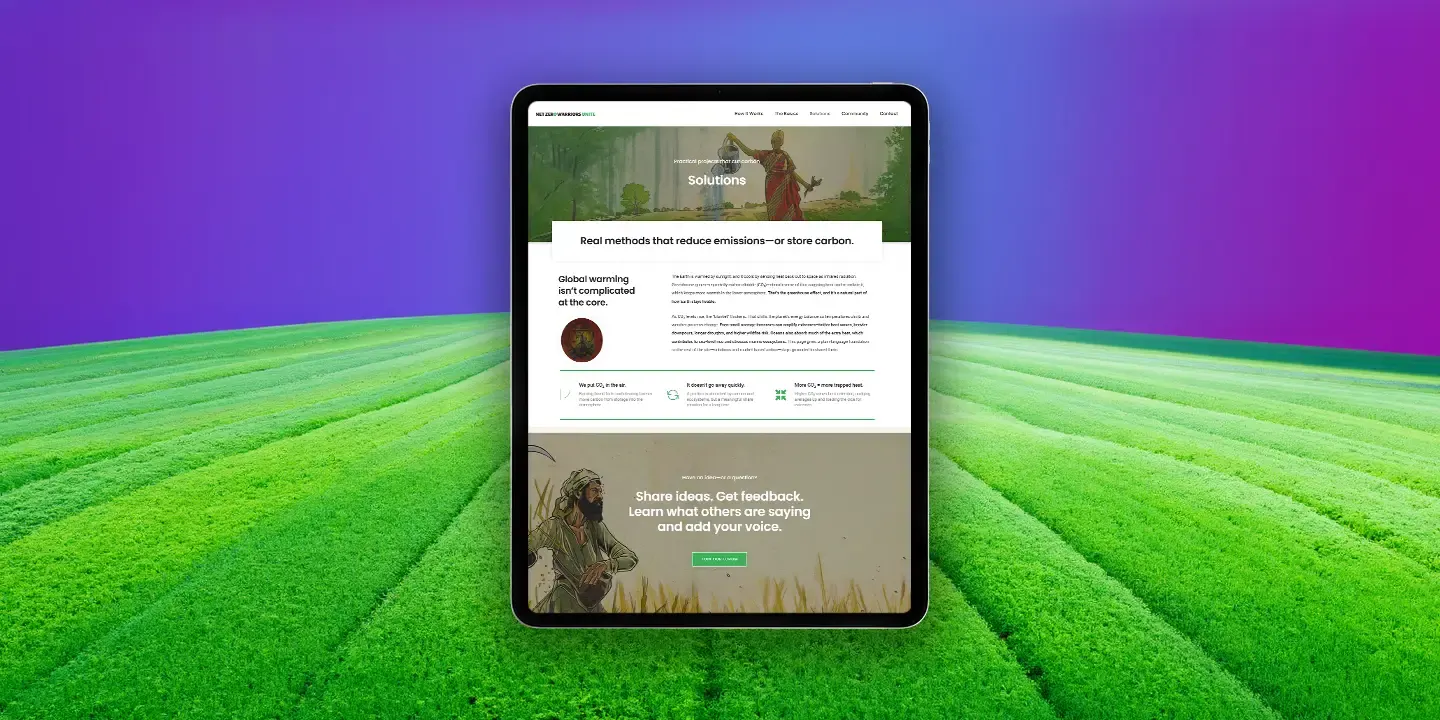
What Actually Happens When I Build a Website with ChatGPT
A behind-the-scenes look at how I used ChatGPT throughout a real website…

How AI Is Transforming Web Design
Discover how AI is revolutionizing web design — from smart automation and…

Why Doesn’t My Website Rank Even Though It Looks Great?
A great-looking website doesn't automatically rank well in Google. Search…

What Should Every Small Business Website Include?
A small business website doesn’t need to be complicated, but it does need to…
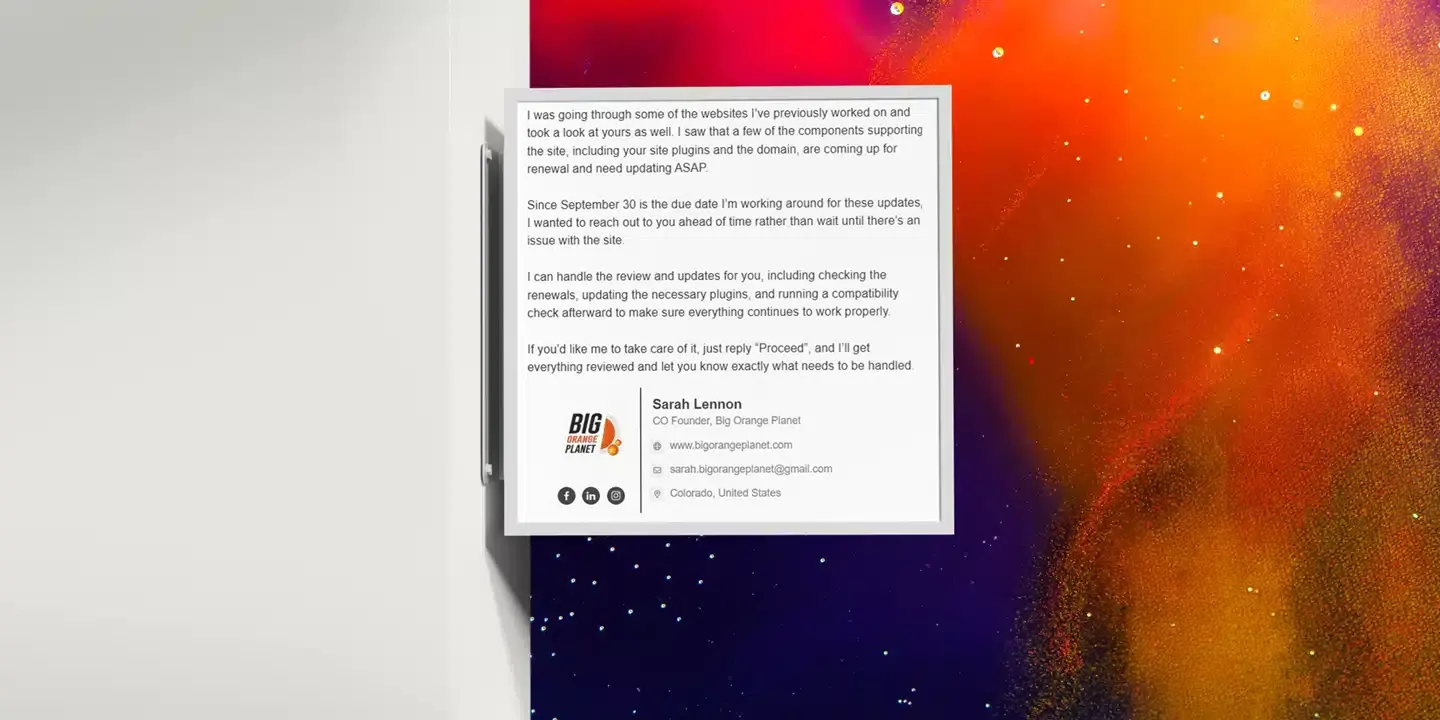
The New Phishing Attack Doesn’t Look Like Spam — It Looks Like Someone You Know
Phishing isn't always an obvious scam anymore. We recently saw an attack that…