
How to Deal With Fake Google Reviews and a Negative SEO Attack
There is a particular kind of online attack that most business owners never think about until it happens to them: someone starts leaving fake Google reviews about your business. Not one bad review. Not an unhappy customer who had a legitimate complaint. A sudden burst of one-star reviews from people you’ve never met, never worked with and never heard of before. That is a very different situation.
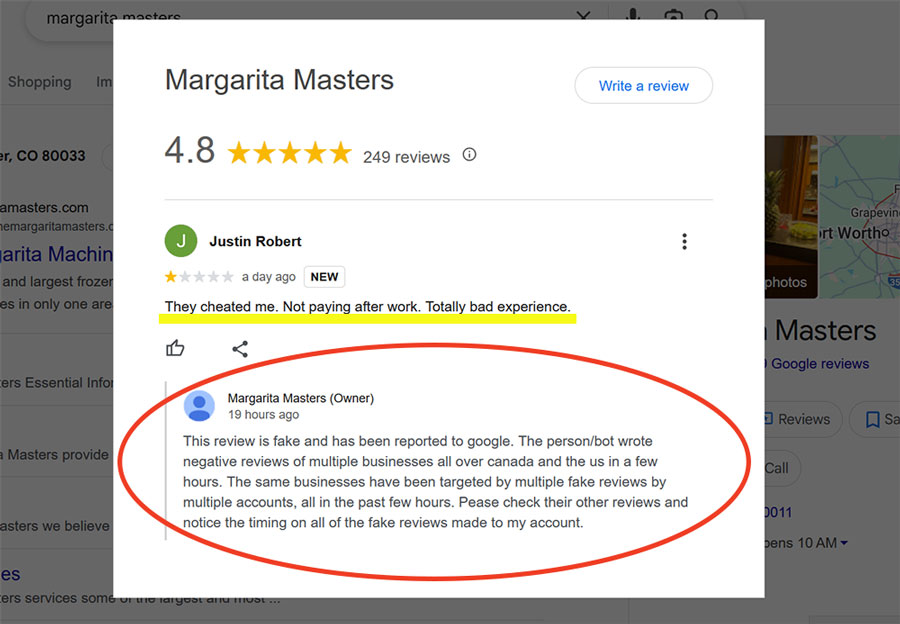
We’ve experienced it firsthand at Big Orange Planet. One morning, we noticed that five one-star Google reviews had appeared within roughly 20 minutes. None of the people leaving them had ever been customers. The reviews were vague, the accounts were suspicious, and the timing alone was enough to make it clear that something unusual was happening. What initially looked like a handful of bad reviews turned into something much more deliberate. We discovered that some of the same accounts had been leaving negative reviews for other businesses around the country while also posting positive reviews elsewhere. Eventually, the situation moved beyond fake reviews and into outright extortion. The demand was essentially simple: pay, and the reviews stop.
We didn’t pay.
And that turned out to be one of the most important decisions we made.
Fake Google Reviews Are More Than a Reputation Problem
When people hear the phrase “negative SEO,” they often think about somebody building thousands of bad backlinks to a competitor’s website or trying to manipulate Google’s technical signals. That kind of activity gets most of the attention because it sounds technical and mysterious. But search visibility is not just about links, keywords and technical SEO. Google is where people investigate businesses before they decide whether to call, visit, request a quote or buy something. Your Google Business Profile is part of that experience. Your reviews are part of that experience. Your website is part of that experience. The consistency of your business information, the quality of your content, the way customers describe their experience and the overall credibility of your company all contribute to the picture a potential customer sees.
That means an organized attack on your reviews can become a much bigger business problem than a lower star rating. Imagine that a potential customer searches for your company and sees a business with hundreds of legitimate reviews. They click through to the Google profile and suddenly see several one-star reviews posted within a very short period, all from people describing experiences that don’t sound anything like the normal feedback from your customers. That can create doubt. A customer doesn’t necessarily have to believe the fake review for it to have an effect. They only have to wonder whether there might be something to it. Maybe they’ll click on another company. Maybe they’ll spend another five minutes researching you. Maybe they decide to call someone else.
That is why protecting your online reputation isn’t separate from SEO anymore. It is part of the larger search ecosystem. A strong Denver SEO strategy isn’t simply about getting a page to appear in Google. It is about building enough useful, consistent and credible information around a business that a person — or a search engine — can understand who you are and what you actually do.
How Our Fake Review Attack Started
Our situation started with something that would be easy for a business owner to dismiss if they weren’t paying attention. We saw five new one-star reviews appear in approximately 20 minutes. The first thing that stood out was that none of the reviewers had ever been customers of Big Orange Planet. The reviews themselves were also unusual. They weren’t detailed complaints from people describing a specific project, a communication problem or something that actually happened during a website build. They were vague, poorly written and suspiciously similar.
Five people don’t independently decide to review the same business in the same general window, despite having no customer relationship with that business, without there being a reason. That was the first clue. The second clue came when we looked beyond our own Google Business Profile. Some of the accounts involved had reviewed other businesses across the country. We found patterns involving completely unrelated companies, from service businesses to retail businesses. Some accounts had left negative reviews in one place and glowing five-star reviews somewhere else.
At that point, this no longer looked like a few random people who happened to be unhappy with us. It looked coordinated. And once you recognize that pattern, the appropriate response changes completely. You aren’t trying to win an argument with an unhappy customer. You’re documenting fraudulent activity.
The Extortion Component Changed Everything
The situation eventually escalated beyond fake reviews. We began receiving messages demanding payment to make the problem stop. More fake reviews appeared. Some were written in languages we didn’t normally see associated with our customer base. We also received harassing messages through WhatsApp from accounts that appeared to be located overseas. The basic message was simple: pay us and the reviews will stop.
This is where a business owner can make a very understandable mistake. You might think, “It’s cheaper to just pay them.” It may even seem logical in the moment. If you’re looking at your Google rating dropping and you’re worried about customers seeing it, paying a relatively small amount can feel like the fastest way to make the problem disappear.
I would strongly advise against that.
Once you establish that you will pay someone to stop attacking your reputation, you haven’t necessarily solved the problem. You may have demonstrated that the attack works. There is no guarantee that the person asking for money won’t come back next month and ask for more. There is no guarantee that paying will actually stop the reviews. And there is certainly no reason to assume that somebody who is already willing to fabricate reviews is going to honor a business arrangement with you.
We chose not to negotiate. We chose to document. That distinction mattered.
Documentation Is Your Best Friend
When something like this happens, the instinct is to start fighting immediately. Don’t. First, document everything. Take screenshots of every suspicious review. Capture the review itself, the reviewer’s name, the date, the time if available, and anything else that helps establish the pattern. Save copies of messages demanding payment. Save emails. Save phone numbers. Save screenshots of suspicious reviewer profiles. If you discover that the same accounts have targeted other businesses, document that too.
The goal is to build a timeline. One fake review by itself can be difficult to prove. A pattern of five reviews appearing in twenty minutes, from people who were never customers, followed by messages demanding payment, is a very different evidentiary picture. The more clearly you can demonstrate the sequence of events, the easier it becomes to explain what happened to Google or anyone else who needs to review the situation.
This is also why you should resist the temptation to immediately respond emotionally to every review. A response such as “You’re a liar and you’ve never been our customer!” may feel satisfying, but it doesn’t necessarily help you establish your case. Worse, an angry public exchange can make the situation look like an ordinary dispute between a business and a customer. Keep the public response professional if one is necessary. Keep the detailed evidence for the reporting process. The objective isn’t to win a fight in the Google review section. The objective is to give Google enough information to recognize that the activity violates its review policies.
Report the Reviews, But Make Your Case Clearly
Google provides mechanisms for businesses to report reviews that violate its policies. That process is important, but simply clicking “report” and hoping for the best isn’t always the strongest approach. Context matters. If you have evidence showing that the reviewer was never a customer, explain that. If several suspicious accounts appeared within a short period, explain that. If the same accounts have targeted unrelated businesses, explain that. If you received an extortion demand connected to the reviews, document that separately.
Think like an investigator rather than an angry business owner. You are trying to make the pattern easy for someone reviewing the case to understand. In our situation, the evidence was strong enough that Google ultimately removed the fraudulent reviews. Our rating, which had fallen from 4.9 to 4.4 during the attack, was restored.
That didn’t happen because we found some secret SEO trick. It happened because we documented what was happening and used the appropriate process. There is no magic button that says “negative SEO attack — remove everything.” You have to make the case.
Don’t Confuse Fake Reviews With Legitimate Negative Reviews
There is another side to this that is worth discussing because businesses sometimes make the opposite mistake. Not every negative review is fake. A legitimate customer is allowed to be unhappy with you. They’re allowed to say they didn’t like the service. They’re allowed to complain about communication, pricing, deadlines, a website project or whatever their actual experience happened to be. A negative review isn’t automatically an SEO attack simply because you don’t like it.
And frankly, trying to remove every negative review is usually the wrong reputation strategy anyway. Real businesses have unhappy customers. What matters is the overall pattern and whether the review represents a genuine experience. There is a major difference between a customer saying, “We hired Big Orange Planet to rebuild our website and the project took longer than expected,” and an account with no apparent relationship to the company suddenly posting a vague one-star review at the same time as four other unrelated accounts.
One is feedback. The other may be manipulation.
That distinction should be at the center of your response. It is also one reason I wouldn’t treat reputation management as an isolated service that gets switched on only when something goes wrong. It belongs alongside the rest of the work that establishes a business online, including Denver web design, search optimization, local visibility and useful content.
Don’t Try to Manufacture Positive Reviews to Cancel the Fake Ones
Another temptation is to panic and start asking everyone you know to leave five-star reviews immediately. That’s not the answer either. If you suddenly generate a pile of suspicious five-star reviews immediately after a pile of suspicious one-star reviews, you’ve potentially created another unnatural review pattern.
Instead, continue asking real customers for honest feedback as part of your normal review process. If you have a strong customer base, legitimate reviews will naturally provide context around the business. More importantly, a consistent stream of genuine customer feedback is much more valuable over the long term than trying to engineer your rating whenever something goes wrong.
This is one of the reasons we talk about Google Business Profile optimization for Denver companies as an ongoing part of local visibility rather than something you set up once and forget. Your profile, your website and your actual customer experience should reinforce each other.
Your reputation should be built on real customers, not on a numbers war.
What About the SEO Impact?
This is where businesses need to be careful with the terminology. A fake Google review attack isn’t necessarily a direct “Google SEO penalty” against your website. It’s not as simple as someone posting five one-star reviews and Google deciding to push your website from position one to position twenty. Search doesn’t work that neatly.
But that doesn’t mean the attack is harmless. Google Search, Google Maps and your Google Business Profile are interconnected parts of the way people discover and evaluate local businesses. A damaged reputation can influence whether people click, whether they contact you and whether they choose your company after finding you.
If a potential customer searches for “Denver web design” and discovers your company, then looks at your Google profile and sees a sudden collection of suspicious one-star reviews, the immediate issue isn’t necessarily an algorithmic penalty. The issue is trust. And trust affects conversions.
That is why I prefer to think about these attacks as a search reputation problem rather than making an overly simplistic claim that every fake review is a direct ranking attack. The distinction matters. Good SEO gets people to discover you. A good website helps explain what you do. A strong Google Business Profile helps reinforce your local presence. And a trustworthy reputation helps turn that visibility into a customer. All of those pieces work together.
That broader relationship between search results and reputation is becoming even more interesting as businesses are discovered through both traditional search and AI-generated answers. We’ve written about the difference between ChatGPT results and Google results, because visibility is increasingly about more than simply occupying a blue link in Google.
Your Google Business Profile Deserves Attention Before There Is a Problem
One of the best ways to deal with a reputation attack is to have a healthy digital presence before someone tries to damage it. That means keeping your Google Business Profile accurate and complete. It means making sure your website clearly identifies your company and services. It means maintaining consistent business information across the web. It means earning legitimate customer reviews over time rather than waiting until something goes wrong.
This is one reason we’ve always treated Google Business Profile work as part of the broader SEO picture at Big Orange Planet. Your website and your Google presence shouldn’t exist in separate universes. They should reinforce one another. Our earlier Google Business Profile optimization guide goes into more of the practical side of that process.
If someone discovers your business through Google, the information they find should make sense from one property to the next. Your company name should be consistent. Your services should be clear. Your website should support the claims you’re making in search. Your reviews should reflect actual customer experiences. That kind of consistency creates resilience. It doesn’t make you immune to an attack, but it gives the attack less power.
What I Would Do If It Happened Again
If I woke up tomorrow and discovered another wave of fake reviews on a business profile, I wouldn’t start by worrying about the star rating. I’d start by asking a much simpler question: What evidence do we have?
I’d document every review. I’d document every suspicious account. I’d look for timing patterns. I’d determine whether the reviewers have any legitimate relationship with the business. I’d preserve every communication connected to the incident. I’d report the reviews through the appropriate Google process and keep a record of what was submitted. And if there were extortion demands, I would preserve those as well.
I would not pay. I would not get into an emotional public argument. I would not manufacture reviews to counteract the fake ones. And I would not immediately assume that the attack meant Google had penalized the website.
First, establish what actually happened. Then respond to that.
That approach is much more useful than reacting to every new review as though it were a separate emergency. It also fits into a larger local SEO principle we’ve written about before: don’t make major strategic decisions based on one isolated search result or one sudden change. Look at the broader pattern. Our article on local SEO mistakes that cost you leads covers some of those larger issues, including reviews, website quality, local relevance and internal linking.
The Bigger Lesson About Online Reputation
The internet has changed the way businesses build reputations. Twenty years ago, reputation was largely local. You knew the people in your community. Someone recommended you to a neighbor. A customer told a friend about a good or bad experience.
Today, your reputation can be evaluated by someone who has never met you before they even speak with you. They can find your website. They can read your reviews. They can look at your Google Business Profile. They can search your company name. They can see what other websites say about you. Increasingly, they can ask an AI system what it knows about your company.
All of those signals contribute to the impression that gets formed before you ever get the opportunity to make your case directly. That makes reputation worth protecting. But it also means businesses need to stop thinking about reputation management as something that only matters after a crisis. It should be part of the overall digital strategy.
Your website, SEO, Google Business Profile, content, reviews and brand presence should all tell essentially the same story. That is what creates digital credibility. And when those pieces aren’t aligned, the problem can extend well beyond reviews. It can affect how clearly Google understands the business, how customers understand the company and how confidently either one can connect the dots.
Don’t Let a Fake Review Attack Become a Real Business Problem
Our experience with fake Google reviews was frustrating, but it also reinforced something I’ve seen repeatedly in SEO: the best response to a digital problem is usually not panic.
It’s process.
Investigate what happened. Document it. Understand the mechanism. Use the tools available to you. Correct what you can correct. Give legitimate signals time to outweigh the noise.
And most importantly, don’t let someone else’s attempt to manipulate your online reputation change the way you run your business. If the reviews are fake, treat them as evidence. If the reviews are legitimate, learn from them. If someone is demanding money to stop posting fake reviews, don’t assume that paying is the easiest solution. And if you aren’t sure what you’re dealing with, get someone who understands both search and reputation involved before you start making changes.
At Big Orange Planet, we’ve spent years working with the pieces that make up a company’s digital presence — websites, SEO, local search, Google Business Profiles and the broader signals that determine how a company is discovered online. A fake review attack is a particularly ugly reminder that all of those pieces are connected.
Your reputation isn’t just what people say about you.
It’s the story the internet tells about your business when you’re not in the room.
And that story is worth protecting.
More Big Orange Knowledge

AI SEO vs. Google SEO: What’s Actually Different—and What Still Matters
AI SEO has a game-changing advantage that Google SEO simply can’t match -…

Why Isn’t My Website Getting More Leads?
Getting traffic but not enough leads? We look at why website visitors don't…

Internal Linking: The Most Overlooked SEO Lever
Internal linking is one of the most overlooked parts of SEO. A clear linking…

5 Key Strategies to Boost PR Team Productivity and Efficiency
Boost PR team productivity with 5 practical strategies: collaboration tools,…

Why Businesses Think GEO Is Easier Than It Actually Is
Many businesses see GEO as a shortcut to being recommended by AI. In reality,…

The Link Is Not the Strategy: Why Manipulated Anchor Text Inside Bad Content Is a Losing SEO Tactic
A link doesn't become legitimate because the anchor text looks natural. When an…