
“`html
Indexing vs. Ranking: What’s the Difference and Why It Matters
If you have ever looked at Google Search Console, searched your own website, or hired someone to help with SEO, you have probably heard two words used over and over again: indexing and ranking. They sound like they belong to the same process, and they do, but they describe two very different things. A page can be indexed by Google and still receive almost no traffic. It can be indexed and rank on page five. It can rank well for one search and be practically invisible for another. A page can even disappear from the search results temporarily while still technically being indexed.
That distinction matters because one of the most common misunderstandings I see in website and SEO work is the assumption that getting a page indexed means the SEO work is finished. It doesn’t. Indexing means Google knows about your page and has processed it for its search index. Ranking is what happens when Google decides where, when and whether that page should appear for a particular search. Those are separate parts of the search process, and understanding the difference makes it much easier to figure out what is actually happening with a website.
Think of Google as a Massive Library
One of the easiest ways to understand indexing is to think about Google as a gigantic library. Your website is a book. Your individual web pages are the chapters. Before someone can find your book in the library, the library has to know the book exists, receive it, process it and decide how to catalog the information it contains. That is roughly what indexing represents.
Google discovers a page, crawls it, processes the content and, when appropriate, stores information about that page in its index. Once that happens, Google can potentially consider the page when responding to searches. But being in the library doesn’t mean your book is sitting on the front desk, or even that it is on a prominent shelf. It simply means the library knows it exists. Ranking is the next question: when somebody asks for information related to that book, is it one of the best answers, and where should it appear?
That is where relevance, search intent, content quality, authority, usefulness, location, competition and many other signals become important. This is why indexed does not mean ranked, and why understanding that distinction is fundamental to understanding SEO.
What Does It Mean for a Page to Be Indexed?
When we say a page is indexed, we generally mean Google has crawled and processed the page and included information about it in its searchable index. That is useful, but it shouldn’t be confused with a vote of confidence. Google can index pages that are poorly written, repetitive, thin, outdated or unlikely to rank well. It can also index pages that have very little search demand.
A website owner might therefore say, “Great, all 150 of my pages are indexed.” That’s useful information, but it doesn’t tell us whether those pages are actually accomplishing anything. Are they appearing for meaningful searches? Are they generating impressions? Are they receiving clicks? Are they reaching the right people? Are the important pages getting visibility while unnecessary pages stay out of the way?
Those are performance questions. For a business website, I would much rather have 50 strong, useful pages performing well than thousands of pages that technically exist in Google’s index but contribute little to the business.
What Exactly Is Ranking?
Ranking is the position a page occupies in Google’s results for a particular search query. The important phrase is for a particular search query. There isn’t necessarily one universal ranking for a page. Your page might rank very well when someone searches for a highly specific phrase, moderately for a broader phrase and not appear at all for another variation.
Location can change the results as well. A Denver business may have strong visibility for a local search performed in Denver and considerably less visibility for the same search performed somewhere else. Search intent and other contextual signals can also change what Google considers the best result.
So when someone says, “My page ranks,” that doesn’t tell us very much. The useful questions are: What does it rank for? Where does it rank? How often does it appear? And is that visibility producing the kind of traffic the business actually wants? That is the difference between looking at rankings as a vanity metric and using them as part of an actual SEO strategy.
Why an Indexed Page Might Not Rank Well
If a page is indexed but isn’t ranking well, that doesn’t automatically mean Google has a problem with your website. There are plenty of reasons an indexed page may perform poorly. Sometimes the content simply isn’t a strong enough answer to the search. Sometimes the keyword is much more competitive than expected. Sometimes the page is targeting a phrase that doesn’t match the intent behind the search. Sometimes another page on the same website is a better candidate for that topic. And sometimes the page is good but doesn’t yet have enough authority or supporting relevance to compete.
Search intent is particularly important. Imagine a company creates a page targeting “website design.” That sounds straightforward, but the person searching could be looking for a designer, examples of website designs, a definition of web design, a template or instructions for designing a website themselves. Google has to determine what that searcher is trying to accomplish.
If the results overwhelmingly favor educational resources and your page is essentially a sales pitch for web design services, simply adding the keyword more often isn’t going to solve the problem. The page needs to satisfy the reason someone searched in the first place. This is one reason I tend to look at the actual search results along with the page and the broader site structure. A page isn’t competing for a word. It is competing to be considered a useful answer.
Content Quality Matters
Once Google can find and process a page, the quality and usefulness of that page become much more important. A 500-word page that says essentially the same thing as every competitor may technically cover a subject, but that doesn’t make it the best result. At the same time, a 3,000-word article isn’t automatically better simply because it is longer. I’ve seen plenty of long SEO articles that say very little.
The goal is not to make a page long because someone decided Google likes long content. The goal is to make the page genuinely useful. That might mean explaining something more clearly, providing original experience, answering questions competitors skip, showing examples, addressing common mistakes or bringing practical knowledge that a generic article doesn’t have.
For a business website, some of the strongest content comes from the business itself. If you’ve actually built websites, dealt with migrations, repaired technical problems, watched rankings change and seen what happens after a site launch, you have experience worth putting into the content. That gives a page something beyond information pulled together from other websites.
It is also why the underlying website matters. Good content sitting inside a poorly structured website can have a harder time doing its job. The broader Denver web design strategy, site architecture, navigation and content relationships all contribute to how the site works as a whole.
Internal Linking Helps Google Understand the Site
A page sitting alone with almost no meaningful connections is different from a page that belongs to a coherent group of related content. That’s one reason internal linking is more important than many website owners realize. If you’re writing about website performance, for example, it makes sense for that article to connect naturally to broader information about Denver web design, website development and SEO.
If you’re writing about search visibility, it makes sense to connect that content to Denver SEO services and other useful resources covering related subjects. The point isn’t to put links everywhere. The point is to establish useful relationships between pages so visitors can continue exploring the subject and search engines can better understand how the site is organized.
A strong internal linking structure can reinforce topical relationships, help important pages receive authority from other relevant pages and make the overall architecture of the site easier to understand. That’s also why I consider internal linking one of the more overlooked parts of a serious SEO strategy.
Why site: Searches Can Be Misleading
One of the quickest checks people use is a Google search such as site:example.com. It’s useful, but it has limitations. Finding a page in a site: search can give you an indication that Google knows about the page, but it doesn’t tell you where that page ranks for the search terms you care about. It doesn’t tell you how many impressions the page receives, how many clicks it generates or whether it is reaching the right audience.
Even the number of results shown isn’t a reliable measurement of exactly how many pages Google has indexed. So if you search your site and find the page, that’s encouraging. But the next question should be what happens when someone searches for the subject that page is actually designed to address. That’s where Google Search Console becomes much more useful.
Search Console Gives You the Better Picture
If you manage a website, Google Search Console should be one of the primary places you look when trying to understand search performance. Search Console can show you information about indexing, search queries, impressions, clicks and the pages generating that activity. It gives you evidence about what Google is actually doing rather than relying entirely on what you happen to see when you search manually.
For example, suppose you publish a page targeting “Denver web design” and search Google but don’t see it. That doesn’t automatically mean the page isn’t indexed. It could be ranking lower than expected, appearing for related searches instead of the exact phrase, experiencing a ranking change or competing with another page on your site.
Search Console helps separate those possibilities. That is important because making major SEO changes based on one manual search can easily lead you in the wrong direction. Before rewriting a page, changing its URL or making technical changes, I want to know what the actual search data is telling us.
What If a Page Was Ranking and Suddenly Isn’t?
This is where the distinction becomes especially useful. Imagine a page has been ranking on the first page for months and then suddenly disappears from the results. The natural reaction is, “Google removed my page.” Maybe. But not necessarily.
The page may still be indexed while its ranking position has changed dramatically. Search results are constantly changing. Competitors publish new content. Existing pages are updated. Search behavior changes. Google’s systems evolve. Search features change. A page that was previously a strong match for a query can become a weaker match without anything being technically wrong with the URL.
That broader search volatility is something I’ve been watching closely, particularly as Google continues changing how results are assembled and displayed. I covered some of that movement in why Google rankings can suddenly shift. The important point here is that a ranking change and an indexing problem are not automatically the same event.
There are also technical issues that can affect visibility, including canonicalization, redirects, robots directives and accidental noindex settings. So the first step shouldn’t be panic. It should be diagnosis. Is the page still accessible? Does it return the expected status? Is it still indexable? What does URL Inspection show? Is Search Console still reporting the page? Did impressions decline across many queries or just one? Did another page on the website start receiving the impressions?
Those answers tell you much more than a single Google search.
A Ranking Drop Doesn’t Automatically Mean Deindexing
A dramatic ranking decline can feel exactly like deindexing from the perspective of a business owner. If you were previously number three and suddenly can’t find yourself anywhere near the first few pages, it is easy to conclude that Google removed the page. But a page can move from position three to position forty without leaving the index.
That’s a visibility problem, not necessarily an indexing problem. The investigation therefore needs to follow the evidence. If the page is still indexed, the next questions involve relevance, search intent, content quality, competition, authority, site structure and recent changes. If the page is no longer indexed, the investigation becomes much more technical.
Knowing which situation you’re actually dealing with can save a lot of unnecessary work. I’ve seen plenty of SEO problems made worse because someone started changing content, URLs or links before establishing what had actually changed.
Technical SEO Still Matters
It would be a mistake to treat indexing as purely a Google problem and ranking as purely a content problem. Technical SEO can affect both. A page accidentally marked noindex has an obvious indexing problem. A page blocked from crawling can create another. A poorly configured canonical can cause Google to select a different URL. Redirects can change how signals are consolidated. Weak site architecture can make relationships between pages harder to understand.
Performance and user experience also matter as part of the larger picture. None of these issues automatically explain every ranking change, but they are reasons I look at the website as a system rather than treating an individual page as an isolated object.
Good SEO isn’t just publishing articles. It’s understanding how the website works as a whole, which is why technical SEO, content, internal linking, site architecture and conversion should be considered together rather than handled as completely separate projects.
Indexing Problems and Ranking Problems Require Different Diagnoses
This is the practical distinction I would keep in mind. If a page isn’t indexed, investigate the technical and discovery side first. Look at crawling, robots directives, noindex settings, canonical URLs, redirects, sitemap inclusion, internal links and the page’s overall accessibility.
If the page is indexed but isn’t ranking, the questions change. Is the page actually the best answer for the search? Is the search intent correct? Is the content sufficiently useful? Is another page on your website a better candidate? Are competing pages substantially stronger? Does the page have enough authority? Does the site demonstrate meaningful topical coverage? Is the page targeting a phrase that people actually search? Has the search landscape changed?
Those are ranking questions. Trying to solve a ranking problem by repeatedly submitting a URL for indexing usually won’t help. Likewise, rewriting an article ten times won’t fix a page that is accidentally set to noindex. You need to know which problem you actually have before choosing the solution.
Why More Indexed Pages Isn’t Always Better
There’s another misconception worth addressing: the idea that a website should simply have as many indexed pages as possible. I don’t agree with that. More pages can absolutely be useful when those pages serve a purpose, but a website doesn’t become authoritative simply because it has thousands of URLs.
A site filled with thin, repetitive, outdated or irrelevant pages can become harder to manage and harder to understand. This is especially common with WordPress sites, where categories, tags, archives, attachment pages, author pages, search pages and other automatically generated URLs can create a surprisingly large amount of material.
The objective isn’t to get Google to index everything. The objective is to make sure the pages worth finding are discoverable, understandable, useful and competitive. That’s a much better SEO goal, and it is one of the reasons I put so much emphasis on the underlying architecture of a website rather than treating every page as an independent SEO project.
The Relationship Between Indexing, Ranking and Traffic
Neither indexing nor ranking is ultimately the business objective. Traffic is closer, but even traffic isn’t necessarily the end goal. A business generally wants qualified visitors who take some meaningful action: an enquiry, phone call, appointment, purchase, registration or another conversion.
Think of it as a chain: Crawl → Index → Rank → Click → Visit → Engage → Convert. Every stage matters. A page that isn’t indexed has difficulty entering the chain. A page that is indexed but has poor visibility may receive very few visitors. A page that ranks well but has a weak title or doesn’t match the searcher’s intent may not generate many clicks. And a page that attracts traffic but provides a poor user experience may not generate business.
That’s why I don’t look at SEO as a contest to collect indexed pages or chase individual ranking positions. The goal is to build a connected website that attracts the right people, answers their questions and gives them a reason to take the next step.
How I Diagnose an Underperforming Page
When I’m looking at a page that isn’t performing, I don’t start by assuming Google “doesn’t like” it. I start with what the page is supposed to accomplish. Then I look at whether Google can access it, whether it is indexed, what queries it is appearing for, what kind of impressions it receives and how that performance has changed.
From there, I look at the actual content and compare it with the search results. Does the page answer the question? Does it satisfy the intent? Is it substantially different from competing pages, or is it essentially another version of the same generic content? Does the rest of the website support the topic? Are internal links establishing useful relationships? Is another page on the site competing for the same subject? Are there technical problems?
This is also where a proper SEO audit can tell you more than a simple ranking check. A ranking position tells you where you are. It doesn’t necessarily tell you why you’re there, what changed or what needs to be fixed.
And perhaps the most important question is whether the page is actually useful to the person we’re trying to reach. That tends to get lost when SEO becomes too focused on algorithms. Google is trying to return useful results to people. The better a website understands that objective, the more useful its SEO strategy becomes.
Don’t Confuse Visibility With Existence
The simplest way to remember the difference is to separate existence from visibility. Indexing answers: Does Google know about this page and have information about it in its index? Ranking answers: How prominently does Google show this page when someone performs a relevant search?
Once you separate those two ideas, many confusing SEO situations become easier to diagnose. A newly published page can be indexed quickly but take time to develop meaningful visibility. An established page can remain indexed while losing rankings. A page can rank highly for one query and poorly for another. And a technical change can prevent a page from being eligible for search visibility in the first place.
The Bigger SEO Lesson
The real lesson here isn’t just about terminology. It’s about looking at SEO as a process rather than a switch. Getting a page into Google’s index is an important technical step, but it is only the beginning. The page still has to be understood, matched with relevant searches and compete with other pages that may be trying to answer the same question.
That means good SEO requires more than publishing content and checking whether Google can find it. It requires a website with sound architecture, useful content, logical internal relationships and a clear understanding of what potential customers are actually searching for.
That’s the approach I take with Denver SEO. The goal isn’t simply to get pages indexed. It’s to build a website that Google can understand, that searchers can actually use and that ultimately supports the business behind the website.
Getting indexed means Google knows you’re there. Getting ranked means you’ve earned visibility for a particular search. The real objective is turning that visibility into the right traffic and, ultimately, the right business results.


More Big Orange Knowledge

What Is Domain Authority — And Does It Actually Matter to Google?
Domain Authority can be a useful SEO metric, but it isn't a Google ranking…

Google – Algorithm update August 2024
Google is continuing to roll out a very major update to its algorithmn, what is…
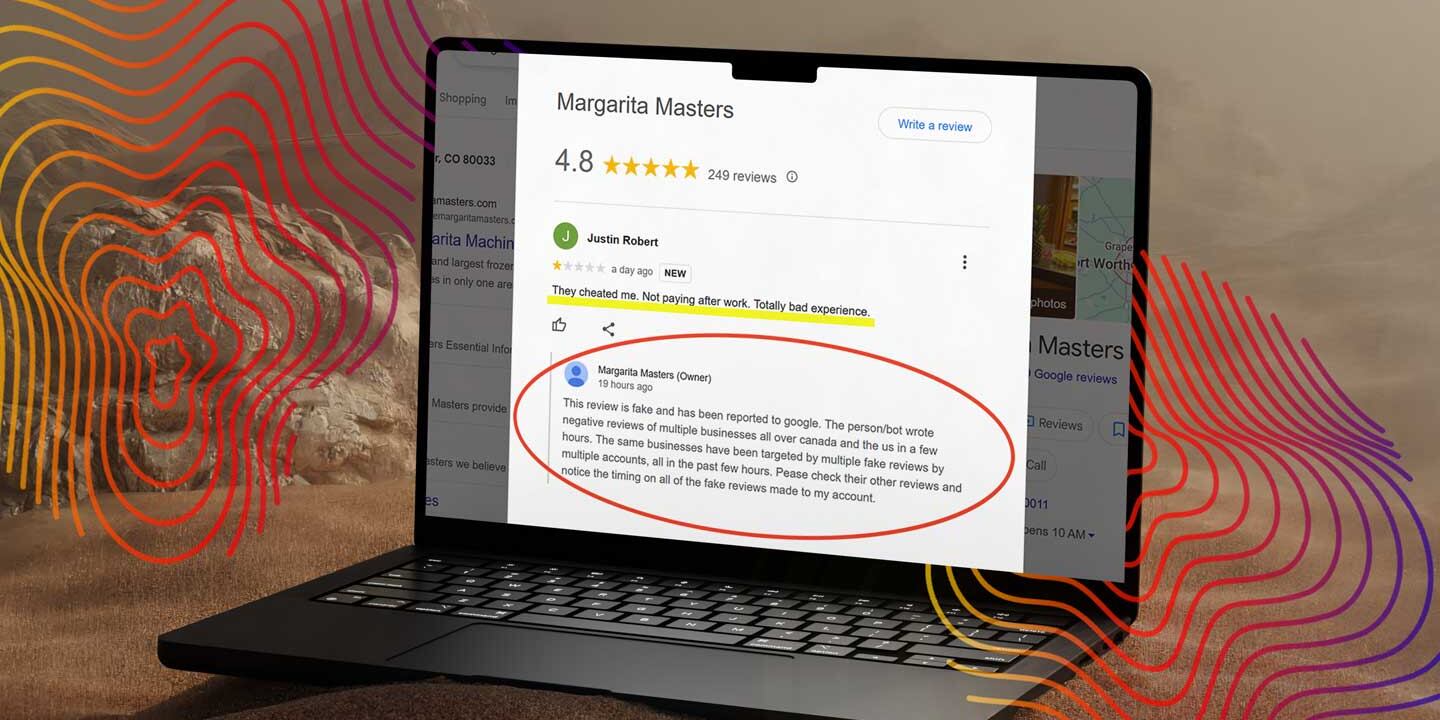
How to Deal With Fake Google Reviews and a Negative SEO Attack
Fake Google reviews aren't just a reputation problem. They can create…

Why Your Website Looks Good but Still Doesn’t Work
A website can be beautifully designed, technically sound and completely wrong…

Content VS Authority- What Wins in SEO Today
Google search results are shifting across industries, keyword clusters, and…

Reviews and Rankings – What’s the Real Impact?
Reviews can influence local rankings, Maps visibility, trust, and conversions,…