
From Technology Hype to Measurable Results: How to Evaluate New Digital Tools
Technology Is Not the Same Thing as Improvement
There is no shortage of technology promising to make a business faster, smarter, more efficient, or more profitable. That has always been true, but the explosion of AI has turned the volume way up. Every week there seems to be another platform, another automation tool, another AI application, another analytics system, or another “game-changing” technology that businesses are supposed to be using. Some of these tools are genuinely useful. Some solve problems businesses actually have. Others are solutions looking for a problem.
The difficult part isn’t finding technology anymore. The difficult part is figuring out whether the technology is actually making the business better. Adopting a new tool is rarely the end of the process. Someone has to learn it, configure it, integrate it with existing systems, maintain it, monitor it, and eventually determine whether the promised improvement actually happened. That is why businesses should spend less time asking, “What can this technology do?” and more time asking, “What problem are we trying to solve?”
That problem-first approach is something companies such as Excedify bring to business and technology decisions through structured problem-solving methodologies. It is a useful distinction in a market where the technology itself often gets more attention than the business result it is supposed to produce.
One of the easiest traps in digital business is confusing activity with progress. Installing a new CRM creates activity. Launching an AI system creates activity. Redesigning a website creates activity. Automating a workflow creates activity. None of those things automatically creates improvement. A business can have better technology and worse results, particularly when the technology is layered on top of a process that was already inefficient.
If employees have to enter the same information into three different systems, adding a fourth system probably isn’t going to solve the underlying problem. If a website has poor messaging and confusing navigation, adding an AI chatbot doesn’t necessarily fix the conversion problem. If a company doesn’t know which customers it is trying to reach, another analytics dashboard may simply provide more numbers to ignore.
The technology may work exactly as advertised and still fail to produce a meaningful business result. This is one reason I tend to be skeptical when someone tells me that a particular technology is going to “transform” a business. Transform it how? Faster? Cheaper? More accurate? More leads? Higher conversion rates? Fewer errors? Less repetitive work? Better customer retention? Those are outcomes a business can actually examine. The technology itself isn’t the result. The improvement produced by the technology is the result.
Start With the Problem, Not the Tool
A better technology evaluation starts with the business problem. That sounds obvious, but it is surprisingly easy to get backwards. A company sees an impressive demonstration of an AI platform and starts thinking about where it could use AI. A marketing department sees a new SEO platform and starts building reports around it. A management team sees an automation system and begins looking for tasks to automate.
The better question is simpler: What isn’t working particularly well right now? Maybe a sales team spends too much time manually qualifying leads. Maybe customer information is inconsistent between departments. Maybe a manufacturing process produces too many defects. Maybe employees spend hours transferring data between systems. Maybe a website generates traffic but very few meaningful enquiries. Once the problem is defined, the technology becomes much easier to evaluate because there is something specific to improve.
Suppose a business spends ten hours a week manually moving information from one system to another. A new automation tool has an obvious test case: can it reduce that workload without introducing new problems? That is a much more useful starting point than buying an AI tool because “everybody is using AI.” There may be a benefit to the latter, but without a defined problem, it becomes difficult to determine what success actually means.
Establish a Baseline Before You Change Anything
Before changing a process, you need a reasonable understanding of how that process works now. Otherwise, even a positive result can be difficult to interpret. If a company changes its website and enquiries increase, for example, what else changed during the same period? Did traffic increase? Did advertising change? Was there a seasonal difference? Did the sales team change how enquiries were handled?
The same principle applies to internal processes. If an AI tool is supposed to save employees time, establish roughly how much time the task currently consumes. If an automation is intended to reduce errors, know how frequently those errors occur. The measurement doesn’t need to become an elaborate analytics project. It simply needs to give the business a useful reference point.
This is where structured methodologies such as Six Sigma, Failure Mode and Effects Analysis (FMEA), and Design of Experiments can provide useful ways of thinking. These approaches come from environments where assumptions can be expensive, so they emphasize understanding the existing process, identifying variables, considering potential failures, and using evidence to evaluate changes. The underlying thinking applies just as well to a digital business deciding whether a new technology deserves a larger role.
Don’t Measure the Wrong Thing
Having data isn’t the same as having useful information. Businesses can measure something extremely accurately and still focus on the wrong outcome. Website traffic is a good example. Traffic is easy to report and produces an impressive number, but if a website gets 50 percent more visitors and generates the same number of qualified enquiries, the business may have increased traffic without improving the thing it actually cares about.
The same problem exists with AI. A company might measure how many pieces of content its AI system produces, but production volume isn’t necessarily the objective. If the content doesn’t attract the right audience, answer useful questions, generate visibility, or contribute to business outcomes, producing more of it isn’t necessarily progress.
The useful question isn’t simply, “What can we measure?” It is “What information would actually change our decision?” If a metric doesn’t help determine whether a process is working or whether a technology is worth continuing, it may not deserve much attention.
Test Before You Transform
Businesses don’t necessarily have to make an enormous technology decision all at once. In many cases, a smaller controlled test can tell you much more. Rather than implementing a new system across the entire organization, test it on one process, one department, one workflow, or one defined group of users.
This is where the thinking behind Design of Experiments can be especially valuable. The basic idea is to understand which variables may affect an outcome and design a test that helps determine what is actually causing the change. You don’t need to turn every website project or software implementation into a university research experiment. The useful part is the discipline of testing an assumption before building an entire strategy around it.
That also helps avoid another common mistake: deciding that a technology works because the first results look promising. A new system might initially save employees time but create additional maintenance work later. An automation may reduce manual effort but introduce errors that weren’t present before. An AI system might increase content production while reducing consistency. A new software platform might solve one problem while creating integration problems somewhere else.
Risk Is Part of the Calculation
The more complicated the system, the more important it becomes to look at the entire process rather than one attractive result. A technology decision should also include the question that tends to get ignored when everyone is excited about a new tool: What could go wrong?
That doesn’t mean avoiding new technology. It means understanding the risks before committing to it. FMEA, for example, provides a structured way to think about potential failure modes, their effects, and their significance. The exact methodology may be more detailed than most small businesses need, but the underlying question is extremely useful: what happens if this doesn’t work the way we expect?
For a digital business, that might mean asking what happens if an automation sends the wrong information, an AI system produces an inaccurate answer, a software integration fails, customer data is exposed, a critical platform changes its pricing, or the business becomes dependent on a tool that later disappears. None of those possibilities automatically means the technology shouldn’t be used. It means the business should understand the exposure before making the commitment.
The Best Technology May Be Less Technology
Sometimes the technology decision is less about finding the most sophisticated solution and more about finding one that produces a useful improvement without introducing an unreasonable amount of complexity or risk. Technology has a tendency to create new dependencies even while it solves old problems.
There is a funny paradox in digital strategy. We often assume that a more advanced problem requires a more advanced solution. Sometimes it does. Sometimes the problem is simply that nobody has documented the process.
A business might spend thousands of dollars searching for automation when the real problem is that five employees have five different ways of doing the same thing. Before automating a process, understand it. Before adding another software platform, understand what the existing platforms are already doing. Before introducing AI, determine whether the task actually requires AI. And before replacing a system that people complain about, find out whether the problem is the system itself or the way the business has configured and used it. That is the sort of problem explored in Why Smart People Still Make Bad Decisions.
Technology should reduce unnecessary complexity, not become another layer of it. A stack of disconnected tools can easily become another broken process that somebody eventually has to fix.
From Hype to Evidence
None of this means businesses should be afraid of new technology. Quite the opposite. Technology is incredibly useful when it is connected to a real problem and tested against a meaningful outcome. The mistake is treating the purchase or implementation as the achievement.
A new tool should earn its place by solving a problem, producing a useful result, and doing so without creating more trouble than it removes. That might mean saving ten hours a week, reducing errors, increasing qualified leads, shortening response times, or giving employees more time to work on things that actually require human judgment. The specific outcome will vary from business to business.
The real goal isn’t to become the company using the most technology. It is to become the company getting the most useful results from the technology it chooses. Those are two very different things.

About Anonymous
Some contributors prefer to let the ideas speak for themselves. Anonymous contributors bring independent perspectives, professional experience and first-hand insight to the Big Orange Planet Journal. Their identities are withheld where privacy allows them to write more openly about their experiences and ideas.
Get the Good Stuff
No fluff. Just practical web design ideas, SEO insight, behind-the-scenes projects, & solutions we've tested in the real world.
Never Miss a Good Idea
More Big Orange Knowledge

The $200 Logo Job That Wanted a Full Legal Department
A $200 logo project arrived with luxury-brand requirements, an NDA, corporate…

Why Better AI Tools Don’t Automatically Produce Better Results
AI tools are becoming extraordinarily capable, but better technology doesn't…

AI Is Only as Good as the Person Who Knows When It’s Wrong
The most dangerous AI answer isn't the obviously wrong one. It's the plausible…
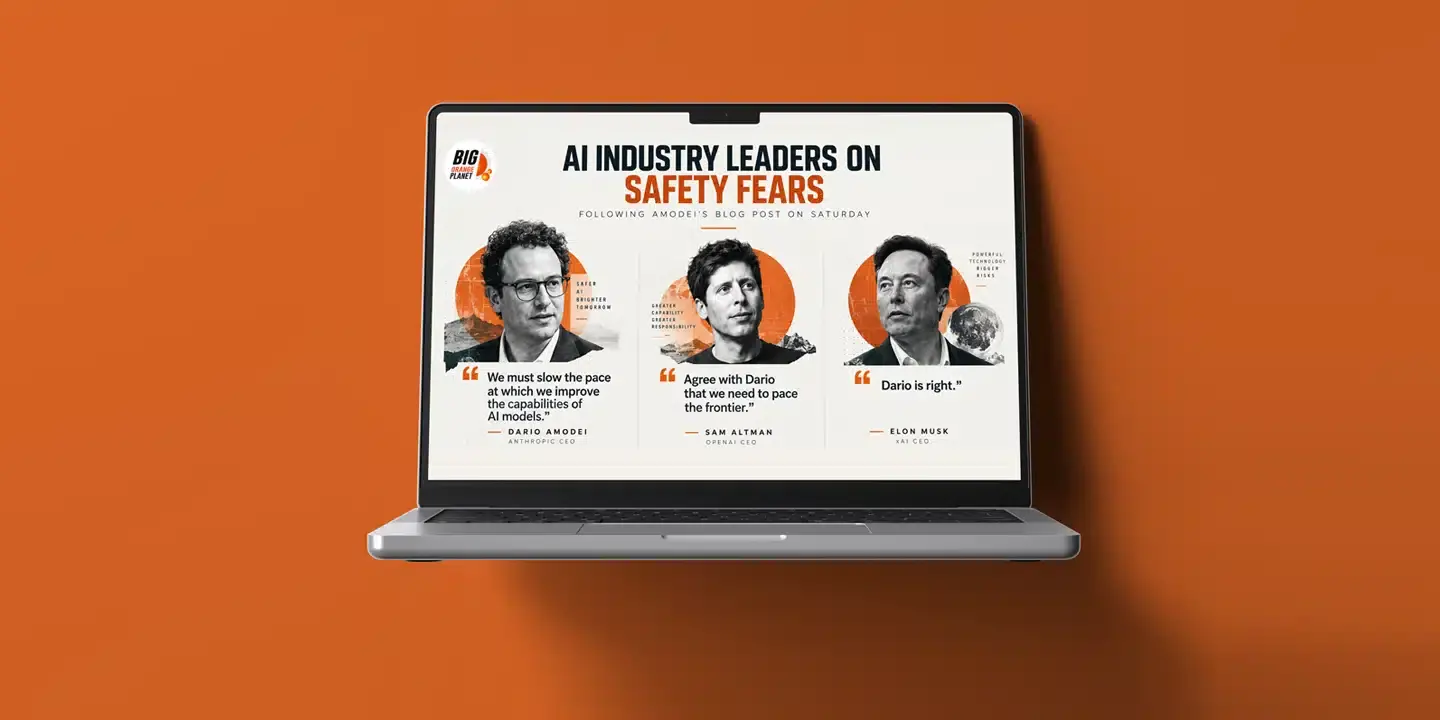
Why Are the People Building AI Suddenly Asking Us to Slow It Down?
Some of the people building the world’s most powerful AI systems are now…

I Stopped Prompting AI. I Started Working With It
After working with ChatGPT for a long time, I stopped thinking about AI as…

Why Having Better Design Software Doesn’t Necessarily Make You a Better Designer
Photoshop, Illustrator, Figma and AI tools can give almost anyone extraordinary…