
How Google Actually Ranks Websites
There is no single formula that determines why one website ranks above another in Google. That is probably the most important thing to understand before trying to improve search visibility. Search rankings are the result of many systems working together. Google is trying to understand what a page is about, whether it matches what somebody is actually searching for, how useful and credible the information appears to be, how the page relates to the rest of the website, and what wider evidence exists around the site and the business behind it. This is why reducing SEO to keywords, backlinks or any other single ranking factor usually leads businesses in the wrong direction. Those things can matter, but they matter as parts of a much larger picture.
Google Is Trying to Understand Meaning and Intent
Keywords still matter because language matters. If someone searches for a Denver web design company, Google needs to understand which pages are actually relevant to that request. But modern search is considerably more sophisticated than simply finding pages containing the exact words somebody typed. Closely related searches can express essentially the same intent. “Denver web design,” “web designer in Denver” and “Denver website design company” are different phrases, but someone using them may be looking for substantially the same thing.
That changes the way useful SEO content should be created. A page does not need to repeat every possible variation of a keyword. It needs to communicate its subject clearly and comprehensively enough that both users and search engines can understand what it offers and when it is relevant. This is one reason we increasingly think about keyword clusters rather than isolated keywords. A strong page can become relevant to a family of related searches because the underlying subject and intent overlap.
A Page Does Not Exist in Isolation
Google is not only trying to understand an individual page. It also has the rest of the website for context. A company with one page claiming expertise in a subject presents a very different picture from a company with service pages, case studies, supporting articles, project examples and other useful information consistently demonstrating knowledge in the same area. This is where website structure and topical depth begin to matter. Related pages help establish context around one another. A core service page can be supported by articles answering narrower questions, while those articles can point visitors and search engines back toward the central subject.
Over time, this creates a recognizable body of information rather than a collection of disconnected pages. We explore that idea more deeply in Topical Authority: What It Really Means for SEO. Internal linking is one of the mechanisms that holds this structure together. Links between related pages help users move through the site while also giving search engines additional information about how content is connected and which pages occupy important positions within that structure. That is why internal linking should be treated as part of website architecture rather than something added randomly after an article has been written.
Authority Is Evidence, Not a Score
Relevance alone is not enough. Google also has to make decisions between many pages that may all be relevant to the same search. This is where the wider evidence surrounding a website becomes important. Backlinks and external mentions can contribute to that picture because other websites referencing your work may provide evidence of recognition or relevance. Brand visibility, reviews, citations, expertise demonstrated across the site and a consistent presence within an industry or local market can all help create a clearer picture of the organization behind the website.
But authority should not be confused with a single number in an SEO tool. Metrics such as Domain Authority are third-party estimates. They can be useful for comparison and research, but Google does not simply look up an authority score and rank websites accordingly. Nor does collecting backlinks automatically create a trustworthy website. The source, context and reason for a link matter. That is why we increasingly make the distinction between acquiring links and building genuine authority in The Link Is Not the Strategy.
The Technical Foundation Still Has to Work
Excellent content and genuine authority cannot compensate for a website that search engines struggle to access or understand. Google needs to be able to discover pages, crawl them and determine whether they should be indexed. Poor site architecture, accidental indexing restrictions, broken internal links, duplicate pages, problematic redirects and other technical issues can interfere with that process before the quality of the content even becomes the main question.
Performance and usability matter as well. A website should work properly across devices, load reasonably quickly and provide visitors with a usable experience. None of these elements should be viewed as a magic ranking switch, but together they form the technical foundation that allows everything else to function. Our Technical SEO Basics Every Business Should Know looks at that side of search visibility in more detail.
Why Rankings Move Even When You Haven’t Changed Anything
One of the most confusing parts of SEO is that a website can remain exactly the same while its rankings change. That happens because your website is not being evaluated in a vacuum. Google changes its search systems. Competitors improve their websites. New content enters the index. Search intent can shift. Different interpretations of a query can become more or less prominent, and the pages Google considers the strongest match can change accordingly.
Rankings are therefore comparative rather than permanent. Holding a strong position today does not create ownership of that position tomorrow. This is particularly noticeable when several related search terms move together. That can indicate a broader change in how Google is interpreting a subject or comparing the pages competing within it rather than a problem with one individual keyword. We looked at exactly that phenomenon in Why Google Search Results Look So Unstable Right Now.
So What Actually Improves Rankings?
The frustrating answer is also the useful one: there usually isn’t a single thing. Strong search performance tends to emerge when the pieces support one another. The page clearly answers the intent behind the search. The surrounding website demonstrates depth in the subject. Internal links establish useful relationships between pages. The technical foundation allows search engines to access and understand the content. External evidence supports the credibility of the business. And the website continues to evolve rather than being treated as a finished object.
This also explains why SEO can be difficult to diagnose from a single metric. A page can have backlinks and still be a poor result. It can contain the right keywords but fail to satisfy the search. It can contain excellent information but sit inside a weak or confusing website. It can rank well for years and then encounter stronger competition. Google’s job is not to reward websites for performing SEO correctly. Its job is to return results it believes are useful for the person searching.
The closer your SEO strategy gets to supporting that objective—clear information, genuine expertise, useful structure, credible evidence and a technically sound website—the less dependent you become on chasing whatever individual ranking tactic happens to be fashionable that month. That is a much less exciting answer than discovering a secret Google ranking factor. It is also a much more durable one.
This article was written by Ally Lennon, Big Orange Planet’s SEO legend—call him directly! Phone: 720-272-0770.
Related Reading
This article reflects the thinking behind how we approach websites, artificial intelligence, search and long-term digital strategy at Big Orange Planet. If you found it useful, you might also enjoy:
- Topical Authority: What It Really Means for SEO
- Internal Linking: The Most Overlooked SEO Lever
- Keyword Clusters vs. Single Keywords in SEO
- Technical SEO Basics Every Business Should Know
- What Business Owners Think SEO Is vs What SEO Actually Is
- The Link Is Not the Strategy
Over the coming months, The Big Orange Planet Journal will continue exploring search, branding, website architecture, local SEO, artificial intelligence and the ideas shaping how businesses are discovered — and trusted — online. If you’d like to follow along, you can sign up below for new articles and ideas as we publish them. If you’d like to discuss your website, SEO strategy or digital marketing goals, visit our Contact Us page or explore our Denver web design and SEO services.
Get the Good Stuff
No fluff. Just practical web design ideas, SEO insight, behind-the-scenes projects, & solutions we've tested in the real world.
Never Miss a Good Idea
More Big Orange Knowledge
September 5, 2025
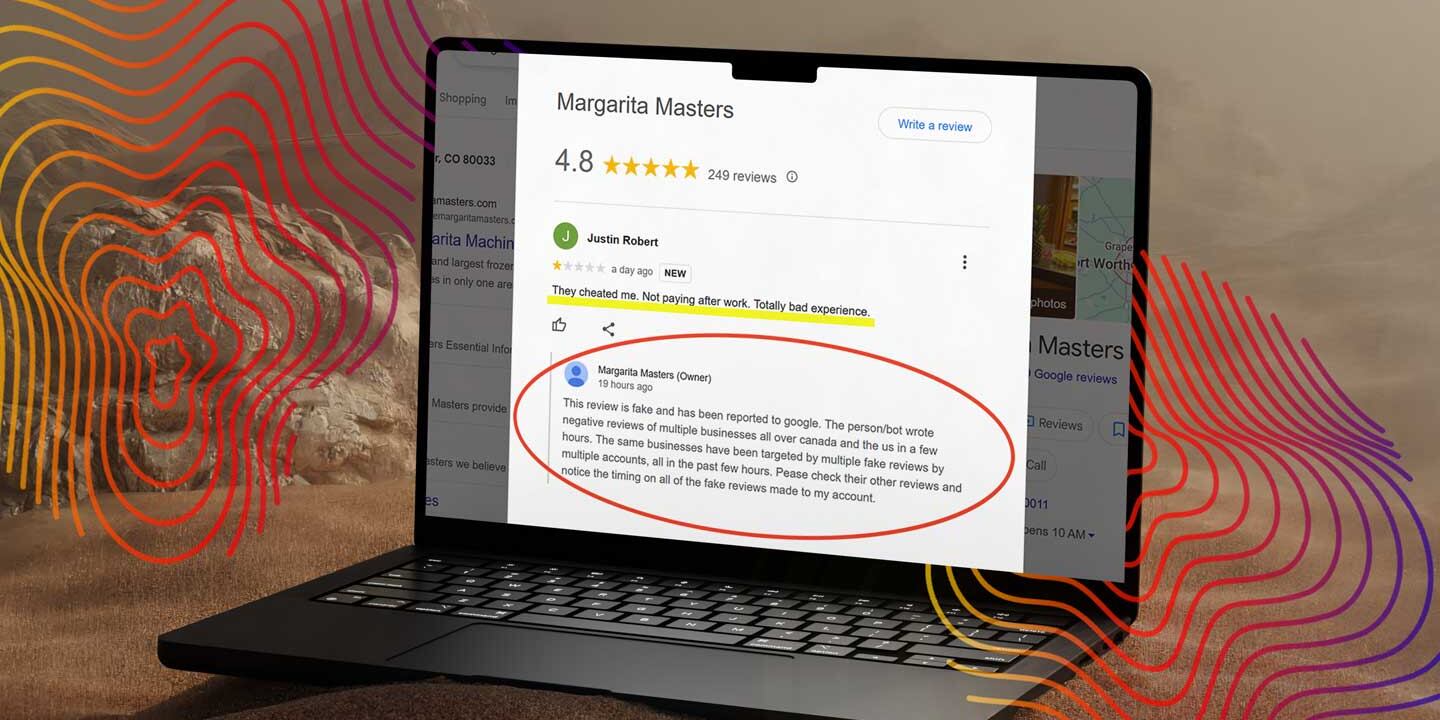
How to Deal With Fake Google Reviews and a Negative SEO Attack
Fake Google reviews aren't just a reputation problem. They can create…

January 15, 2025
Google Business Profile- Advanced Optimization Techniques
Establishing strong credibility with Google My Business will earn you higher…

May 31, 2026
What Small Businesses Really Need From a Website
Most small businesses don't need a complicated website. They need one that…

September 28, 2025
How to Get Your Company Mentioned in AI Search Results
AI search is changing how people discover businesses. Here's how to build the…
January 29, 2025
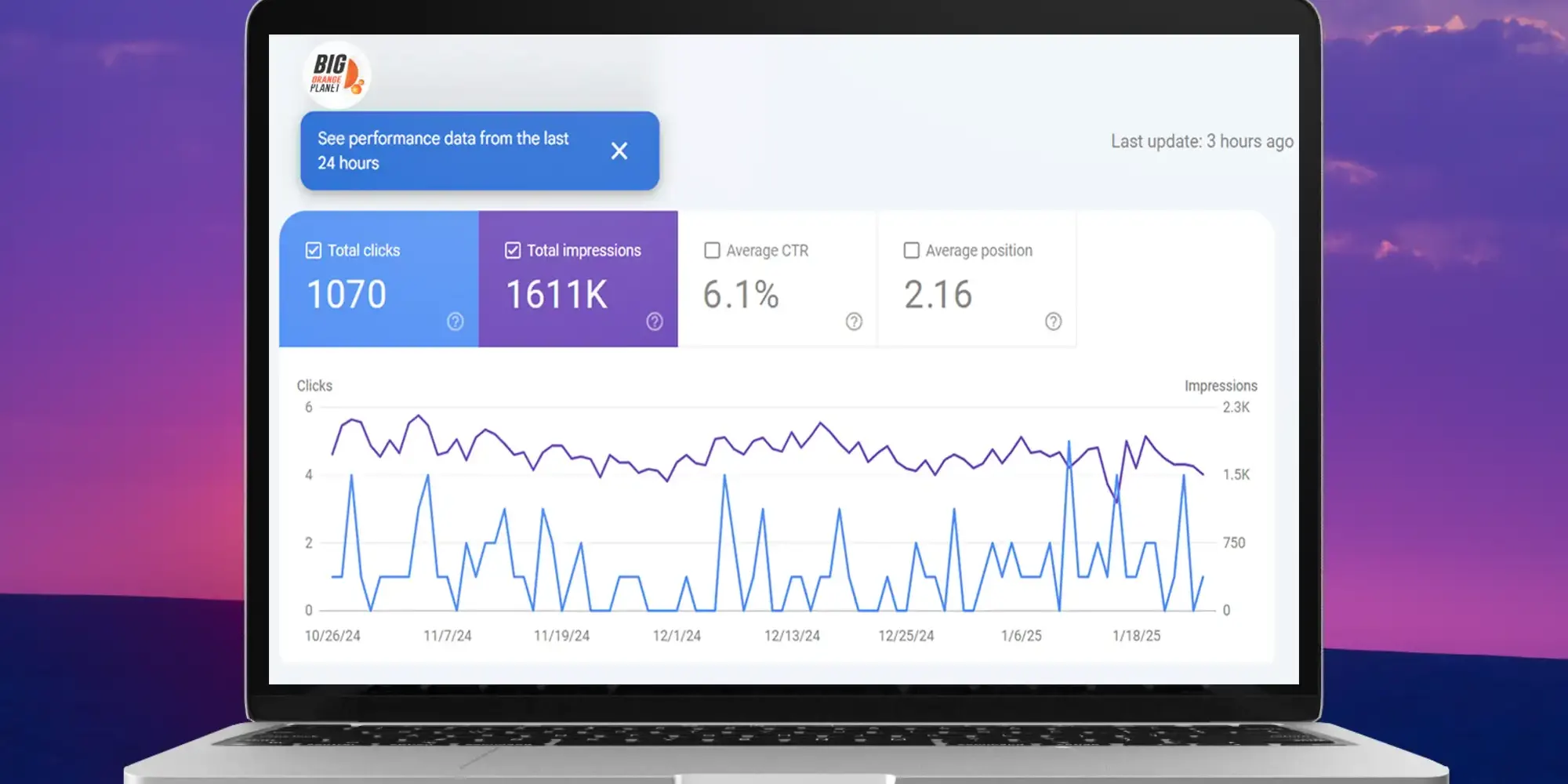
What is SEO exactly and why does it matter to you?
SEO isn't about making Google like your website. It's about making your…

March 23, 2025
The difference between ChatGPT results and Google results illuminated!
Google and ChatGPT can receive the same question and produce very different…